Why Does “Biodegradable Plastic” Sometimes Not Biodegrade?
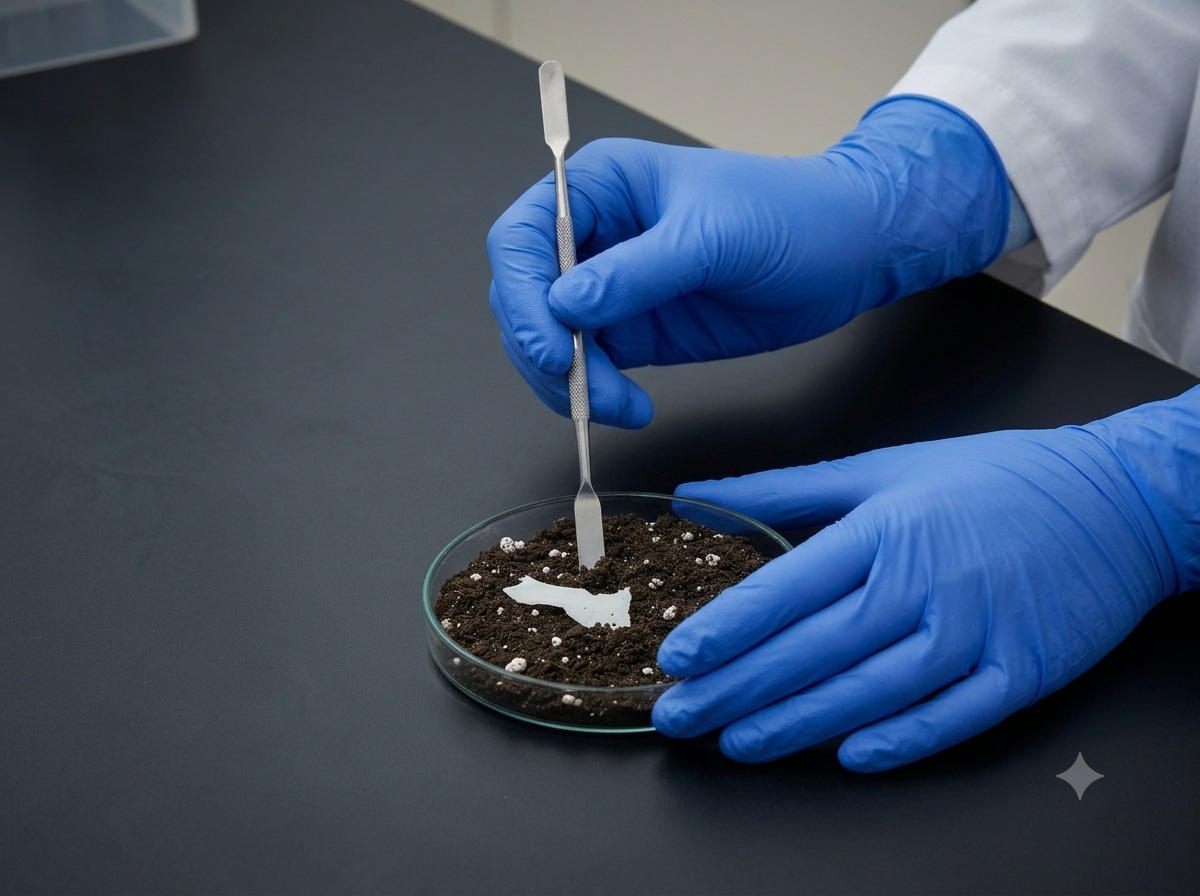
When people hear the term biodegradable plastic, they often picture a material that disappears shortly after being thrown away. Compared with conventional plastics used for years, biodegradable materials are frequently presented as a solution to plastic pollution. As a result, many people assume that once a biodegradable package ends up in the environment, nature will simply take care of the rest.
To be honest, the reality is a little more complicated.
Biodegradable does not mean a material instantly disappears when it reaches the ground. It simply means that microorganisms can break it down under the right conditions. Just as plants need water, sunlight, and suitable temperatures to grow, biodegradable plastics also depend on their surroundings like suitable moisture, heat temperature and so on to degrade effectively.
During my master's research at Toronto Metropolitan University, I worked with biodegradable films made from poly(lactic acid), or PLA, which is a bio-based plastic derived from renewable resources such as corn starch and sugarcane. While PLA is often promoted as a sustainable alternative to conventional plastics, I became curious about a simple question: What actually happens after biodegradable plastic films are thrown away?
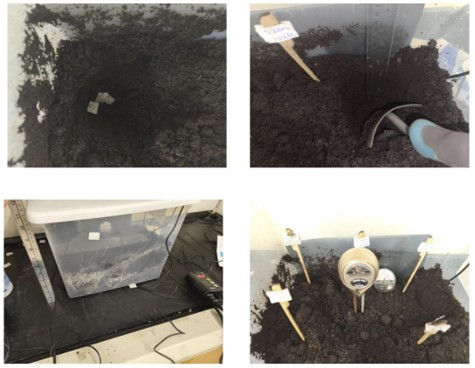
To explore that question, I buried several PLA-based film samples in a garden soil which is commonly used in the local Toronto area and monitored them for eight weeks (56 days). The goal is to view how they behaved in an environment that contained moisture, oxygen, microorganisms, and organic matter which are all conditions that are commonly associated with biodegradation.
At first, nothing seemed particularly exciting. The films looked almost identical to when they were first placed in the soil, especially for Pure PLA. However, as the weeks passed, visible changes began to appear like biomass color loss. Some samples gradually became whiter and more opaque from week 4. Others started to lose flexibility and became noticeably more brittle and small cracks and fragmented regions appeared on the film surface.
Film |
Day0 |
Day7 |
Day14 |
Day28 |
Day56 |
Pure PLA |
|
|
|
|
|
PLA with Biomass |
|
|
|
|
|
PLA with High Biomass |
|
|
|
|
|


Even though every sample was based on PLA, Pure PLA showed only minor changes after eight weeks, while others deteriorated much more noticeably. Watching those differences develop over time made me realize that biodegradation is not an on-or-off process. The label biodegradable describes a material's potential, but what actually happens depends on both the material itself like how it was made and the environment around it.
In addition to PLA, some of the films contained implemented biomass including beetroot-derived betalain pigments and plant-based essential oils. These ingredients were originally added for smart packaging purposes in my project. The pigments provide visible color responses, while the essential oils help improve flexibility and overall film performance.
Interestingly, in this experiment they also seemed to influence biodegradation.
Films containing these additives generally showed earlier signs of whitening, embrittlement, and surface damage during the soil burial test. One possible explanation is that essential oils make PLA less rigid, allowing moisture to penetrate the material more easily over time. The pigment particles may also create small irregularities within the film structure, providing additional pathways for water and microorganisms to interact with the material.
Although these changes begin at the microscopic level, their effects eventually become impossible to miss. By Week 8, some of the films had broken into so many tiny pieces that recovering them felt a bit like an archaeological excavation. Instead of collecting data, I was carefully sifting through soil, trying not to miss any of the remaining fragments.
For me, this was one of the most amusing parts of the experiment. The same ingredients that improve material performance during use may also influence what happens after the product is discarded.
Rethinking What “Biodegradable” Really Means
Many people assume that a biodegradable product will quickly disappear once it is thrown away. In reality, biodegradation is a process rather than a guarantee. Whether a material actually breaks down depends on where it ends up and the conditions it encounters after disposal.
This idea extends beyond packaging materials. Waste management systems, composting infrastructure, consumer behavior, and local environmental conditions all influence whether a biodegradable material can achieve its intended environmental benefits.
In Canada, biodegradable plastics do not always end up in environments that support efficient degradation. As a result, a material designed to be environmentally friendly may not behave exactly as consumers expect.
This project changed the way I think about sustainable materials. Rather than asking whether a plastic is biodegradable, a more useful question may be: under what conditions can it actually biodegrade? Sometimes, the most important part of a package's story begins after we throw it away.

Zhenhan (Fred) Ma is a Master of Applied Science student in the Environmental Applied Science and Management (EnSciMan) program at Toronto Metropolitan University. Before beginning this project, he earned his Bachelor’s degree in Chemical Engineering from McMaster University and gained R&D experience at the Canadian startup Longan Vision Corp. Fred now works in the Sustainable Polymers Research Lab (SPRL) under the supervision of Dr. Ehsan Behzadfar, where ongoing discussions with his supervisor help shape the scientific direction of his research. His work is supported by Mitacs funding and by the research infrastructure at TMU, allowing him to explore how natural pigments and biodegradable polymers can be developed into smart medical packaging materials. His broader interests include sustainable materials design and the policy context that guides innovation in Canada.
Questions about the article? Contact Zhenhan (Fred) Ma at fred.ma@torontomu.ca