Before you apply
Before you apply
Discover our unique 4-year MD program structured across Foundations, Clinical & Community Immersion, and Professionalization phases.

The 2027 admissions cycle opens for application July 9 and closes October 1, 2026, at 4:30 PM ET. Review program details, admission requirements, streams, and pathways here!
Our four-year MD curriculum is rooted in community-driven care and cultural respect and safety, with equity, diversity, inclusion, and our commitments to truth and reconciliation with Indigenous communities woven throughout. Through active, inquiry-based learning, we will help students to become a new kind of physician: one with the knowledge and tools to not only provide excellent, inclusive care, but to drive real change in the healthcare system.
Explore the MD Program below, including an overview of the curriculum, learner resources, and more.
Information to review before you apply:
Our campus
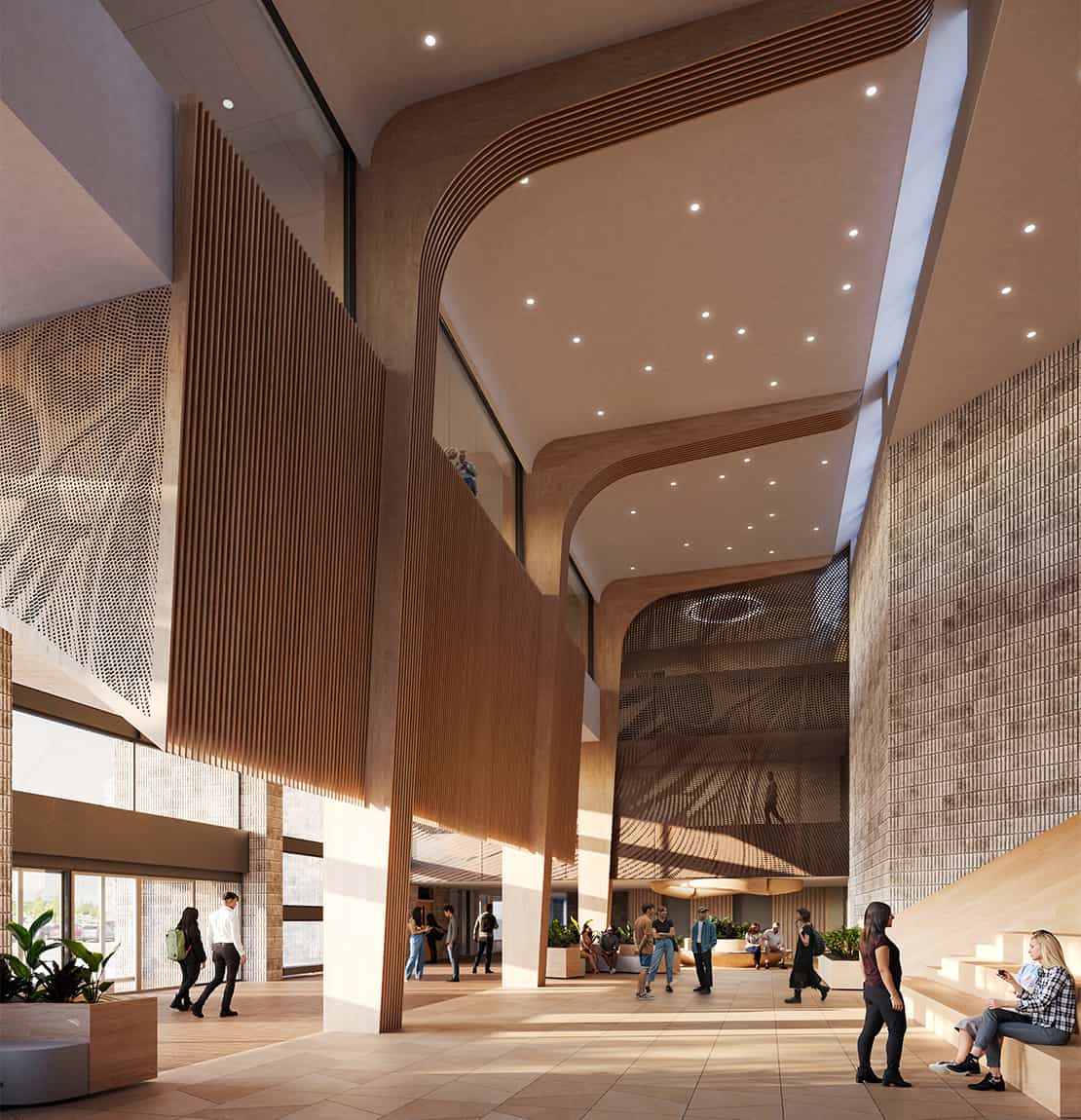
The TMU School of Medicine is housed in the former Bramalea Civic Centre at 150 Central Park Drive in Brampton, Ontario. The building has been transformed into a state-of-the-art medical school that features functional, flexible and collaborative active learning classrooms, lab and study spaces that support various modes of pedagogy. A three-storey interconnected atrium at the primary west entrance welcomes students, staff and visitors into a vibrant, inclusive and safe environment where they can interact and engage with one another.
The library provides quiet individual and group study spaces, and additional learning opportunities outside the classroom. Case-based learning teaching labs, simulation and digital anatomy labs further bolster TMU’s experiential learning approach for medical learners. This building project is the first at TMU to integrate the university’s Indigenous Design Guidelines – developed in consultation with Indigenous community members – in the design process.
The site was chosen for its proximity to both Brampton Civic Hospital and Peel Memorial Centre for Integrated Health & Wellness as well as its accessibility via municipal transportation, GO transit and highway systems. The site is also close to a variety of services and amenities to support the needs and well-being of our students.
Another key highlight of our campus is the Integrated Health Centre (IHC), which delivers primary care services to the community while serving as an academic teaching and learning site for our students. This is one of two IHCs that TMU has established in Brampton.