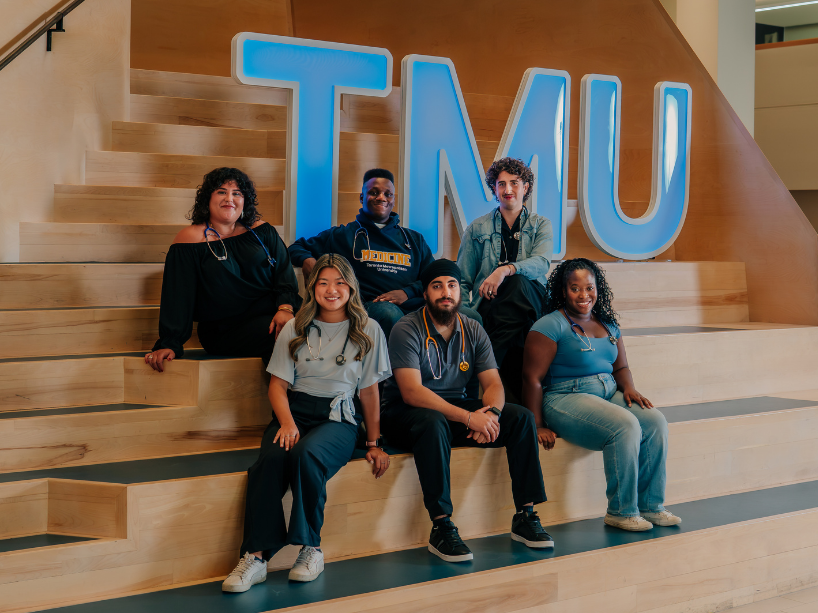
Second to none: The MD students shaping medicine's future
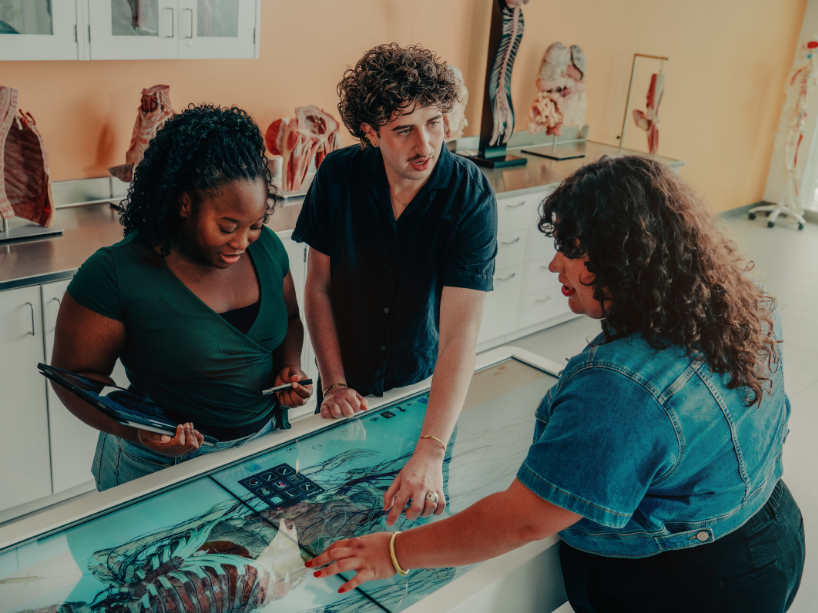
Community excellence is more than just working in the health care system, it’s about having the courage to transform it. Deneisha Hammith, Andrew Faller-Saunders and Justice Ryan, three incoming MD students, have embodied what it means to be empathic, socially accountable leaders within their communities.
Now, as members of TMU’s second cohort, they are bringing these skills to their medical training—part of the School of Medicine’s mission to train future physicians who provide outstanding holistic health care and who lead in health system transformation, to build a better health care system for all.
Deneisha Hammith
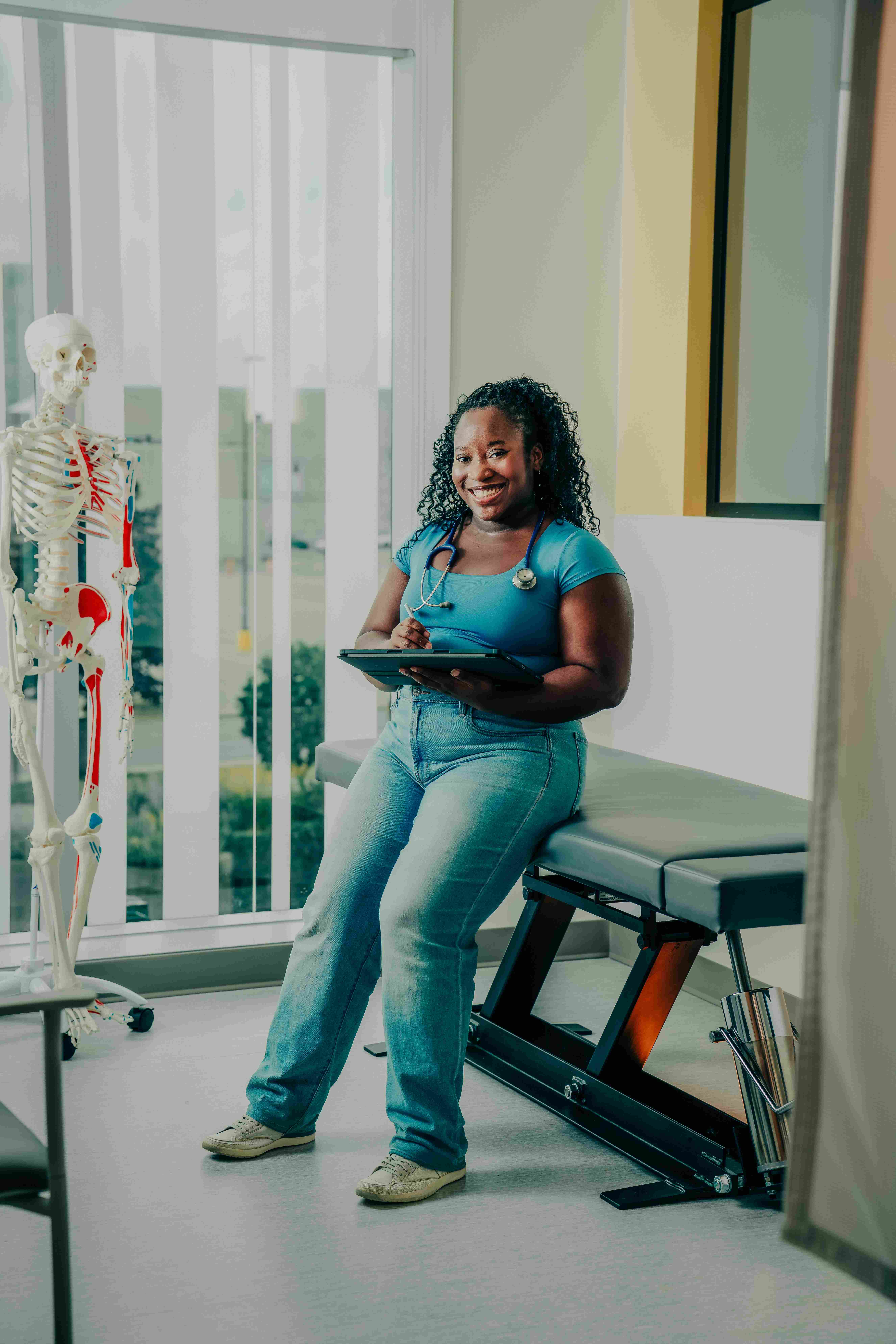
As a vascular nurse, Deneisha Hammith had her finger on the pulse of patient care. But becoming a physician meant taking a different route to medical school—one that gave her a deeper understanding of health care from the bedside up.
After an initial rejection from medical school, Hammith enrolled in nursing at Western University, where she gained hands-on clinical experience caring for patients as a vascular nurse. The three-year detour was not part of her original plan, but it gave her a perspective she now sees as invaluable to her future career as a physician.
“I’m always learning and I’m going to make mistakes,” Hammith said. “I know being able to admit when I’m wrong, take time to learn from those mistakes and carry those lessons with me will be important—especially in a place like Brampton where there are so many different walks of life.”
Growing up in Newmarket as a first-generation Jamaican-Canadian, she completed her undergraduate degree in biomedical sciences, with a minor in neuroscience, at the University of Guelph.
“It combines every single thing that I’m interested in—leadership, science, the human body, teaching, mentorship—all in one big job, where I can help people and interact with patients on a human level all day,” said Hammith.
Her experiences in nursing have also strengthened her commitment to uplifting marginalized communities by improving access to education and creating more welcoming spaces in STEM and medicine. Through her volunteer work with Scientista, United for Literacy and her co-presidency of Guelph Women in Leadership, Hammith has worked to engage people who don’t traditionally see themselves in science, educational or leadership settings, ensuring everyone feels they have a seat at the table.
Hammith understands how crucial social accountability is for an evolving health care system, which is one of the reasons TMU was the perfect fit for her. She’s ready to embrace her studies with an open mind and all biases left at the door.
Reflecting back on her journey to medicine, Hammith wouldn’t change a thing. Her years of clinical and life experiences have given her confidence, maturity and perspective—qualities she hopes will make her a stronger physician and help her serve the diverse community around her.
Andrew Faller-Saunders
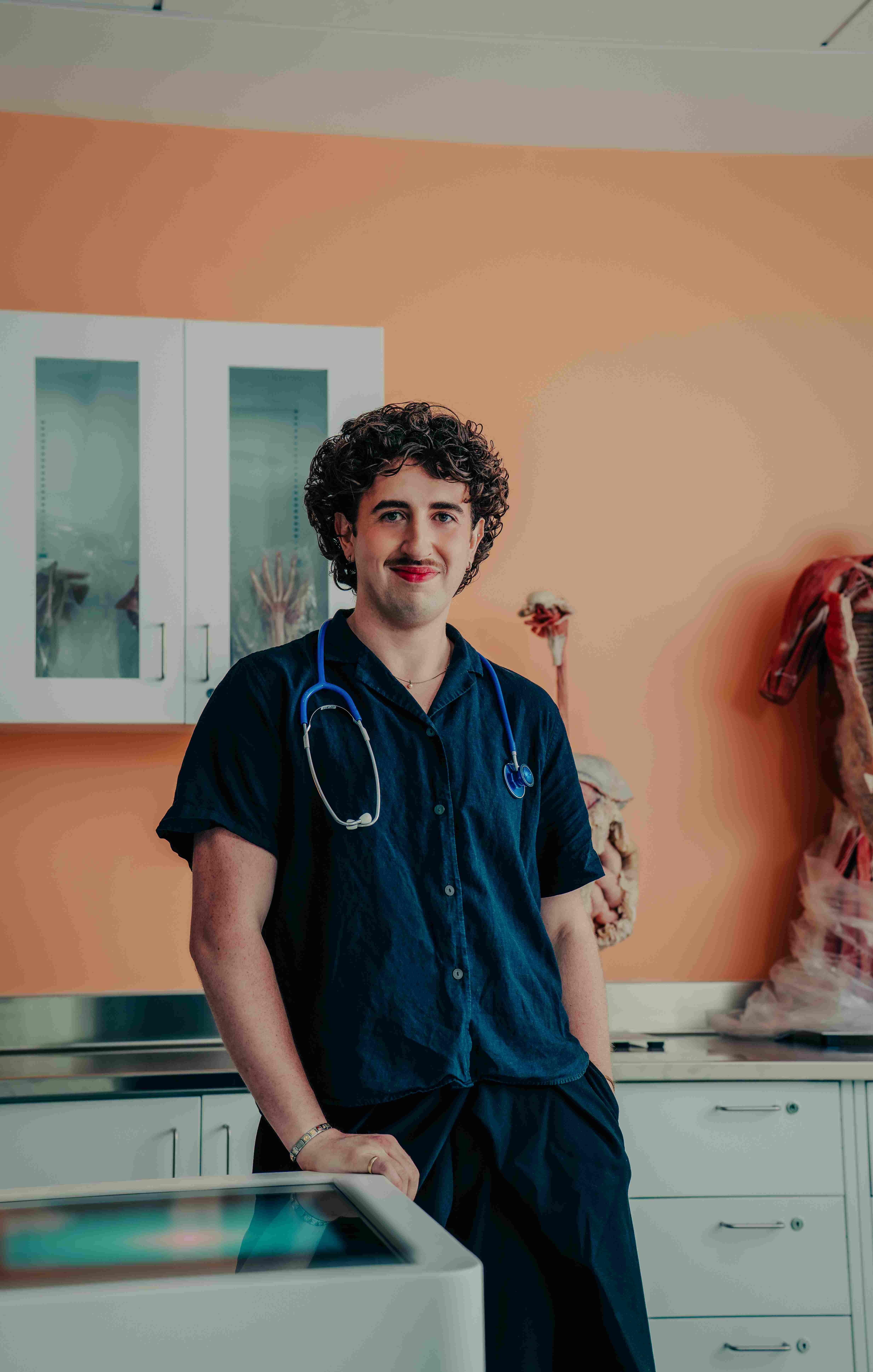
Long before Andrew Faller-Saunders got into TMU, he had already witnessed just how deeply health is shaped by the systems and communities surrounding a person.
At home, he saw firsthand how disability, poverty, identity and fragmented care could determine whether someone received the care they needed as a human being, not just a patient.
“I lost my mom to suicide in 2020, and that’s something I talk about often,” said Faller-Saunders. “Watching her navigate mental illness, addiction and stigma taught me how easily a person can disappear behind a diagnosis or a label. She was so much more than the hardest parts of her life, and knowing that has informed my understanding of what it means to really see someone as a whole.”
Growing up queer in Caledonia, Ontario, on the land of the Haldimand Tract, traditional territory of the Six Nations of the Grand River, instilled an early awareness of inequity, belonging and the strength of community resilience.
Those experiences gave him a profound understanding of injustice and, over time, formed the lens he would carry into community work, public health and medicine.
While completing his undergraduate degree in Health Sciences at the University of Waterloo, Faller-Saunders began volunteering with A Better Tent City, an organization that provides dignified housing while addressing other social determinants of health.
It was there that he began to understand the power of simply showing up.
“Through my work in community health, in hospitals, in shelters and tent cities, and alongside people navigating substance use, mental health, and housing instability, I have learned that care is not just about knowledge,” he said. “It is about presence. It is about dignity. It is about whether someone is met with humanity in the moment they need it most.”
That lesson stayed with him as he pursued a Master of Public Health at the University of Toronto’s Dalla Lana School of Public Health. There, he continued to look “upstream”, connecting what happens in an exam room to the broader conditions, institutions and decisions that shape health care.
For Faller-Saunders, medicine is not a departure from the work he has already been doing. It is a chance to bring it all together—lived experience that defined his commitment to social justice, years of learning alongside communities that deepened his understanding of social accountability, and the health-system knowledge that showed him how to drive structural change.
Now, as a member of TMU’s second MD cohort, he is preparing to become the kind of advocate that patients and families deserve.
Justice Ryan
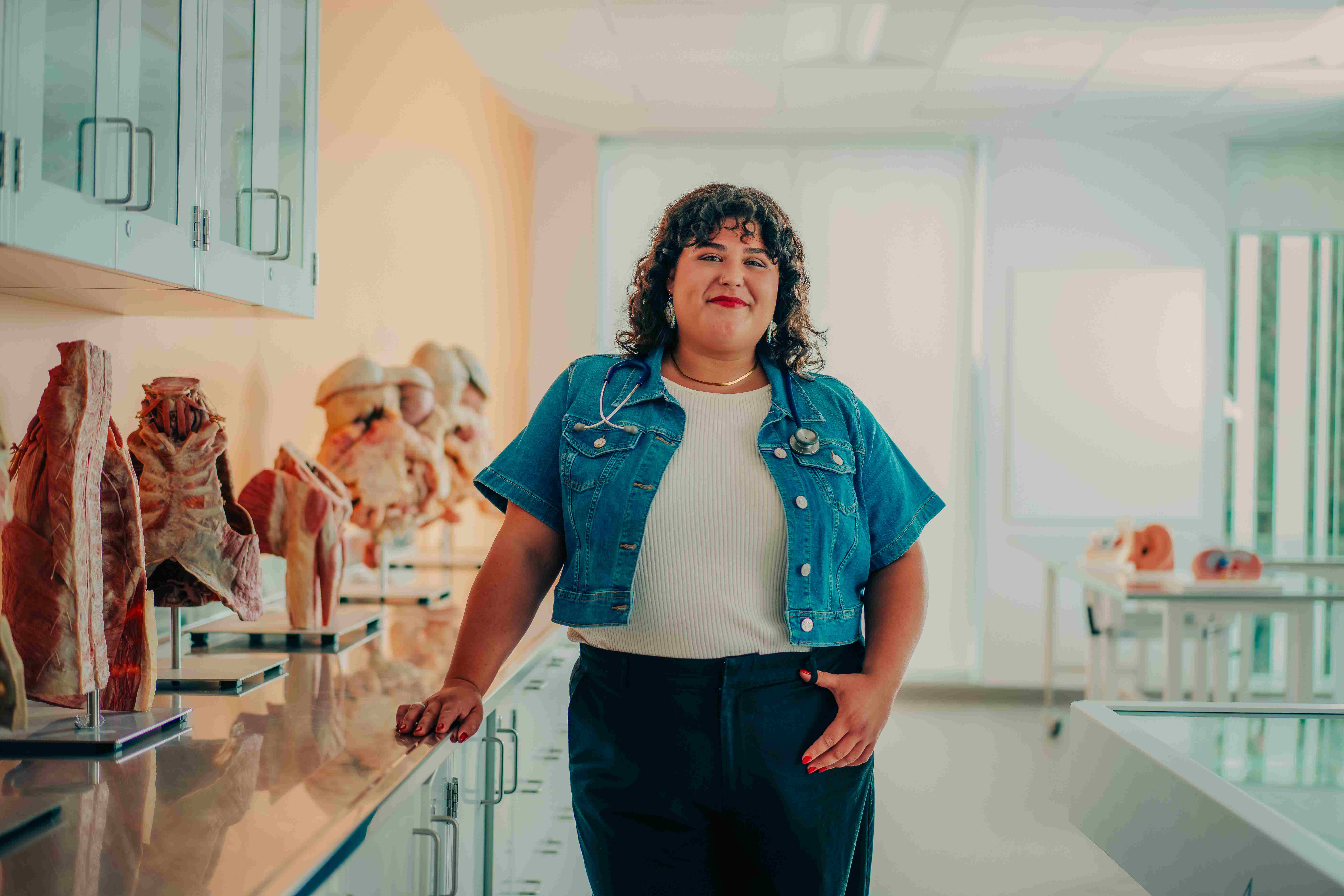
Justice Ryan is Anishinaabe of the M'Chigeeng First Nation on Manitoulin Island. Growing up as an urban Indigenous youth in Toronto, she witnessed the struggle–or sometimes, flat-out refusal–to integrate Indigenous healing practices into mainstream medical care. Those experiences ignited a drive to advocate for culturally competent care, benefiting not only Indigenous people but the broader community.
Medicine is often viewed as strictly science, but in practice, good medicine combines science and humanity. Ryan took a different path to medicine, completing an anthropology degree at McMaster University, with a minor in Indigenous studies. She believes this path has prepared her for a future medical practice grounded in cultural competency, intersectionality and an understanding of adversity.
“In anthropology, I was learning the values that I really want to see translated into medicine,” said Ryan. “Care should be coming from a place of empathy and respect, and should hold space for different perspectives.”
Recognizing a gap in the campus culture at McMaster, Ryan felt driven to bring people together in celebration of Indigenous identities. She began the Indigenous Students and Invited Allies Beading Group—an initiative that grew into a thriving community hub, bringing people together, challenging preconceived notions of what it means to be Indigenous and creating lasting connections.
Ryan’s ultimate dream is to practise as a family physician on a reserve. She wants her patients to know she’ll truly listen and believe their lived experiences and hopes to build a physician-patient experience built on mutual trust and respect—a style of care built around dismantling the power dynamics and barriers between people and their care providers.
“I trust TMU to provide me with an exceptional education that accurately reflects the current state of care, caters to my goals and aligns with my Anishinaabe principles,” said Ryan. “It’s clear that TMU is not a cookie-cutter school.”
By bridging the gap between Western medicine and traditional Indigenous healing, Ryan intends to model her practice in a way both systems can work side-by-side to provide the most suitable treatment. With future doctors like Ryan eager to blend different cultural understandings of well-being into their practice, she is helping to shape a health care system that resonates with the people it serves.
Through unique pre-med pathways, these three students are leveraging lived experience, clinical resilience and grassroots advocacy to ensure every patient feels seen, heard and fought for.