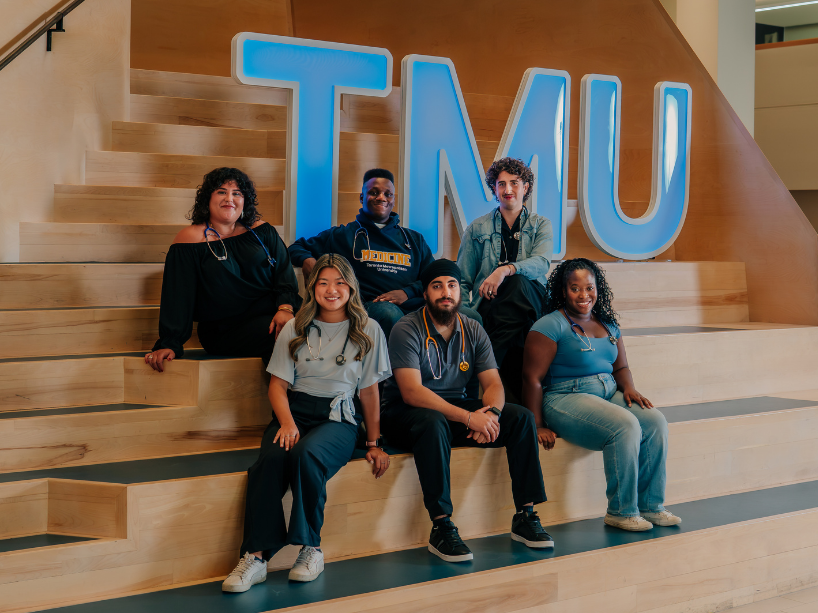
Second to none: meet the School of Medicine’s Class of 2030
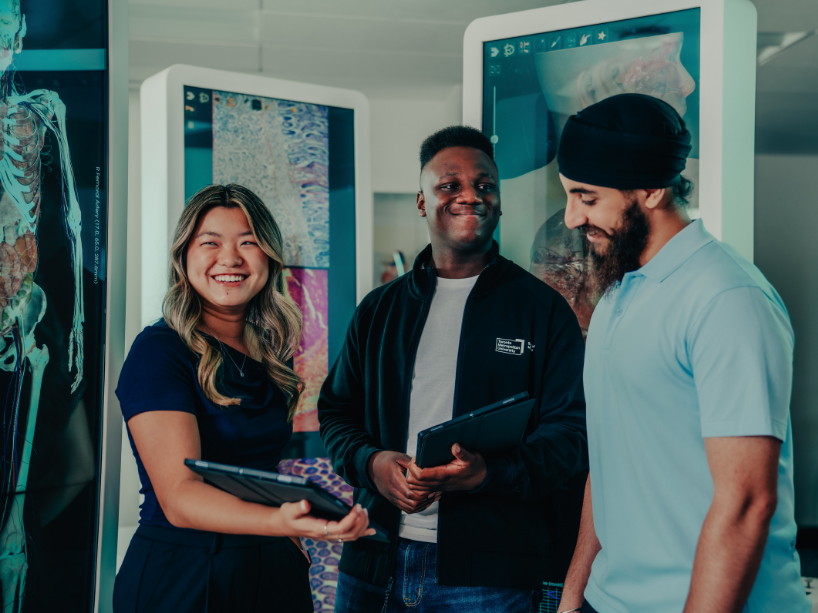
Long before they put on their stethoscopes at TMU, Jordan Meikle, Isabelle Chan and Manroop Phagura were learning about health care in their own communities. Growing up in Peel Region, each saw different ways that culture, language, representation and access can shape a person’s experience with the health care system.
Now, as members of TMU’s second MD cohort, they are bringing those lessons into their medical training—part of the School of Medicine’s mission to train health care professionals from Peel, for Peel, and build the region’s future health care workforce close to home.
Jordan Meikle
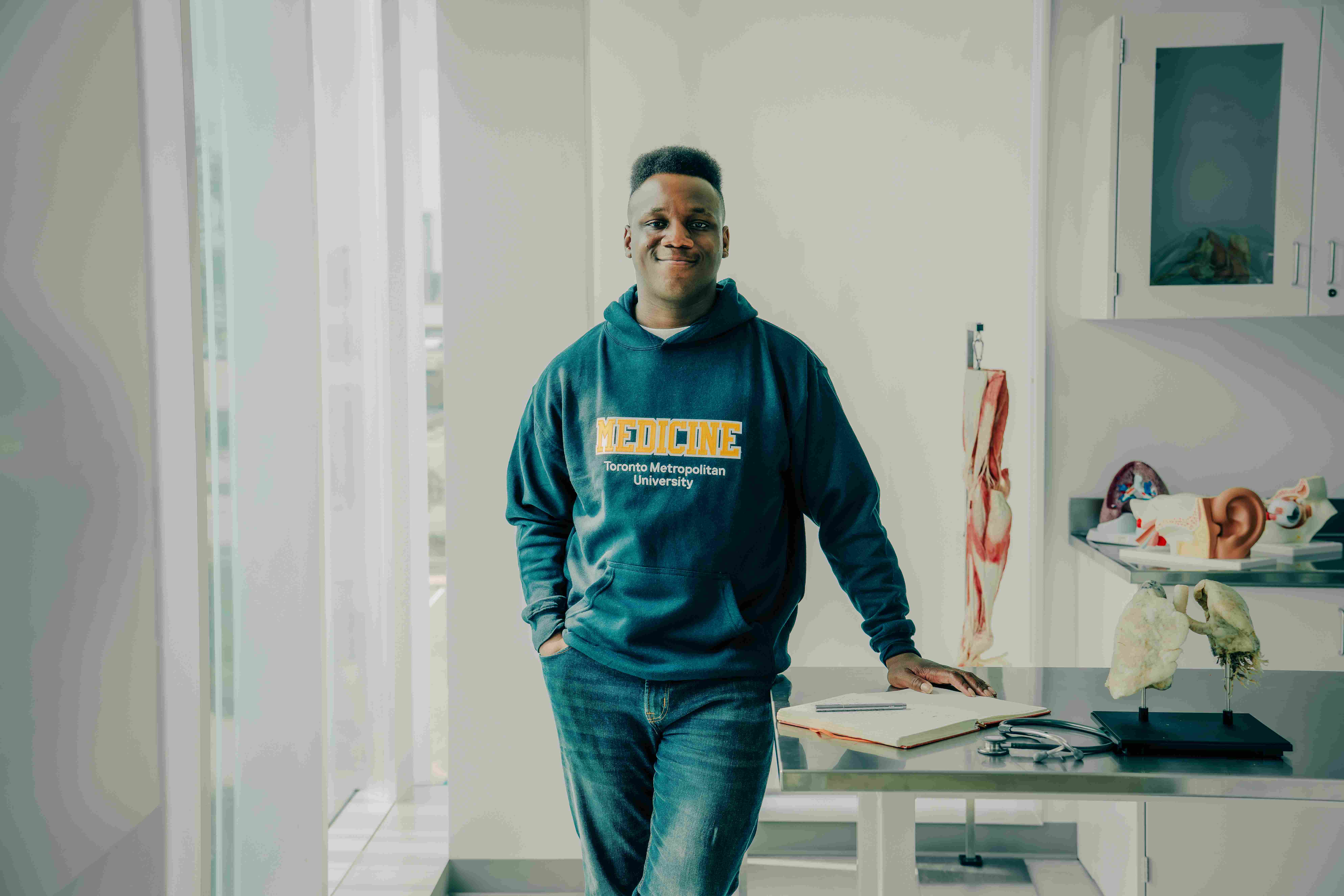
Jordan Meikle grew up in Brampton surrounded by the diversity of the community he now hopes to serve. But when he graduated high school, he noticed how few Black students were pursuing post-secondary education, and even fewer in STEM.
"You don't see a lot of Black people going into medicine,” Meikle said. “You don't see a lot of Black male physicians. It’s a field that is underrepresented, and I'm just happy to just be part of that effective change."
For Meikle, becoming a doctor is about more than providing culturally competent care. He also wants to show Black youth that medicine is a career in which they belong.
While completing his undergraduate degree in Health Sciences at Wilfrid Laurier University, Meikle took a course on social determinants in health. He had long been fascinated by the human body and the way organ systems work together, but learning about the broader social impacts on health changed the way he thought about medicine.
That’s when the idea of becoming a doctor began to take shape—not simply as an interest in science, but as a way to understand and improve people’s quality of life. He carried this focus into his graduate degree in molecular and medical sciences and now into his medical training at TMU.
“Attending TMU, in my hometown, lets me give back to the community that’s given me everything I know,” said Meikle.
He hopes to be the kind of physician who listens closely to patients and understands what they are telling him—and what they may have difficulty saying.
Whether a patient is struggling physically, mentally or emotionally, Meikle wants them to leave his office better than when they arrived. He also sees medicine as a lifelong learning process, one that requires an open mind and a commitment to compassionate care.
For him, there is something fitting about beginning that journey a few minutes from his home.
Isabelle Chan
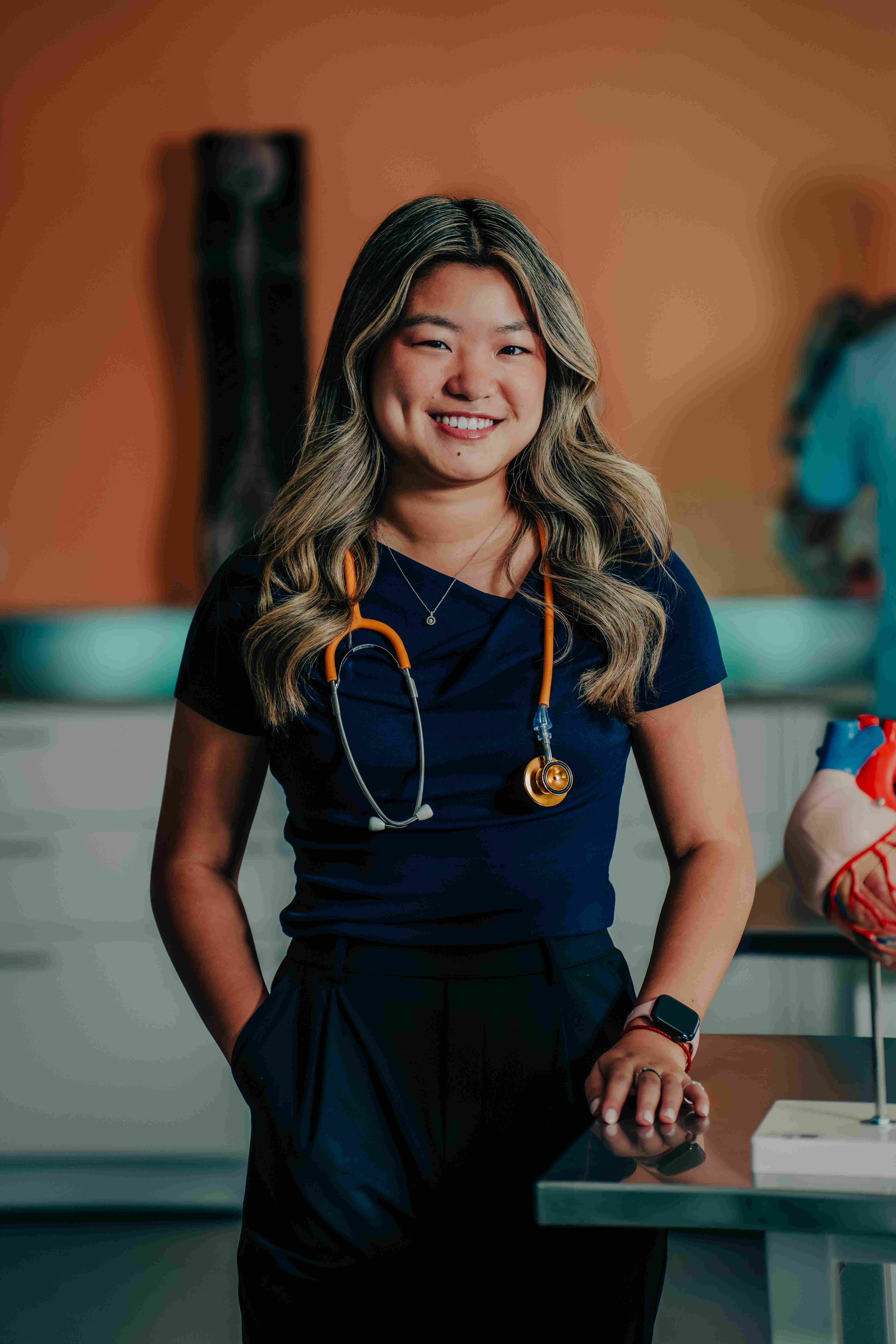
For Isabelle Chan, attending the TMU School of Medicine feels like “coming home.”
Raised in Mississauga by immigrant parents, Chan grew up seeing some of the challenges that can come with navigating the health care system as a newcomer. Those experiences shaped her interest in medicine and her desire to help create health care spaces where people feel understood.
Her interest became personal when her father was diagnosed with diabetes while she was an adolescent. As her family learned to navigate his diagnosis, Chan often found herself helping make sense of unfamiliar medical information and health recommendations. Experiences supporting family members, including her grandfather as he navigated Alzheimer’s disease, gave her an early appreciation for the importance of clear, accessible health information.
Being her family’s liaison sparked an early interest in medicine. She began imagining what health care could look like if physicians better understood the cultural realities that shape patients’ lives.
Chan completed her undergraduate degree in Life Sciences at McMaster University, followed by a master’s degree in Biomedical Discovery and Commercialization. Her studies introduced her to antibiotic resistance and laboratory research, giving her a new appreciation for the work that takes place between a scientific discovery and its eventual clinical application.
But her interests extend well beyond the laboratory.
During the COVID-19 pandemic, Chan became concerned about the isolation and loneliness experienced by many young people. She responded by creating Be Strong Together, a nonprofit that connects post-secondary student mentors with girls aged four to 12 to build confidence, self-esteem and community.
What began as an informal group in Peel has since grown to support girls from more than 500 families across Canada.
As a future physician, Chan hopes to bring that same focus on connection to health care. She is particularly interested in health literacy among newcomers and immigrants, who make up more than half of Peel’s population.
“I would love to partner with community centres and do preventative health education,” she said. “I want to offer a safe space where people can ask basic health questions without feeling judged or embarrassed, without asking themselves, ‘Should I already know this?’”
Chan is now looking forward to training as a physician close to home—and helping build the kind of health care experience she wishes her family had had.
Manroop Phagura
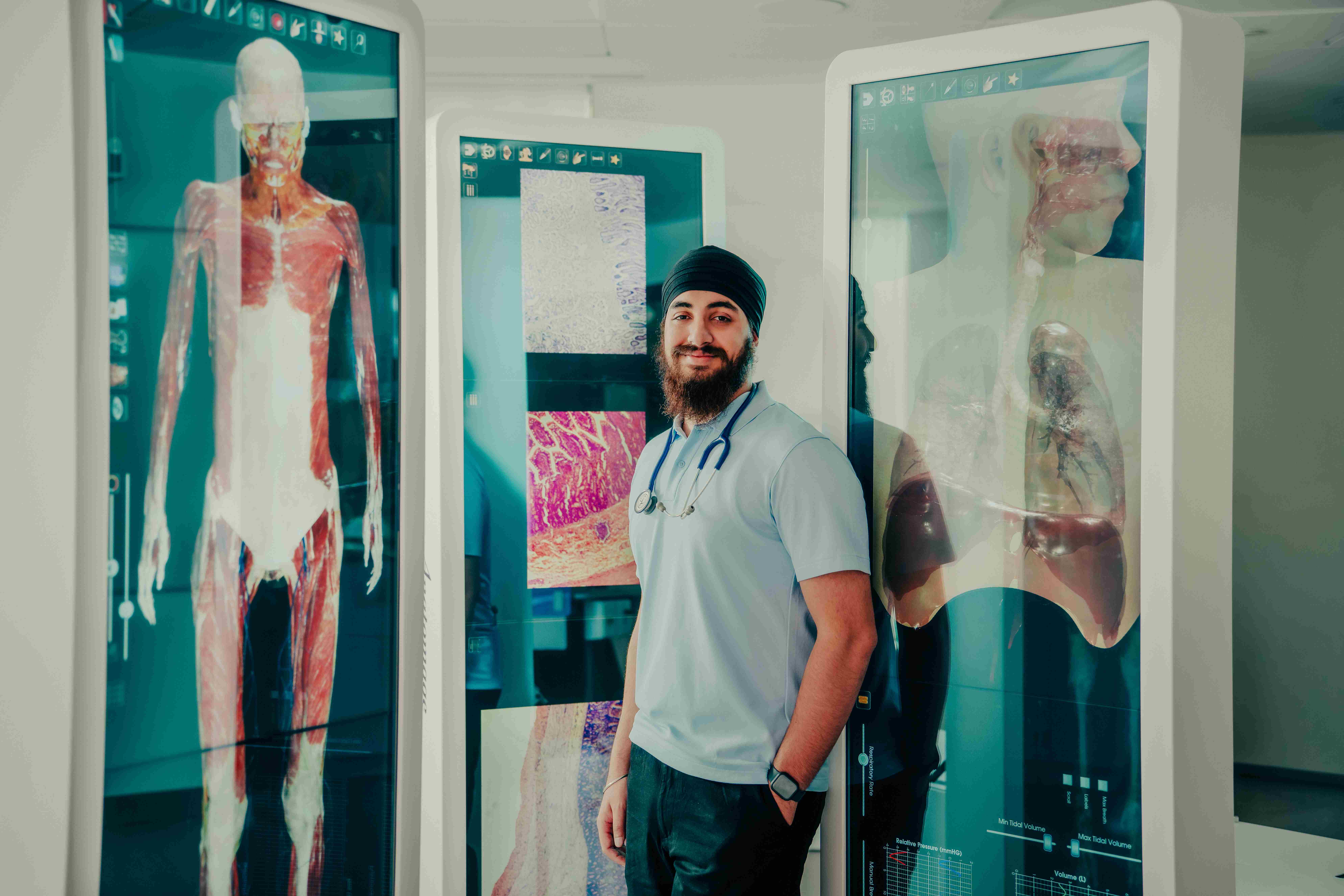
For Manroop Phagura, community has always been closely tied to a sense of belonging.
Phagura teamed up with his former school teacher, the community programming advocate who first introduced him to basketball, to create the same sense of community for young people in his hometown of Brampton.
His answer was HoopHouse.
Phagura transformed a warehouse into two basketball courts, creating a place where young people could play, take classes and join leagues. The space was designed to make sport more accessible while providing a safe after-school environment where young people could stay active, connect with their peers and build relationships within their community.
During the COVID-19 pandemic, Phagura saw another side of the challenges facing his community.
While volunteering at vaccine clinics, he encountered immigrant and older patients who were anxious and had questions about their care. He noticed that some were more comfortable approaching him because he shared their language and cultural background.
“The patients that reminded me of my grandparents were always more comfortable approaching me—someone who shares their language and their culture,” Phagura said. “It showed me firsthand the value of cultural competence and representation.”
The experience reinforced something he had already begun to understand: representation can affect how comfortable patients feel seeking and receiving care.
With a bachelor’s degree in Kinesiology from University of Waterloo and a growing interest in prevention and community health, Phagura saw medicine as a way to combine his academic interests with his commitment to serving others.
“I want to commit myself to serving Brampton,” he said. “People should have access to doctors and a health-care system that speaks their language.”
Staying in Brampton was important to Phagura when he considered where to study medicine. TMU’s focus on the communities of Peel Region, and its proximity to the people he has spent years supporting, made it his top choice.
For Phagura, choosing TMU was a slam dunk: he could stay close to home, stay connected to his community and prepare for a career serving the people who shaped him.