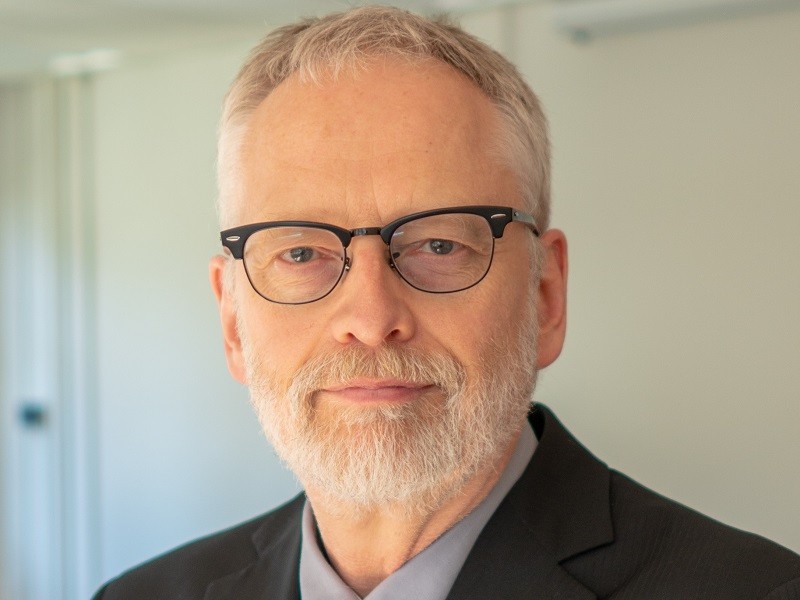
Daniel Hiebert
Visiting Toronto Metropolitan University
Fall 2026
Research focus while a Global Migration Institute Scholar
While visiting Toronto Daniel Hiebert will pursue two areas of research. This includes, first, a study of global demographic transition and its consequences for Canada. We are already past the age of ‘peak children,’ and the global workforce will begin to shrink in approximately one generation. This process is highly uneven, with sharp differences between what could be called the ‘fast’ and ‘slow’ worlds. What does this mean for Canada’s engagement with the world – especially in the areas of immigration, trade, and international assistance? His second project will be more grounded in Canadian cities and will investigate the socioeconomic integration of immigrants who live in different kinds of residential settings (i.e., primarily mono-ethnic vs cosmopolitan neighbourhoods).
Career Achievements
Daniel Hiebert is Professor Emeritus of Geography at the University of British Columbia, specializing in issues of public policy. His research interests include immigration policy, the integration of newcomers into the housing and labour markets of Canadian cities, and the consequences of the growing ‘super-diversity’ of Canadian society. His work often involves collaboration with partners in government and non-government organizations. From 2003 to 2013, Daniel served as Co-director of Metropolis British Columbia, a Centre of Excellence fostering research on immigration and cultural diversity in Canada, which was also dedicated to building a community among academics, government officials and practitioners from the non-profit sector. He has participated in a number of public advisory roles, serving as Co-chair of the City of Vancouver Mayor’s Working Group on Immigration (until 2017) and currently as a member of the Advisory Council to the Deputy Minister of Immigration, Refugees and Citizenship Canada, and is on the Advisory Board of the Transatlantic Council on Migration. He recently stepped down from the role of Academic in Residence at Immigration, Refugees and Citizenship Canada, where he participated directly in the development of immigration policy.
His interactive project mapping superdiversity can be found here www.superdiv-canada.mmg.mpg.de (external link) .
Relevant Publications
Hiebert, D. (2025). Balancing Canada’s population growth and ageing through immigration policy (external link) . C.D. Howe Research Commentary.
Hiebert, D. (2025). ‘Fast’ vs. ‘slow’: How different immigration rates can impact Canada’s economic challenges and regional disparities (external link) . C.D. Howe Research Commentary.
Bragg, B., & D. Hiebert. (2022). Refugee trajectories, imaginaries, and relaities: Refugee housing in Canadian cities (external link) . Canadian Journal of Urban Research 31(1) 16-32.
Vertovec, S, D. Hiebert, P. Spoonley & A. Gamlen. (2022). Visualizing superdiversity and “seeing” urban socio-economic complexity, Urban Geography, DOI: 10.1080/02723638.2022.2151753 (external link)
Hiebert, D. (2019). The Canadian Express Entry system for selecting economic immigrants: Progress and persistent challenges (external link) . Washington, D.C.: Migration Policy Institute.