
What is ACS?
Toronto Metropolitan University’s Arts and Contemporary Studies (ACS) program is an interdisciplinary four-year undergraduate degree that brings together the humanities and social sciences to help students understand and engage the contemporary world. Through three concentrations — Anthropology, Culture and Media Studies, and Global Studies — ACS combines critical inquiry with applied learning and skills development.
ACS is designed to:
- Explore culture, media, society, and social change through interdisciplinary perspectives;
- Build skills in critical thinking, communication, collaboration, research, and creative problem-solving;
- Develop cultural, historical, and social awareness in both Canadian and global contexts;
- Engage issues related to identity, equity, representation, community, and public life;
- Move from foundational learning to advanced capstone experiences and applied research;
- Offer the flexibility to pursue diverse academic and career interests; and,
- Prepare students for a wide range of careers, graduate studies, and future pathways in a rapidly changing world.
Opportunities available to join the Faculty of Arts paid co-op program.
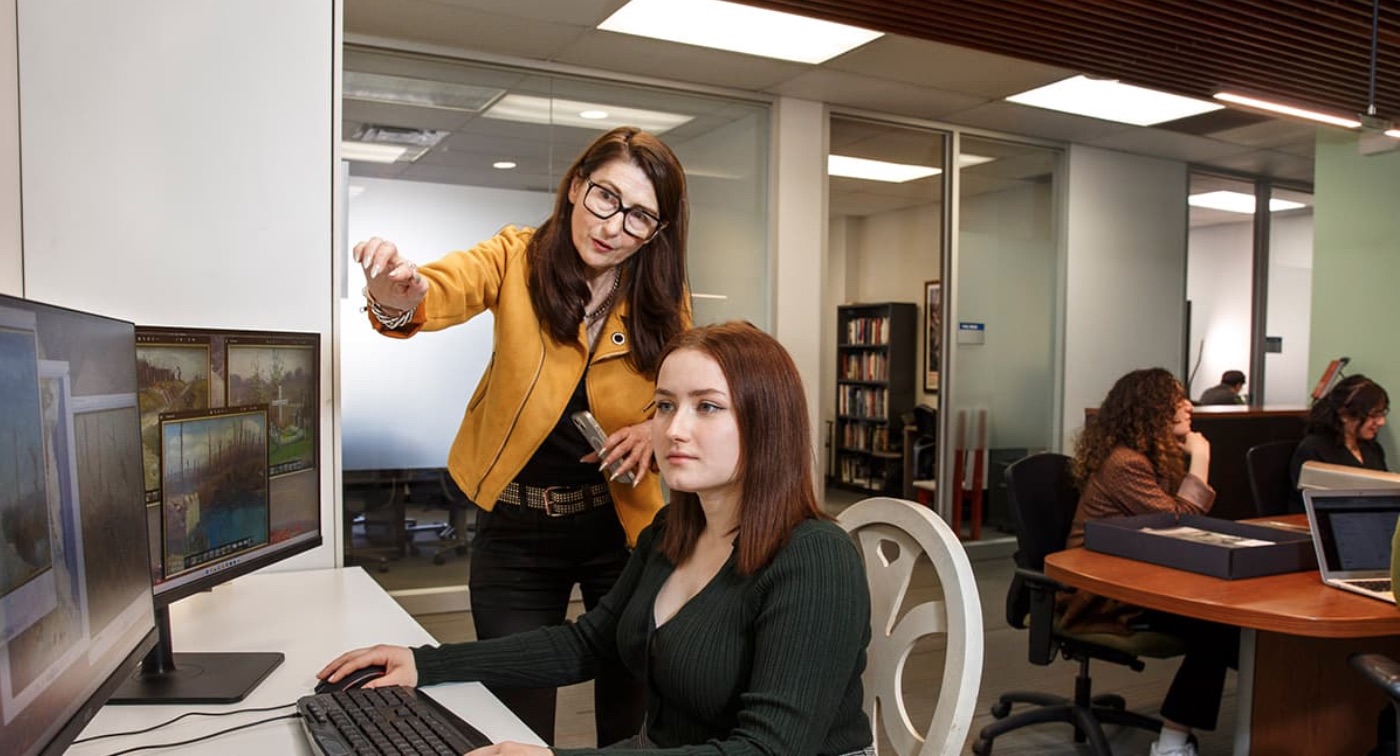
Interested in an interdisciplinary undergraduate education that combines the humanities and social sciences with contemporary skills development? Arts and Contemporary Studies (ACS) offers a dynamic program that balances critical inquiry with applied learning and real-world relevance.
Through its core interdisciplinary curriculum and three concentrations — Anthropology, Culture and Media Studies, and Global Studies — ACS encourages students to engage critically with culture, media, identity, society, and social change while developing practical and transferable skills.
Students build strengths in research, communication, collaboration, analysis, and creative problem-solving through a carefully structured progression from introductory courses to advanced capstone experiences. Along the way, ACS students gain a deeper understanding of historical and contemporary issues shaping local and global communities while preparing for diverse career paths and future opportunities.
Our Program

In a set of common courses in the first years of the program, you study influential ideas, cultures, and social debates from antiquity to the present. Courses such as Canadian Cultural Perspectives, Global Cultural Perspectives, Introduction to Diversity and Equity, Conflict Resolution, and Business Ethics are interconnected in ways that challenge and expand your understanding of what it means to live as an individual, a citizen, and a member of a complex global society.
You engage with thinkers, writers, artists, and social critics from a wide range of historical periods and cultural traditions, while drawing connections among philosophy, literature, politics, history, science, media, ethics, and contemporary social issues. Alongside interdisciplinary inquiry, students also explore areas such as digital technologies, research design, Indigenous studies, culture studies, anthropology, and global studies.
Skills Development
In other core courses in the first two years of the program, you develop skills essential to today’s workplace. You will hone your ability to read precisely and critically with an understanding of language and its histories; communicate effectively in speech and writing; design, implement, and evaluate research projects; think critically and creatively; mediate conflict; work collaboratively in teams; and develop strategies for lifelong learning.
Choose Your Concentration
A Concentration is a structured plan of study within the program that allows students to pursue in-depth study in a specific area of interest. Courses are selected from Core Elective Table II. Students who choose to complete a Concentration must declare it prior to applying to graduate, typically at the end of Winter term in Year 2.
- Concentrations are optional.
- Students who do not complete a Concentration may select any course from Core Elective Table II, including those listed within concentration areas.
- Courses used toward a Concentration cannot also be used toward a Minor.
- Students may select only one optional Concentration from the list provided in Core Elective Table II.
This concentration examines the study of anthropology in its attempts to understand the human experience, past and present, using holistic, comparative, and field based evolutionary perspectives and practices. Students will earn a strong base in anthropological history, theory and methods as well as acquire important skills allowing them to conduct research and analysis in the mode of an anthropologist, examining and interpreting the immediate world around them.
Students must complete eight (8) courses as follows:
REQUIRED:
- ANT 100 Introduction to Anthropology
One (1) of the following:
Six (6) of the following:
- ACS 106 Introduction to Language
- ANT 200 Decoding Culture
- ANT 306 Language, Culture, and Power
- ANT 900 Anthropology Capstone
- BLG 143 Biology I
- BLG 144 Biology II
- HIS 501 Archeology and Material Culture
- HIS 502 Life Stories: Oral History
- HIS 755 Themes in Material Culture
- LIR 200 Critical Practices in Intercultural Relations
- LIR 300 Intercultural Negotiations
- LIR 400 Ethnographic Practices
- SEM 101 Sign, Sense and Meaning
- SEM 301 Cognitive Semiotics
Students examine the forms of cultural expression that have become a measure of who we are and who we dream of becoming. They explore cultural identity through both high culture and popular entertainment.
Students must complete eight (8) courses as follows:
REQUIRED:
- ACS 302 Introduction to Culture and Media Studies
Seven (7) of the following:
- CHS 504 Chinese Cultural Traditions
- DST 509 Disability, Arts and Culture
- ENG 142 Black Arts, Black Power
- ENG 515 Madness in Fiction
- ENG 611 Film and Literature
- ENG 620 Literatures of the Caribbean
- ENG 623 Film/Literature: Middle East, North Africa
- ENG 647 Afrofuturism
- FRE 302 French Food, Wine and Hospitality
- FRE 303 French Fashion
- FRE 505 Language and Culture I
- FRE 605 Language and Culture II
- HIS 392 African Canadian History
- HIS 462 Intro to the Islamic world
- HIS 615 Film, Television and 20th C History
- HST 219 Decolonization: History Through Film
- HST 375 LGBTQ2S+ Histories
- HST 430 Food History
- HST 658 Sex in the City
- LIR 208 Skateboarding as a Cultural Bridge
- LIR 302 Food Language and Culture
- MUS 503 Social Issues in Popular Music
- MUS 505 History of Pop Music
- NPF 571 Introduction to Museum and Gallery Studies
- PHL 220 Introduction to Africana Philosophy
- PHL 320 Queer Theory
- PHL 710 Philosophy and Film
- POG 331 Politics and Cinema
- PSY 802 Death, Dying and Bereavement
- PSY 813 Psychology of Art and Creativity
- REL 101 Introduction to World Religions
- SOC 221 Hip Hop Lens on Society
- SOC 320 Black Popular Culture
- SOC 350 Queer Sociology
- SOC 505 Sociology of Sport
- SOC 525 Media and Images of Inequality
- SPN 504 Spanish Language and Culture through films
This option explores the often volatile mix of global issues and perspectives, environmental concerns and corporate interests that drive contemporary society and culture at a time when global transformations are transcending political boundaries.
Students must complete eight (8) courses as follows:
REQUIRED:
- ACS 402 Introduction to Global Studies
Seven (7) of the following:
- ECN 503 Economic Development
- ECN 511 Economy and Environment
- ENG 942 Decolonizing Literature
- GEO 206 Regions, Nations and the Global Community
- GEO 811 Global Environmental Issues
- HIS 265 Asia: Foundations and Modern Nations
- HIS 350 The Fight for Rights in North America
- HIS 475 Human Rights in Global History
- HIS 490 International Relations from 1945
- HIS 696 History of Terrorism
- HIS 760 The African Diaspora
- HIS 845 Canada in the International Sphere
- HST 540 Espionage: A Modern History
- PHL 570 Black Political Thought
- POG 323 Politics of International Development
- POG 370 Politics of Global Migration and Inequality
- POG 426 Global Conflict and Peace
- POG 431 Power, Domination and Resistance
- POG 443 Global Urban Politics
- SOC 474 Immigration, Borders and Belonging
- SOC 530 Blackness and Freedom
Applying Your ACS Degree
ACS graduates pursue careers in education, media and communications, public relations, marketing, cultural and creative industries, community and non-profit organizations, public service, research, and business. Many students also continue into graduate and professional programs, including education, law, media studies, cultural studies, and the social sciences.
Many ACS students are interested in teaching, and the program’s flexible interdisciplinary structure allows students to combine courses that support applications to B.Ed. programs and other professional pathways.
Through concentrations in Anthropology, Culture and Media Studies, and Global Studies, ACS students tailor their studies to their intellectual and professional goals while developing transferable skills in research, communication, critical and creative thinking, collaboration, and problem-solving.

ACS Alumni Pathways

Arts and Contemporary Studies graduates build careers across entrepreneurship, arts leadership, media, philanthropy, wellness, publishing, communications, education, and the creative industries. An ACS degree develops adaptable skills in critical thinking, communication, creativity, research, and collaboration that translate across many professions.
Apply to ACS
Ready to get started? Apply to ACS, a Bachelor of Arts Honours Degree here at TMU.