The Reality and Implications of Supply Chain Transparency and Small Businesses
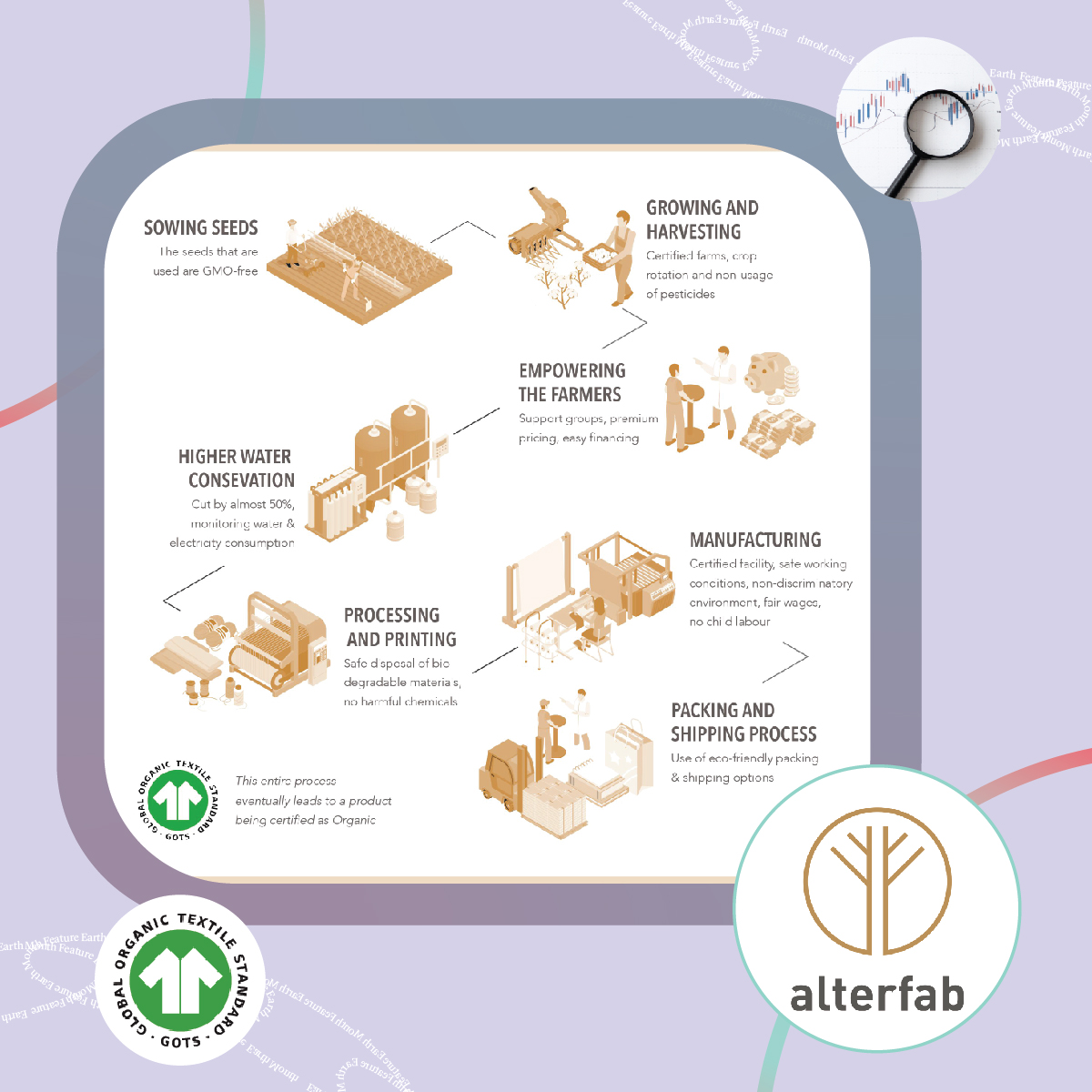
Sustainability and promoting eco-friendly practices is something we do year round, but this month on July 3 is International Plastic Bag Free Day! In celebration of this day, we highlighted one of our members, Alterfab (external link, opens in new window) , which makes eco-friendly and sustainable products such as bags, totes, cosmetic pouches, and much more!
The additional procedures and practices that are necessary for one to be a sustainable business are a massive challenge for founders and business owners. In this article, we specifically dive into sustainability in the context of supply chain transparency, and why businesses need to start taking it seriously..
In this article, we focus on 3 aspects that are changing:
- The Consumers
- The Companies
- The Practices
But first, what do the consumers think?
The Consumers
Globally, we’ve witnessed a vast increase in value-driven shopping, reflecting a shift in mindsets and a change in attitude among various consumer segments, many of whom had more time to think about the brands they lent their loyalty to. The Global Ethical & Sustainable Fashion Market has exploded - reaching 8.25B in 2023 - an increase of +10% (external link) , which outpaces other industries.
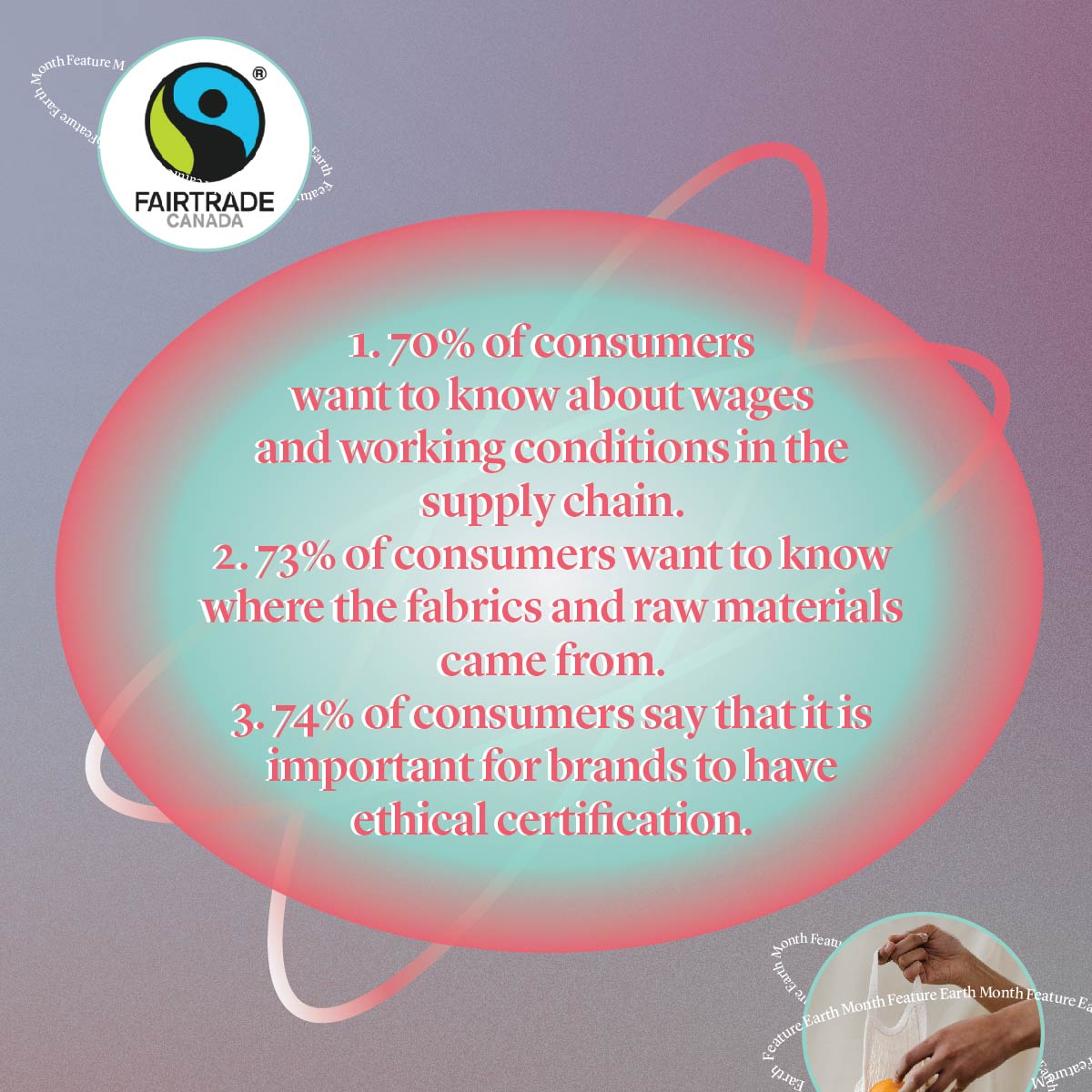
Consumers are increasingly valuing and demanding supply chain transparency and sustainability. Helen Reimer (external link) , manager at FairTrade Canada (external link) , shared that:
- 70% of consumers want to know about wages and working conditions in the supply chain.
- 73% of consumers want to know where the fabrics and raw materials came from.
- 74% of consumers say that it is important for brands to have ethical certification.
Correspondingly, brands are beginning to publish their suppliers’ lists. (external link, opens in new window)
The Companies
We are seeing directly in our membership the growing interest and commitment from companies to have a sustainable focus. At the Fashion Zone, we help our members drive real and progressive social, environmental, and economic impact. In 2020, 32% of Fashion Zone teams looked at their business through a social and/or environmental lens, a metric that was accelerated by a year defined by crisis. Now, 56% percent of Fashion Zone companies put sustainability at the heart of their business model. Needless to say, the rise of purpose-driven brands is a trend we are witnessing live in the Zone.
One of our members, Aamir Malkani (external link) , founder of Alterfab (external link) , are one of these experts.

Driven by a respect for the ecological and social aspects of design and production, Aamir Malkani founded Alterfab with an aim to be a net positive impact business. Alterfab specializes in custom design and manufacturing of eco-friendly and sustainable products such as bags, totes, cosmetic pouches, etc. Coming from a manufacturing background, where Aamir's family owns one of India's largest manufacturing (external link) units of eco-friendly products, Aamir has the inside scoop on what it takes to set up an authentic and certified supply chain.
Aamir has guided participants to the OEKO-TEX buying guide (external link) . There are quite a few certification (external link) bodies out there. In addition, sourcing certified fabrics is something manageable for small upcoming brands. Rather than being certified yourself, try utilizing certified materials in your garment. For instance, one can consider getting B-Corp certified when scaling or brands can consider deadstock. There are a lot of ways to be sustainable, the key is to be transparent, honest and authentic in what you are doing!
The Practices
We spoke with Dr. Anika Kozlowski (external link, opens in new window) on their thoughts on supply chain transparency. Dr. Kozlowski is an advisor at the Fashion Zone. Their research includes studying the design and business practices of emerging small-scale sustainably-minded fashion brands which have led to the creation of the ReDesign Tool. Dr. Kozlowski has also launched the ReDesign Lab, a studio–lab hybrid with the intention of cross-pollinating science with design practices for innovative solutions for sustainable fashion.
“Certifications are an excellent tool in creating accountability and improving conditions along the supply chain. However, they have their limitations especially when it concerns micro-small enterprises (MSE). Certifications are tools well-suited for big business, as many are behind paywalls where cost becomes a barrier for MSEs (e.g. B- Corp (external link, opens in new window) , ISO (external link, opens in new window) or LEEDS (external link, opens in new window) ). Certifications typically require extensive documentation and time, adding additional tasks to an already overloaded design entrepreneur. Even the use of certified materials adds additional costs for an MSE who pays far more for fabric already as they are unable to take advantage of economies of scale. Certifications can also be limiting, as an organization will only ever improve to the standards required by the certification. In my research, I have found that most MSEs have very close relationships with the stakeholders within their supply chain, thereby rendering the use of a certification mute. They have these close relationships as MSEs often produce locally, spending significant time in the factories. Certifications are primarily used by large organizations who cannot physically be there to ensure safe and ethical working conditions and processes. It is far more productive for MSEs to focus on other aspects of sustainability that are more accessible and resonate with them by aligning with their values.
Fashion is optimized for big businesses which creates many challenges for MSEs, especially in terms of access to novel sustainable materials and environmentally-friendly innovations. Barriers to access include high minimum order quantities (MOQ) on materials, increased costs and proprietary rights. Innovations in processes (e.g. Dyecoo waterless dyeing) and materials (e.g. Mycoworks) are often expensive to develop and can be developed in partnership with large firms. These firms then gain proprietary access, such as Nike (external link, opens in new window) was able to do as a major investor into Dyecoo technology (external link, opens in new window) . This is why it is unproductive for MSEs to try and compete with larger firms using the same tools, processes and materials. MSEs have their own set of strengths because they already work with embedded value systems that prioritize social and environmental wellbeing, and frankly, do not need the tools used by larger companies. MSE’s have already surpassed the strategies and tools used by the Nikes and H&M (external link, opens in new window) ’s of the world due to their value systems, stakeholder relationships and small-scale networks. Small is beautiful in its own right.”
There is no doubt that sustainability is and remains one of the top problems facing our world. Guiding innovators to work through the opportunities they represent is at the heart of what we do at the Fashion Zone. To learn more, subscribe to our newsletter (external link) .