Internal Medicine

Virtual Information Sessions: The TMU Internal Medicine Program invites you to attend one of our upcoming virtual info sessions to learn more about the program and have any questions that you may have answered. The info sessions will be approximately 45-60 minutes and will be held on the following dates:
- Thursday, October 15, 2026 at 12:00 p.m. ET – Register now (external link)
- Tuesday, November 10, 2026 at 12:00 p.m. ET – Register now (external link)
Program information
The Toronto Metropolitan University School of Medicine's Internal Medicine Residency Program received accreditation from the Royal College of Physicians and Surgeons of Canada in October of 2024.
TMU’s Internal Medicine residency program will train well-rounded specialists with the knowledge and skills to effectively diagnose and treat diseases affecting various organ systems. Through clinical, community, and interdisciplinary training opportunities covering the full scope of care, residents will learn to meet the evolving needs of patients with complex, multi-system diseases. Residents will join a structured, safe environment fostering communication and collaboration and emphasizing inclusive care for diverse populations.
Faculty:
School of Medicine
Program Format:
Full Time: 3 years
Program Director:
Dr. Hamzah Qureshi
Board Eligibility:
Internal Medicine RCPSC
Accreditation:
RCPSC (October 2024)
Application Deadline:
November 26, 2026 at 12 p.m. ET
Contact Us:
pgme.im@torontomu.ca
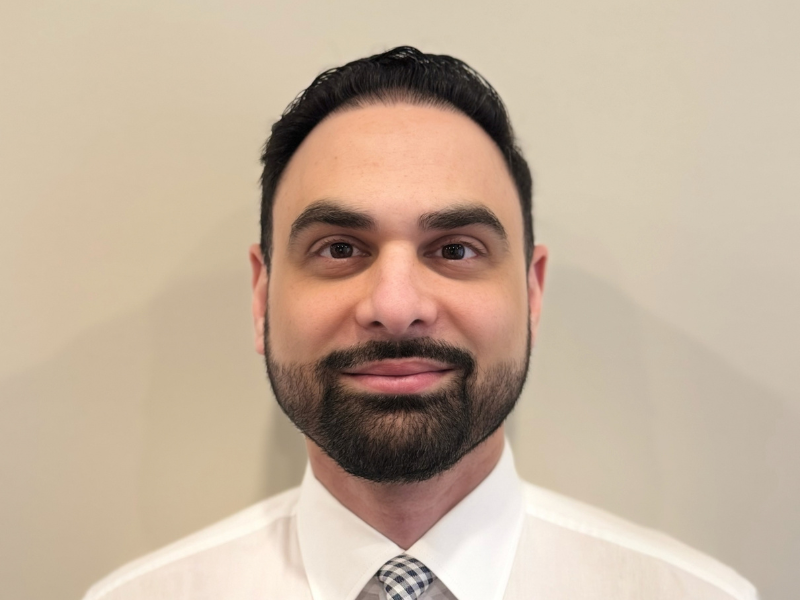
Dr. Hamzah Qureshi
Program Director, Internal Medicine
hamzah.qureshi@torontomu.ca
Dr. Hamzah Qureshi is a general internal medicine physician at William Osler Health System, practising at Brampton Civic Hospital and Peel Memorial Centre. He completed his medical training at the University of Toronto and has a special interest in acute care medicine, ambulatory medicine and medical education.
- Facilitates development of broad range of skills through exposure to range of subspecialty areas
- Integration of subspecialty and elective experiences to cultivate residents' interests in different areas of medicine
- Additional rotations in acute care medicine to prepare residents for work in rural settings and community healthcare environments
- Unique Leadership, Education, Advocacy, Research, and Non-Clinical (LEARN) Time program enables residents to tailor their learning experiences and launch their careers
Sample Rotation Schedule
Transition to Internal Medicine
- 4 weeks: Clinical Teaching Unit (CTU)
- 4 weeks: Emergency Room Consults (ERC)
- 4 weeks: Emergency Medicine
Foundations of Internal Medicine
- 4 weeks: CTU
- 4 weeks: ERC
- 8 weeks: Cardiology
- 4 weeks: Nephrology
- 4 weeks: Ambulatory Clinic in Medicine
- 4 weeks: Infectious Diseases
- 4 weeks: Cardiac Critical Care Unit (CCU)
- 4 weeks: Critical Care Medicine/Intensive Care Unit (ICU)
- 4 weeks: Respirology
- 4 weeks: Gastroenterology
- 4 weeks: Elective
Core of Internal Medicine
- 16 weeks: Senior Medical Resident (SMR) on CTU
- 16 weeks: SMR on ERC
- 8 weeks: Ambulatory Clinic in Medicine
- 4 weeks: Internal Medicine Consult Service
- 4 weeks: Community-Based General Internal Medicine
- 12 weeks: Critical Care Medicine/ICU
- 4 weeks: CCU
- 4 weeks: Hematology
- 4 weeks: Neurology
- 4 weeks: Endocrinology
- 4 weeks: Geriatrics
- 16 weeks: Elective
Transition to Practice
- 52 weeks: Longitudinal Clinic in Internal Medicine
- 4 weeks: Junior Attending Medicine Consults
- 4 weeks: Critical Care Medicine/ICU
- 4 weeks: Junior Consult Role - CTU
- 8 weeks: Community-Based Internal Medicine
- 4 weeks: Ambulatory Clinic
- 4 weeks: Perioperative clinic
- 24 weeks: Elective
Foundational Curriculum
Our comprehensive, competency-based Foundational Curriculum covers diverse areas including equity, diversity and inclusion in medical care, research strategies, communication skills and patient safety. Our unique LEARN Time program also offers individualized time, space and resources for residents to focus on areas of specialized interest.
Residents who complete TMU’s Internal Medicine Program will be eligible to complete the Royal College examination in Internal Medicine.
Eligibility Criteria
Candidates must be Canadian, United States, or international medical students or graduates who have obtained, or are in the process of obtaining, a medical degree from an acceptable medical school by July 1 of the match year.
Candidates must meet both the CaRMS R-1 Main Residency Match basic eligibility criteria (external link) and the Ontario-specific criteria (external link) in order to apply.
Program-specific application requirements, including personal letters and reference documents, are outlined in the program descriptions linked in the “How to Apply” section of this page.
Citizenship
Candidates must be Canadian citizens, permanent residents, or protected persons (convention refugees) under the Canadian Immigration and Refugee Protection Act at the time of application, with the exception of Citizens of Indigenous nations, where Treaties allow individuals to work and train across the USA-Canada border, are eligible to undergo postgraduate medical training in Canada.
Transfers or Re-Entry
- All Candidates that have previous postgraduate training in the United States or Canada which would be creditable for Royal College of Physicians and Surgeons of Canada or College of Family Physicians of Canada certification are not eligible for the first iteration of the R-1 match. National Transfer Guidelines (external link) can be found on the Association of Faculties of Medicine (AFMC) website.
- Physicians in practice in Canada or the United States are not eligible for the R-1 match in Ontario. Physicians who have been in full-time practice in Canada for a minimum of 12 consecutive months who are interested in residency training at TMU may apply through the Ontario Ministry of Health’s Physician Re-Entry Program (external link) .
Residents will train at four sites with whom TMU has clinical affiliations. These sites serve diverse adult patient populations with widely varying health histories and life experiences.
William Osler Health System (WOHS) (external link) includes Brampton Civic Hospital, Peel Memorial Centre for Integrated Health & Wellness and Etobicoke General Hospital. WOHS serves a diverse multicultural population of over a million Ontarians and operates among the busiest emergency departments in Canada.
Trillium Health Partners (external link) includes Mississauga Hospital, Credit Valley Hospital and Queensway Health Centre.
Headwaters Health Care Centre (external link) operates an acute and complex care facility.
Halton Healthcare (external link) includes Georgetown Hospital, Milton District Hospital and Oakville Trafalgar Memorial Hospital.
Additional major training sites may be added for core program rotations.
How to Apply
Applications to the Internal Medicine Program must be submitted through the Canadian Resident Matching Service (CaRMS) R-1 Main Residency Match (external link) by the application deadline in order to be considered.
- Visit our program description pages for detailed application requirements and to apply.
- Please refer to the CaRMS R-1 Match Applicant Timeline (external link) for important dates and deadlines.
- Note: All applicants will receive a notification on the “Interview Offer Status” page in their CaRMS Online account indicating whether they have been selected for an interview. TMU will also send email invitations directly to applicants who are selected for an interview.
Program descriptions for Canadian Medical Graduates (CMGs) and International Medical Graduates (IMGs) are linked below.