Changing the conditions for better diabetes care
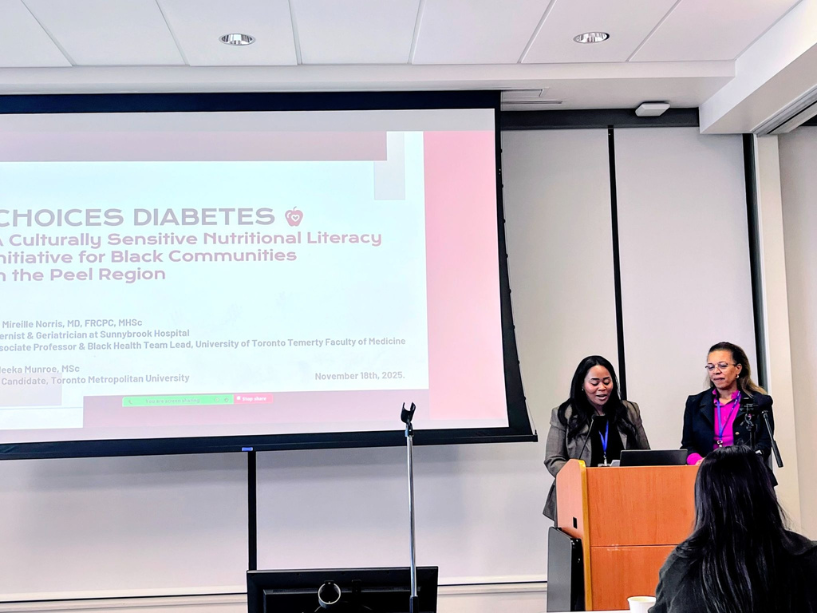
Good health advice only works if patients can follow it. For second-year medical student Maleeka Munroe, that means looking beyond a diagnosis to understand the circumstances that shape a person’s health.
Through research into diabetes care and health outcomes, Munroe is exploring how culture, access to resources and the health-care system affect patients long before they enter an exam room.
Healthier CHOICES for managing diabetes
Munroe knows that healthier living is about more than personal choices. Access to the right information and resources can make all the difference.
“A lot of emphasis gets put on educating marginalized communities,” said Munroe. “But sometimes, it has nothing to do with education, it has to do with access.”
That understanding drew her to CHOICES, an online diabetes education program for Black people living with diabetes in Peel Region. The program offers culturally-informed guidance on managing diabetes through food choices that reflect the traditions that are important to many Black communities.

The need is clear: Black adults in Canada are nearly twice as likely (external link) as White adults to report having diabetes, according to the Public Health Agency of Canada.
“Diabetes is a lifestyle kind of condition,” said Munroe. “This program helps people better manage their diabetes while still being able to have the foods that they hold close to their heart. That’s why I am so grateful to support the CHOICES program.”
Munroe has a long-standing interest in chronic disease management. Her studies at TMU have deepened her technical understanding of how social conditions, including income and access to care, can affect a person’s ability to manage a long-term illness. TMU's School of Medicine also helped recruit participants for the CHOICES study, linking the research to patients receiving care at the university’s Integrated Health Centres.
The pipeline shapes health outcomes
Munroe’s interest in the social conditions that affect health extends beyond diabetes management.
This past summer, Munroe took part in the SRCI’s Dean’s Summer Projects, working with principal investigator Dr. Herbert Brill to study the link between gestational diabetes in mothers and hypoglycemia in infants.
The project also gave Munroe an opportunity to consider the broader factors that can affect maternal and infant health, such as family history, access to preventive care and the social conditions people face.
By studying the circumstances that lead to a diagnosis, researchers can better understand where changes may have the greatest impact. Changes, Munroe says, she has already begun to witness early in her research and medical career.
Big changes start with individual patients
The challenges facing today’s health-care system can feel overwhelming for a medical student preparing to enter the profession. Munroe says there is much she wants to achieve, but she also recognizes that lasting change takes time.
She sees research as one way to help move that change forward. Through projects such as CHOICES and her summer research, she is learning more about the barriers patients face and the changes that could make care more effective.
"I want to be the kind of doctor that advocates for my patients and empowers them to manage their health effectively, without delay," said Munroe.
As she continues her medical training, Munroe is keeping both goals in view: improving the systems that shape health and providing compassionate care to the people those systems serve.