Behind the Mask: A Day in the Life of a General Internal Medicine Resident
In General Internal Medicine, no two days unfold the same way. And that’s exactly what drew Brandon Mitchell to TMU’s residency program.
The speciality, also known as GIM, puts a focus on the patient as a whole, treating a wide range of diseases involving organ systems. For future GIM specialists like Mitchell, it requires specialized training to handle complex cases that may involve multiple or overlapping health issues.
“It’s one of the newer subspecialties within internal medicine,” Mitchell explains. “The work that we do day-to-day is pretty wide ranging.”
Preparation is key
TMU’s General Internal Medicine residency program is a two-year subspecialty program for physicians who have already completed three years of core internal medicine training. Based primarily in large community hospitals across Brampton and the surrounding region, residents develop advanced expertise managing complex, multi-system illness in both hospital and outpatient settings.
For Mitchell, depending on the rotation, his day in the residency program often changes. One day he’s working at an outpatient clinic and another at a perioperative rotation, where he learns all about the preparation needed for both the patient and the care team before going into surgery.
“We’re seeing patients before surgery, reviewing their medical history and medications and making sure everything is optimized,” Mitchell said. “It’s all about making sure patients are safe and set up for the best outcome possible.”
Other days begin in urgent care clinics, where patients are referred from the Emergency Department but don’t need an admission to the hospital.
“It’s more investigative—you’re piecing together information, ordering tests and figuring out what needs to happen next,” he said. “You’re always on your feet.”
Teamwork at the heart of care
During in-patient rotations, particularly the Clinical Teaching Unit, the pace and responsibility shifts even further for Mitchell. That’s where he says residents often take on senior roles, overseeing junior learners and caring for up to 25 hospitalized patients at a time.
“You’re managing multiple issues at once,” said Mitchell. “It’s complex, but that’s what I enjoy—trying to fit the pieces together like a puzzle and trying to see the bigger picture in each patient’s case.”
Rounds often include collaboration with other health professionals, followed by teaching sessions or case discussions.
“Everyone I’ve worked with treats you like a colleague and teammate,” he said.
Learning through loss
Despite being only months into his residency, Mitchell has already taken in some tough lessons—including how to deal with the loss of a patient.
These moments often happen amid the busiest days, when decisions must be made quickly and compassionately. Rather than becoming desensitized to loss, Mitchell describes these experiences as moments to reflect.
“You’re balancing clinical judgment with empathy,” he said. “That’s something you can’t fully learn in textbooks. When a patient passes away, it makes you pause and reminds you that medicine isn’t just about diagnoses or treatment plans—it’s about people.”
At TMU’s School of Medicine, the GIM program’s culture holds space for reflection and growth. “The faculty and staff are truly supportive,” Mitchell notes. “It never feels hierarchical. There’s always room to talk about the hard parts of the job.”
In a small program, these conversations matter. Teaching sessions, student clubs and gatherings give residents like Mitchell a chance to connect – not just clinically, but personally.
Does TMU’s General Internal Medicine Residency Program sound like a good fit to you? Start your journey today.
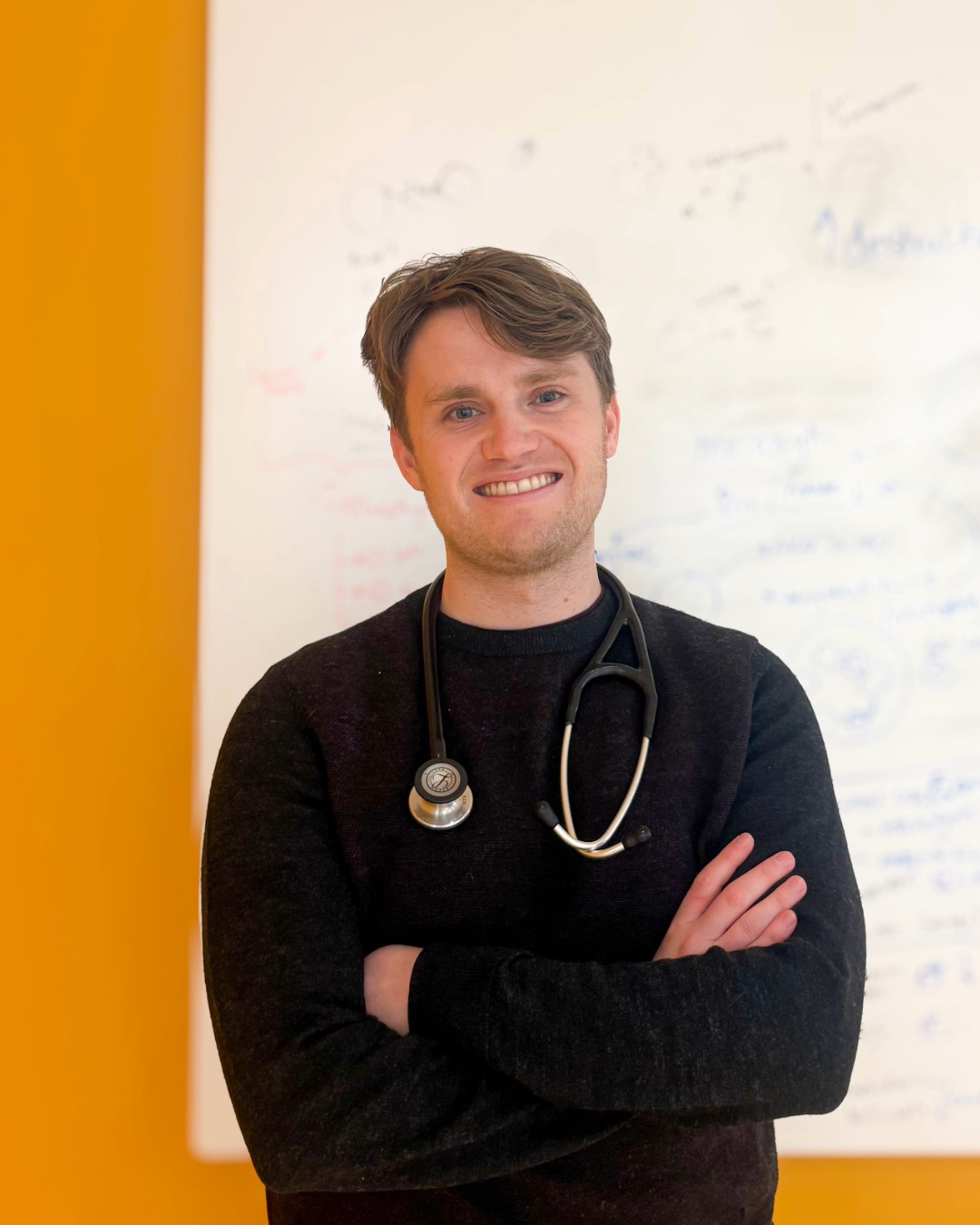
“You’re balancing clinical judgment with empathy. That’s something you can’t fully learn in textbooks.”