Programs overview
Explore programs
From the classroom to the real-world, build career-ready skills in geography and environmental studies.
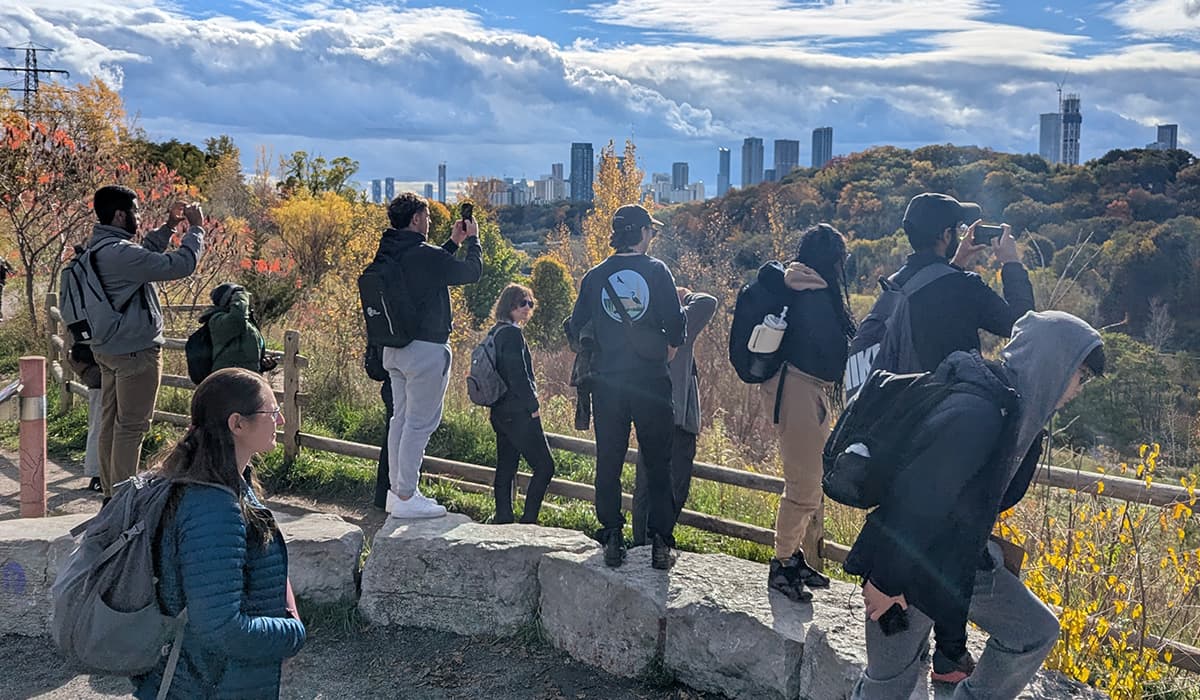
Passionate about social and environmental issues? Geography holds the keys to the future of our cities and how people interact with natural and built environments. The Department of Geography and Environmental Studies offers a range of programs to help you dive in and prepare for a career in this exciting field.

Environmental and Urban Sustainability (BA Honors)
This innovative program integrates social and natural sciences with applied and field-based approaches to solve environmental challenges while sustaining urban growth and development.
What you’ll study:
How to evaluate the effects of development on urban environments and populations, assess and address environmental challenges and understand the fundamentals behind effective conservation plans and policies.
Career paths:
Environmental consultant, sustainability manager, urban planner, policy analyst.
Skills you'll gain:
Policy analysis, systems thinking, stakeholder engagement and consultation, spatial literacy, field methods, data analysis and visualization.
Experiential learning:
Co-op* and internships available.
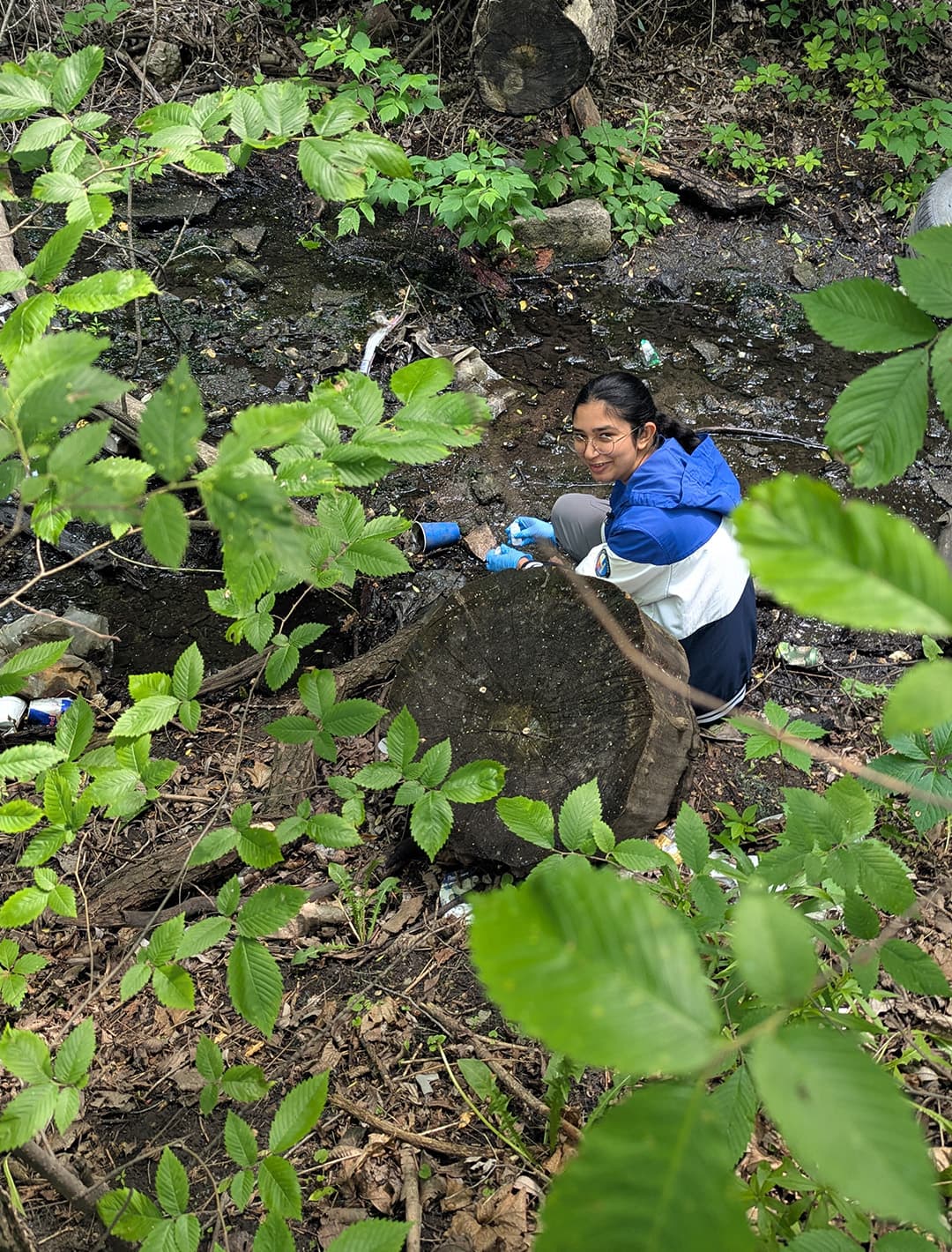
Geographic Analysis (BA Honors)
Explore the interconnections between people and their environments through observation and analysis, geotechnology tools, computer labs and lectures, and a full year of work placements.
What you’ll study:
Advanced techniques in geographic information systems (GIS), spatial statistics, data science, location analysis, and critical problem-solving.
Career paths:
GIS Analyst or specialist, location analyst, spatial data scientist, business intelligence analyst.
Skills you’ll gain:
Expert GIS proficiency, data management, analysis and visualization to support policy and business decisions using spatial and computational methods.
Experiential learning:
Mandatory work placement.

Master of Spatial Analysis (MSA)
A professionally oriented one-year program, or research intensive two-year program. The MSA provides a comprehensive skillset in spatial analyses and data management through case studies, GIS application in lectures and labs, work placement and a major research paper or thesis.
What you’ll study:
Advanced theory and applications in spatial data capture, management and analyses, how to design, execute and implement spatial data workflows for decision making, and more.
Career paths:
GIS analyst, spatial data manager, urban planner, environmental/conservation analyst, consultant, location intelligence officer.
Skills you’ll gain:
Geodatabase management, programming (Python/R), applied research and design, professional report writing and advanced spatial data mining.
Experiential learning:
Computer labs, work placement, major research paper or thesis.

The Geography and Environmental Studies department offers three Minors to explore as a secondary area of interest. Students can pursue any minor except their home program, which is usually noted as excluded in the calendar.
For example, Environmental and Urban Sustainability students cannot take the Environmental and Urban Sustainability minor, and Geographic Analysis students cannot take the Geography or Geographic Analysis minors.
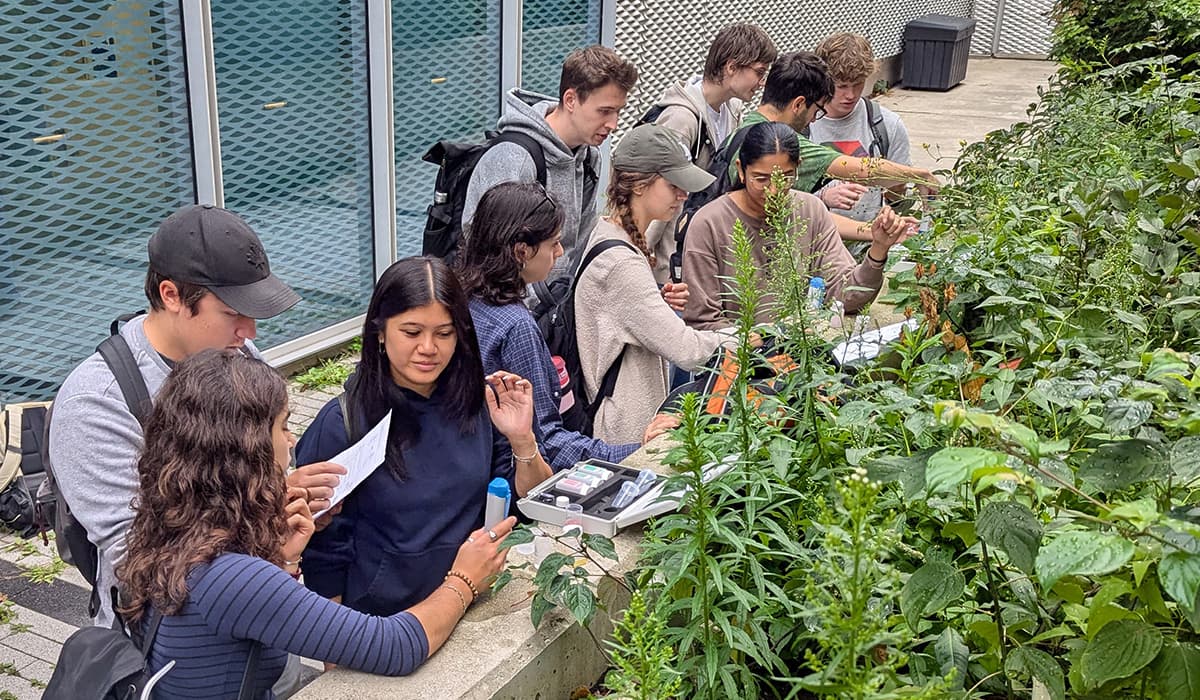
Minor in Environmental and Urban Sustainability
Develop analytical, critical thinking and decision-making skills while expanding your knowledge on resource management, urban natures and environmental sustainability.
Required courses:
EUS 102 Environment and Sustainability
EUS 202 Sustaining the City's Environments
Minor in Geographic Analysis
Location is everything. Learn how the principles of location intelligence and an understanding of spatial processes can help solve challenges of urban growth, economic development and environmental pressures.
Required courses:
GEO 151 Location, Location, Location
Minor in Geography
Expand your understanding of the vital connections and complex interrelationships between human populations and the natural and built environment.
Required courses:
GEO 131 Energy, Earth and Ecosystems
GEO 151 Location, Location, Location

Interdisciplinary programs combine perspectives from multiple fields to tackle complex, real-world challenges. Through research, active learning, and collaboration with faculty and outside partners, you’ll gain the skills and experience you need to build a career in the evolving environmental sector.
Environmental Applied Science and Management (MASc/PhD)
Find solutions to environmental challenges through experiential research supported by faculty, in social and natural sciences, engineering, public health, and more.
Policy Studies (PhD)
Designed for aspiring researchers, this program prepares graduates for positions in academia and at all levels of public and non-profit sectors in Canada and around the world.
Immigration and Settlement Studies (MA)
Explore transnational human mobility as it relates to the Canadian experience through trends in immigration, government policy, and settlement programs.
Communication and Culture (MA/PhD)
Study media and cultural technologies, communication politics, and develop an understanding of the processes and practices of media-immersed cultures. (Partnership with York University.)
Urban Health (PhD)
Combine the power of geography, spatial analysis and population-based research to examine and develop solutions that advance public and environmental health and the well-being of diverse populations.
Data Science and Analytics (MSc)
Develop interdisciplinary skills and gain a deep understanding of technical and applied knowledge in data science and analytics through lectures and active lab-based learning.
Certificate in Applied Digital Geography and GIS
From theory to practical GIS training, learn everything you need to accelerate your career or take advantage of new opportunities in this growing field.
Certificate in Crime Analysis
Study advanced crime analysis techniques to improve tactical and strategic decision-making in this experiential and pioneering certificate program.