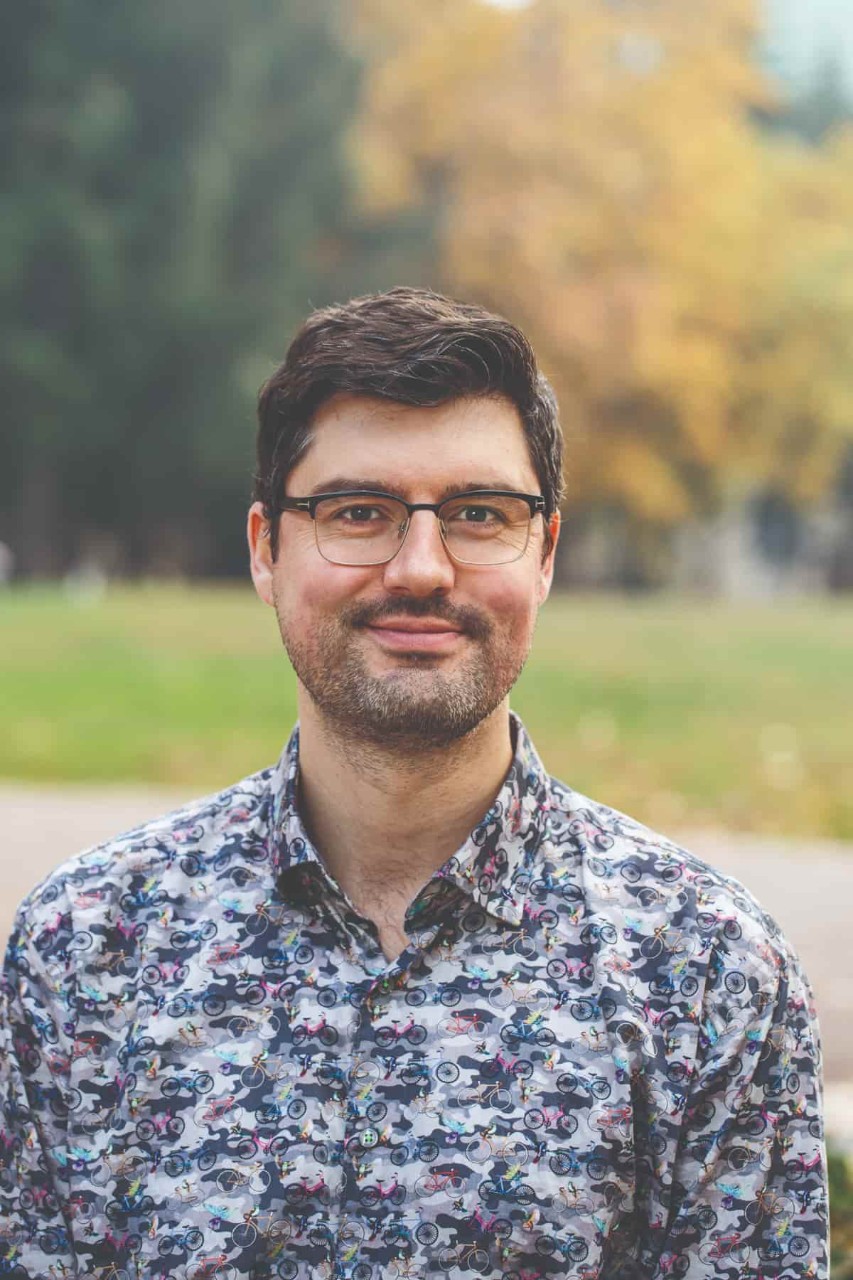
Prof. Christopher Wellen PhD
Research themes:
Dr. Wellen is an Assistant Professor with the Department of Geography and Environmental Studies at Ryerson University. Chris is an environmental scientist whose work focuses on the intersection of hydrology and biogeochemistry in human dominated environments. His work has focused on agricultural, urban, and surface mined areas, but the essential questions are typically: How do natural processes and human modifications to a watershed interact to transport water and materials? What are the effects on instream and downstream ecosystems, and how are these effects likely to change in the future?
Dr. Wellen received a PhD from the University of Toronto in 2013 focusing on comparing the phosphorus export dynamics of urban and agricultural watersheds. His postdoctoral work at McMaster University focused on the role of surface mining in affecting selenium release from watersheds. His subsequent postdoctoral work at the University of Waterloo focused on improving the numerical analysis of watershed data from agricultural systems. Dr. Wellen received an MSc in GIScience from McGill University and a BSc in Water Environments and Ecosystems from McGill University’s School of the Environment.
Follow Prof. Christopher Wellen
Additional Information
Christopher's research aims to produce knowledge that enables better management of water quality in urban and agricultural areas. Chris works across the land to lake continuum, from upland soils, through streams, to lakes, though his area of most expertise is the watershed. Recent pieces about my research program include this one about agricultural systems (https://theeyeopener.com/2021/10/rye-prof-receives-nearly-200k-for-research-on-how-farming-systems-affect-great-lakes-water-quality/) and this one about work in Lake Simcoe (https://thenarwhal.ca/lake-simcoe-road-salt-problem/).
Recipient of NSERC and OGS and several public sector grants from, e.g. Ontario Ministry of the Environment, Conservation, and Parks; Lake Simcoe Protection Plan; and Canada Water Agency