Retrofit Policy Support Tools
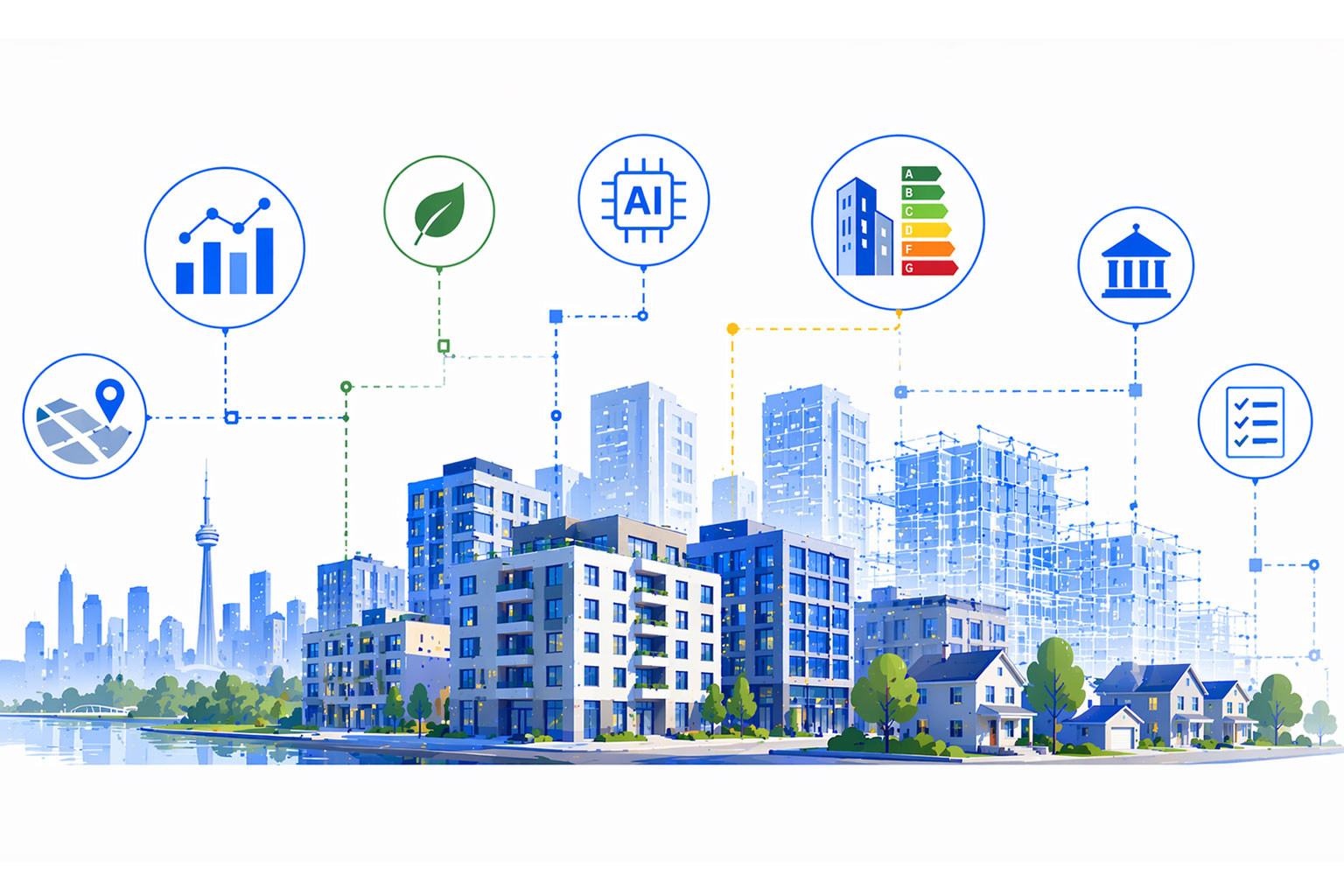

It has been estimated that as of March 2025, we needed to retrofit a building every 45 seconds to meet Canada’s decarbonization targets. This research theme explores how to leverage artificial intelligence, BIM/GIS, surrogate energy modeling, urban digital twins, and new Canadian reference building models to inform retrofit policy at the municipal and national scales.
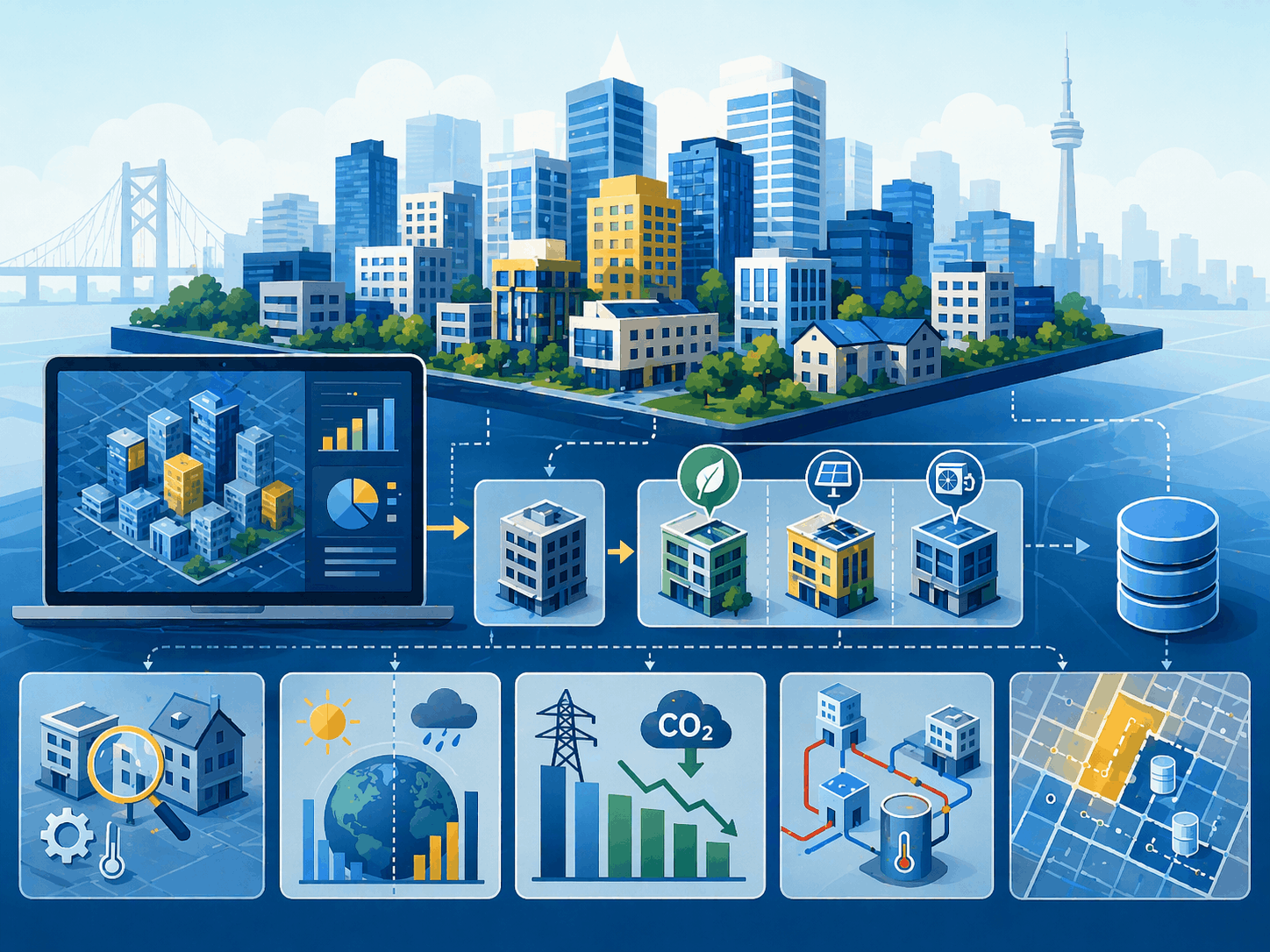
This two year Volt-Age seed project (external link) will develop a city-scale retrofit analysis tool that supports evidence-based decision-making. Focused initially on Montreal and Toronto, this sub-project is creating a more refined set of Canadian building archetypes; both existing building reference models and potential retrofits. The project will integrate them into an automated city-scale modeling workflow, and evaluate both lifecycle carbon and district energy impacts of the retrofits.
Key Outcomes
- Characterization of pre-2004 envelopes and HVAC systems to integrate with BTAP to expand the range of available existing building archetypes
- Identification of retrofit pathways for each characterized envelope and HVAC system
- Evaluation of future climate impacts on retrofit feasibility
- Studies exploring the impact of climate change and grid CO2 intensity on retrofits and TEN integration
- Preliminary TEN feasibility tool to identify potential heat recovery and building inclusion given storage limitations; we are continuing this development within the Community Energy Solutions (external link) project in partnership with Concordia University
Related Projects
The NRC-sponsored Commercial Building Stock Model and Retrofit Pathways
Partners
City of Toronto, Toronto2030 District, National Research Council, Natural Resources Canada (NRCan), Purpose Building, RDH Building Science, Enwave.
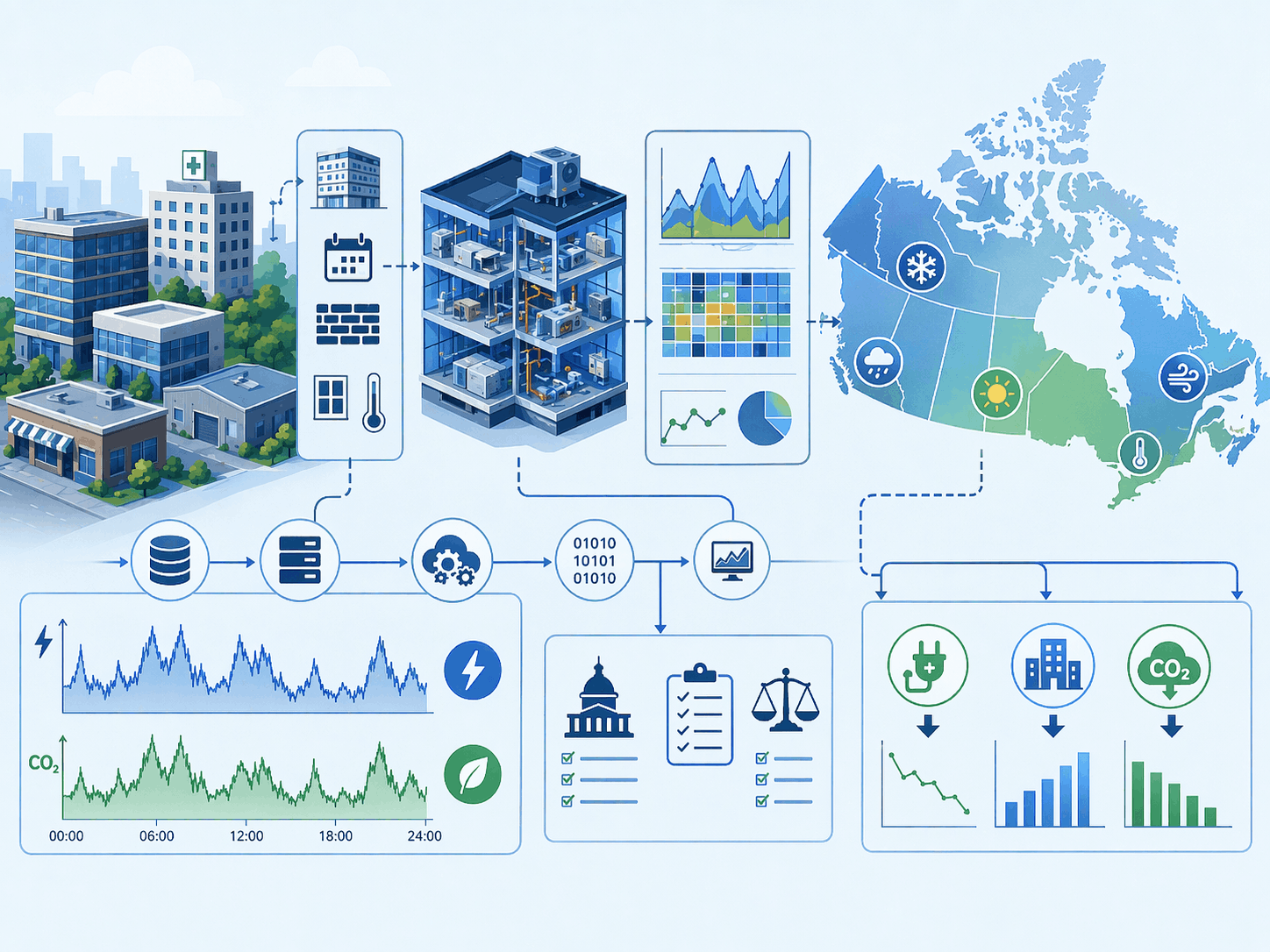
Effective climate policy depends on understanding exactly how commercial buildings use energy. Yet, most existing models don't offer the technical detail needed to predict how specific changes, like mass electrification or updated building codes, will play out across Canada's varied climates and jurisdictions.
This NRC-sponsored project fills that gap. Instead of top-down econometric approaches, the team is building a granular, bottom-up physics simulation model. It draws on basic building characteristics such as age, type, and envelope attributes; and uses statistical sampling to estimate sub-hourly energy consumption and operational greenhouse gas emissions across Canada's entire commercial building stock.
The result is a high-resolution picture of how demand-side management and building improvements can contribute to national decarbonization goals.
Anticipated Outcomes
- A sub-hourly simulation engine that accurately represents the energy profile of Canada's commercial sector
- A framework to evaluate the effectiveness of building codes and emissions regulations across multiple levels of government
- Technical insights into the impact of demand-side management and electrification on energy demand and GHG reduction, moving beyond the limitations of static econometric forecasting
Partners
National Research Council (Canada) and Concordia University

Canada has committed to cutting building-related greenhouse gas emissions by 40–45% by 2030, with a goal of reaching net-zero by 2050. Buildings currently account for 12% of national emissions, most of it from fossil-fuel-based heating, making the retrofit of existing structures one of the country's most urgent decarbonization challenges.
This NRC-funded project helps meet that challenge by developing practical tools for policy-makers and industry partners. The goal is to identify the most effective retrofit options, make the most of capital investment, and support the development of low-carbon communities across Canada.
Anticipated Outcomes
- Building archetypes calibrated and validated with real utility data across four climate zones: Toronto (CZ5), Montreal (CZ6), Shediac (CZ7), and Palatauk (CZ8)
- A robust decision-support tool to assess and quantify retrofit potential
- An evidence-based roadmap to help communities meet federal emissions targets
Partners
National Research Council (Canada)
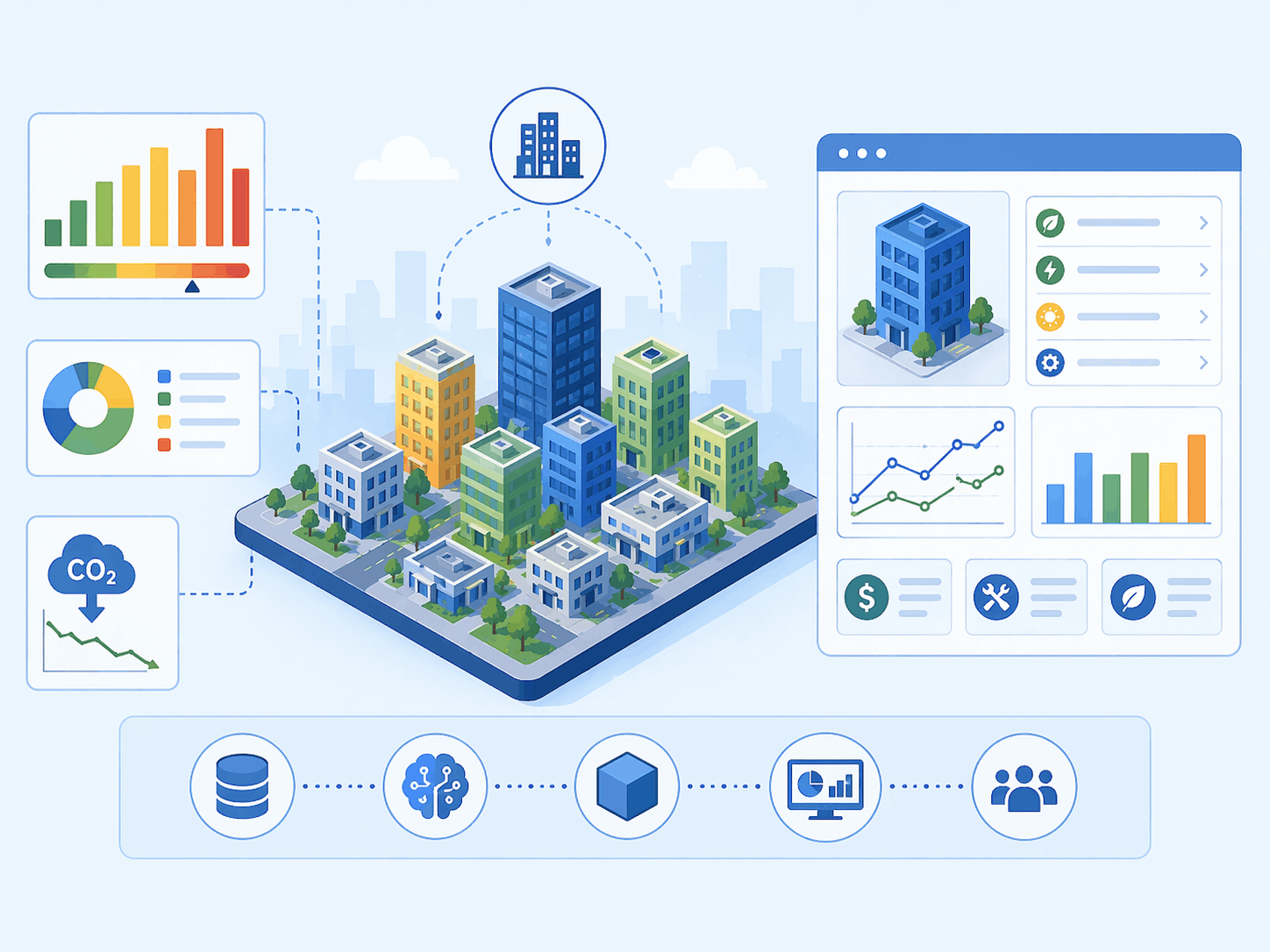
Understanding and reducing greenhouse gas emissions across a portfolio of buildings is complex; and the tools available to help have often fallen short. This NRC-sponsored project aims to change that by developing new methods and interactive visualizations, hosted on the GHGe Reduction Playbook platform, that make emissions reduction planning more intuitive and actionable for end-users.
At the centre of the project is an interactive digital twin; a dynamic, 3D visualization of a building portfolio that users can navigate directly. It allows them to compare emissions intensities across buildings, explore recommended strategies, and identify the most effective approaches to reducing emissions at the portfolio level.
Anticipated Outcomes
- Algorithms to estimate GHG emissions intensities across buildings with different configurations
- Methodologies of digital twinning visualization scenarios with mock-ups and interaction
- An automated Interactive 3D digital twin visualization for building portfolios
- A fully functional web-based dashboard integrating 3D visualizations with user interaction tools; enabling comparisons of emissions intensities and energy use, and supporting retrofit planning
Partners
National Research Council (Canada) and Concordia University