Answering your TMU questions!
Hey, it’s Ido, your Toronto Metropolitan University (TMU) student ambassador! I’m in my fourth year (and final semester!) of the Image Arts: Film program. That’s wild for me to say because I clearly remember being in high school and applying to universities just 4 years ago. I was excited, but honestly, I was almost too overwhelmed with questions to focus on that excitement. I barely knew anything about how university worked. That said, in my experience, attending university doesn’t just make you knowledgeable about your field of study — it can also make you somewhat of an expert on attending university itself.
In my recent emails, I’ve been asking you to submit your burning questions about TMU (sign up for our emails if you haven’t already!). I’ve compiled some of the most common ones received so far and answered them here. These are all questions I would’ve had 4 years ago, so I hope this blog helps!
What’s student and campus life like at TMU?
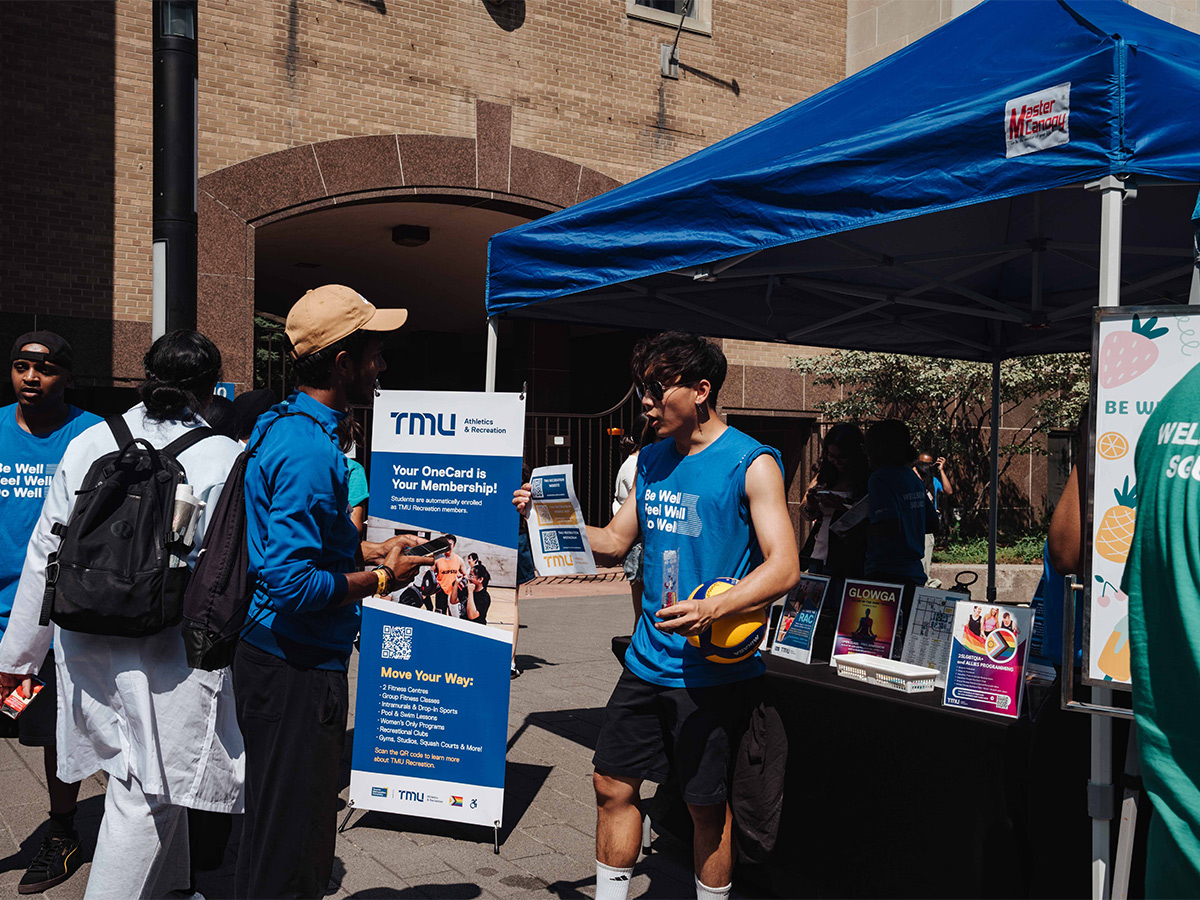
This is understandably one of the most commonly asked questions. University is a great place to gain knowledge and take a first step toward your career. But, it’s also a special time during your life that you want to make the most of; you want to meet people, attend parties and be an active, involved member of the campus community. TMU offers all of these opportunities — you just have to take initiative and seek them out.
Students spend most of their time studying and socializing in and around several campus spots, including:
- The campus eatery — Oakham Cafe
- The Met Campus Pub (external link)
- The Student Learning Centre (SLC)
- The Library
- Kerr Quad
- The main campus pedestrian strip — Gould Street
- Multiple workout facilities — like the Mattamy Athletic Centre (MAC)
- Residence buildings, among several other spaces
In addition to this, since TMU is located in downtown Toronto, the city extends our campus both socially and academically. For instance, there’s a movie theatre located on our campus where some lectures are held (yes, the seats are very comfy!). You might meet up with friends at that same theatre later to catch a movie. Then, you can walk, bike or take the TTC almost anywhere in the city to try a new spot for dinner. Toronto has so much to offer, so exploring new parts of the city has been one of my favourite things about attending TMU.
There are also dozens of student clubs and organizations you can join, like your faculty’s student society or your program’s course union. In my case these would be the Society of the Creative School (SCS), and the Image Arts Course Union (IMACU), respectively. There are also clubs for a range of interests including but not limited to anime, a cappella, improv, model U.N. and several associations for different cultural communities. I recommend attending Orientation, where many of them will be tabling along Gould Street, and following the ones you find interesting on social media to stay up to date.
How big are lectures?
It varies — the largest lectures I’ve attended have had a couple hundred students. Since the hall is spacious in these cases, the professor uses a microphone to amplify their voice. I’ve also been in classes with fewer than 30 students. In these cases the room will usually be smaller, and the lectures will be more intimate and interactive. In both large and small lectures, I’ve found that it’s never difficult to get a hold of the professor during their office hours if I have specific questions I’d like to chat about one-on-one.

Is it easy to make friends?
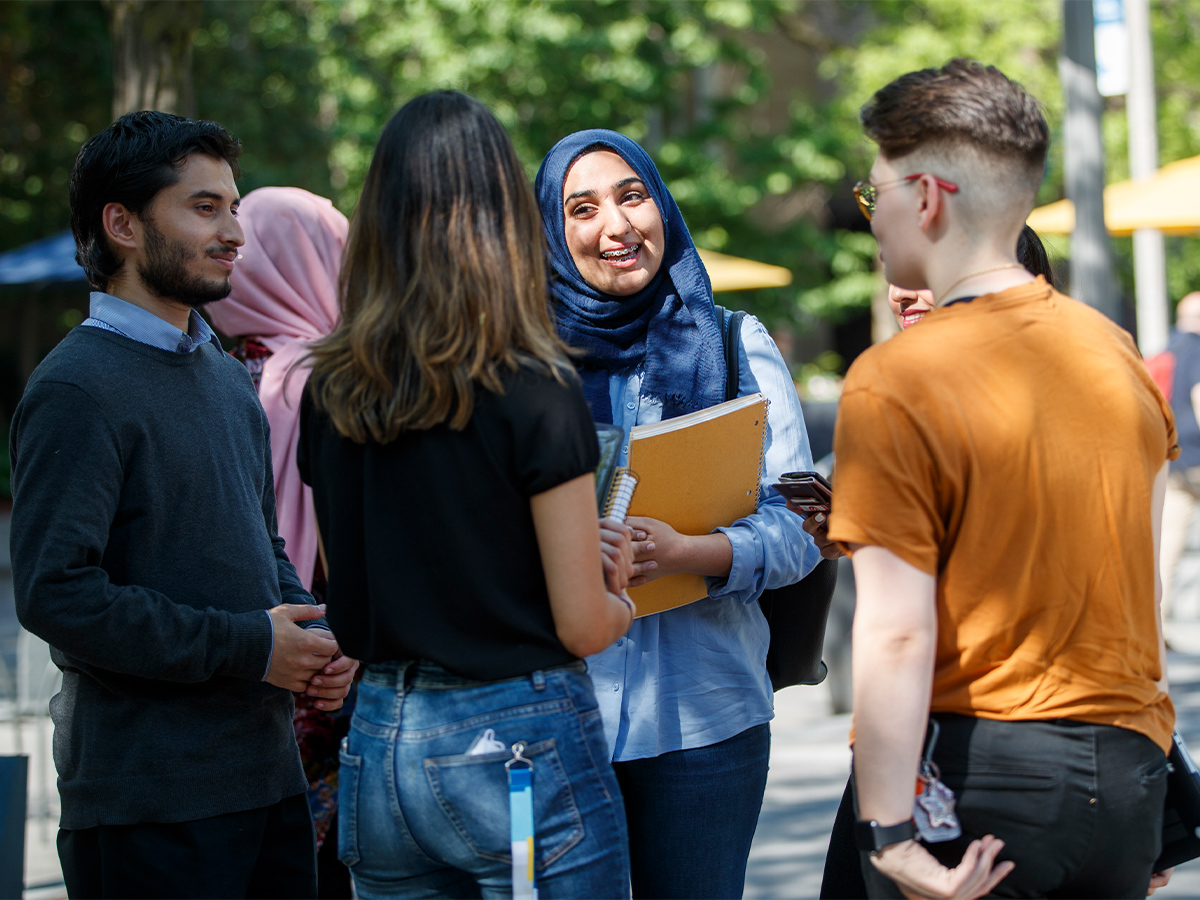
Introducing yourself to people at Orientation events and before or after lectures are 2 of the best ways to make friends — it’s how I met many of mine! Remember, everyone wants to meet new people, so everyone’s in the same boat. People will usually be glad you took the first step and introduced yourself. Joining intramural sports teams and clubs is another great way to find friends who share your interests.
Does TMU have experiential learning opportunities?
Lots! Every program at TMU offers experiential learning opportunities like internships, co-ops, practicums and more. Additionally, some courses have additional practical learning built in, like my MPF 430 Capstone Project course, where my peers and I are working on a full-year short film project. Others, like my FPN 547 Co-Operative Internship course, teach you the skills to find an internship, which you clock hours for throughout the semester. Taking these opportunities provides you professional experience and completely enriches your education. Check out this post I wrote about how TMU students gain experiential learning across different programs for more ideas.
How can I fund my education?
Scholarships, Ontario Student Assistance Program (OSAP) funding and working a Career Boost job on campus are some of the best ways to fund your education.
You may be eligible for TMU’s guaranteed and renewable scholarships based on your Grade 12 grades. These scholarships can renew throughout your academic career if you keep up your grade point average (GPA). You can also create a profile on AwardSpring, where you can be considered for dozens of other scholarships and awards.
OSAP offers student grants or loans based on financial need. If you’re not from Ontario, I highly recommend looking into student financial assistance programs from your province, territory or country.
Career Boost is TMU’s work study program that provides student employment positions across campus. Some examples of jobs could include working as a campus tour guide, a fitness centre desk supervisor or as a student ambassador, which is my Career Boost position! The jobs are meant to keep you close to campus and offer flexibility to work around your class schedule so you won’t need to worry about asking your boss for time off to write an exam.
Finally, if you want to learn how to build a budget, check out my interview with student employees from Student Financial Assistance for some tips.

One thing I observed while reviewing the submitted questions is that a lot of you had similar questions and concerns. A lot of them were the same ones I had when I was getting ready to apply and attend university. I hope it’s comforting to know that everyone is in the same boat, and that there are answers to all of the questions you have. Within a few weeks of attending TMU, I found that things started to click for me and a lot of my questions answered themselves. I know it can seem daunting, but I hope this blog helps you focus a little more on your excitement!
Until next time,
Ido, your student ambassador