Researcher Spotlight: Meeting kids where they are in media education and creation
As an undergraduate student at The Creative School’s RTA School of Media, Dr. Tatyana Terzopoulos created a kids show with her classmates for her final year practicum. Swap TV – a show where two kids trade places with each other for a weekend – took off in the industry, winning a Gemini Award for Best Children's/Youth Non-Fiction program or series in 2004.
As documentary-style shows featuring real kids and factual content produced for tweens became increasingly rare, Dr. Terzopoulos saw an opportunity to anchor her passion for children’s television in academia. With an interest in educational programming for school-aged children and youth, Dr. Terzopoulos began her research on children's media, specifically its dramatically changing audiences, in tandem with content creation for kids that reflect their real lives and real interests. Her academic endeavors led her back to TMU.
“When this amazing opportunity came up to become a professor in the very undergraduate program I attended, it was a no-brainer,” she said.
As a professor and researcher, Dr. Terzopoulos continues to study children’s media and the role of media education in young people’s lives. Her current research focuses on how young girls are engaging with media, as well as opportunities for girl-centered and feminist-oriented media-making education, done outside of the traditional classroom setting.
“Part of the process of writing my dissertation was understanding how much my successes and especially my failures were impacted by systems that prevented me, for example, from becoming a camera operator or securing more directing roles.”
Building on that knowledge, Dr. Terzopoulos is exploring a “middle space” beyond home and school where girls and children more broadly can create media – insights from which would help shape media education programs that support girls in media production.
Working with undergraduate and graduate students, Dr. Terzopoulos continues to develop her research, with the aim of designing ongoing media education and production workshops. A key focus for her has been examining content on platforms where kids engage with media, and the way they tell their stories on different media platforms, like TikTok videos.
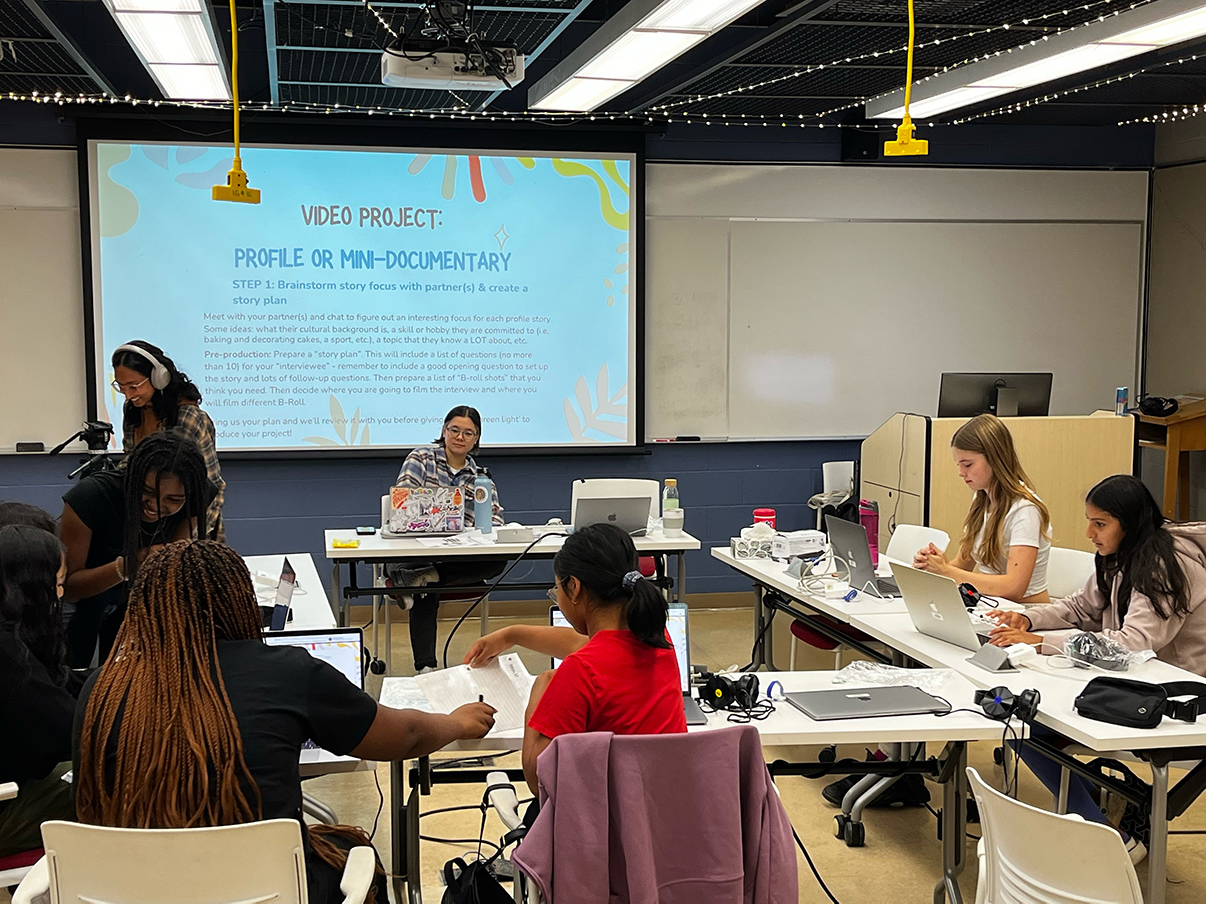
“We brought in a small group of girls two summers ago to TMU, and we experimented with media making as a group,” she said. It was a boot camp-style workshop for girls where they learned different skills in media production.
“It was interesting to look at the peer dynamics, and also how often girls in co-ed contexts feel pressure to slip into specific roles.” Girls often lean back from taking on roles that demand leadership and direction, said Dr. Terzopoulos.
The next phase of the research process aims to highlight the importance of having spaces for girl-identifying youth to work with their peers, as well as have opportunities to be mentored by women in the industry.
The goal is to create pathways for youth who are not necessarily going through the post-secondary path, and to have spaces where girls can collaborate without the added layer of gender dynamics. Beyond her focus on girl-centred media education, Dr. Terzopoulos is broadening her work to include school-aged children and youth, as well as intergenerational collaborative projects, focusing on media creation and media education.
She is working on a new research project, focusing on building media programs that involve kids fully in the media development and creation process.
“I'm really interested in paying attention to what it means to be child-centered. What does it mean to be inclusive? What does it mean to be representative? And how can we do it in a way where children don't feel like token participants?” For Dr. Terzopoulos, kids speaking on their own behalf and giving honest feedback is an important aspect of kids’ media creation and education.
“It’s very early work, but looking at ways in which we can support public service media within a post-secondary context and leveraging the fact that we have amazing talent within our undergraduate student community is exciting.”