Physicians Making an Impact: Meet Dr. Rebecca Brown
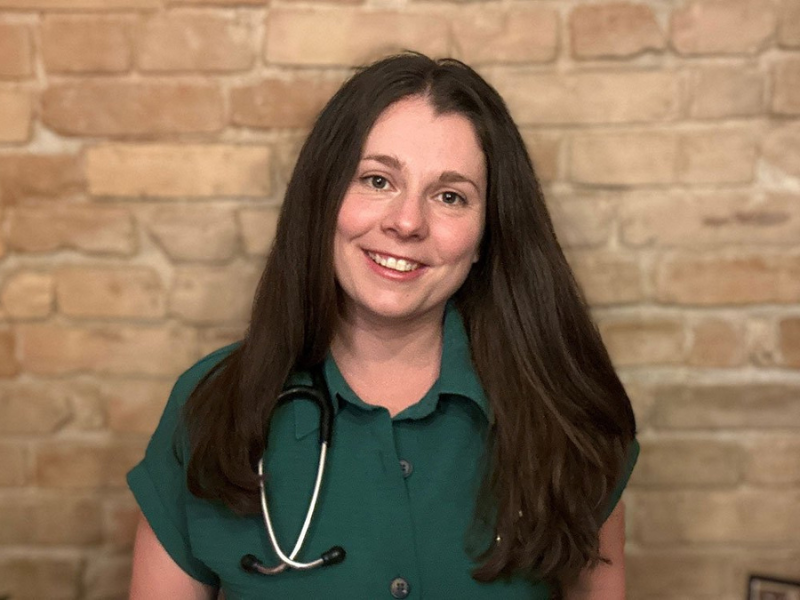
Turn on any medical drama like “The Pitt,” and the Emergency Department is often portrayed as a series of adrenaline-fueled moments: one doctor, one patient and one dramatic save after another. But for Dr. Rebecca Brown, the reality is far more complex and far more meaningful.
Television can’t capture the full weight of the work: evolving public health protocols, management of departmental-level crises, and very personal tragedies that unfold every day—this complexity is exactly where Dr. Brown thrives. As Emergency Medicine Program Director for TMU’s School of Medicine, it is the very reality she is preparing the next generations of physicians to navigate. For Dr. Brown, the goal isn’t just to teach residents how to treat a patient, but how to lead a team under pressure.
“Emergency medicine is the release valve for society,” Dr. Brown explains. “In times of major life changes or distress, like the pandemic, the first place you see the impact is the emergency department.”
Grounded in her team
Over the course of her career, Dr. Brown’s relationship to emergency medicine has shifted. Early on, like many physicians, she was drawn to technical and procedural “firsts” like complex resuscitations. Nearly a decade in, what grounds her most isn’t the individual heroics, but the collective strength of the team around her.
“You are rarely alone in emergency medicine,” she said.
In high-pressure situations—whether it’s dealing with a multi-patient trauma or a cardiac arrest—Dr. Brown relies on preparation. In the moments before a patient arrives, she centres herself through mindfulness or simply making sure she is physically ready.
Once the doors open, she uses education as a tool for calm. She’ll often talk through her thought process out loud with learners in real time, helping everyone stay aligned and focused—turning chaos into a coordinated response.
Bridging the gap through HALO
One of the Emergency Medicine program’s signature initiatives is the HALO (High Acuity, Low-Opportunity) curriculum, led by TMU emergency medicine clinical faculty member, Dr. Luke Hays. The curriculum focuses on situations that are extremely life-threatening, but happen very rarely.
While medical TV dramas often showcase rare flashy procedures for entertainment value, these events—like a surgical airway or certain resuscitative interventions— are infrequent in real life, but carry the highest possible stakes. Because residents cannot rely on repetition alone to master these skills, Dr. Brown and the faculty have integrated HALO as a form of deliberate practice.
“We cover that in our curriculum,” Dr. Brown notes, referring to the rare cases that are often dramatized on screen. “Through simulation and practice, residents learn to sharpen their critical skills in dealing with these life-threatening situations.”
Sometimes fiction does turn into reality. Dr. Brown recalls a recent shift where she watched a TMU resident independently run a cardiac arrest case with competence and confidence. “To see it in practice and see the growth of some of these learners…it’s just fantastic,” she said.
Looking ahead
For Dr. Brown, the future of the program is bright, defined by a supportive team and a cohort of residents who are already proving they are ready for the reality of the job.
“We have this wonderful opportunity to innovate and teach within this sphere,” she said. “And watching that grow since launching our program has been incredible to witness.”
“Emergency medicine is the release valve for society.”