Physicians Making an Impact: Meet Dr. Karim Manji
As a young medical student, Dr. Karim Manji was drawn to the human stories behind the medical charts.
He wanted a career that offered more than a glimpse into his patients' lives. He craved the long, in-depth conversations and the opportunity to truly know them—a luxury of time often not provided in day-to-day medical practices. He thought psychiatry or family medicine might be the answer.
It wasn’t until he did an elective rotation at Brampton Civic Hospital in his first year of his family medicine residency that one dying man’s simple request to eat a meal at a family wedding ignited his own appetite for palliative care.
“For him to be able to share even a portion of the plate that he would normally have eaten and to participate in that event, it meant a lot to him. It meant a lot to his family,” Dr. Manji said. “It took having a conversation that was focused on what he values. We were able to prescribe him some medication that helped boost his energy so he would be able to sit for a little longer and also boost his appetite so that he was able to eat a little more than usual.”
For Dr. Manji, the opportunity to help patients lessen their physical symptoms while also helping them navigate and grapple with the nebulous world of advanced illness and the emotions that come with it made palliative care the perfect career choice.
“I fell in love with the field,” he said. “It just felt like this is what being a healthcare provider was supposed to be all along.”
Now, as a palliative medicine physician at William Osler Health System, Dr. Manji is also excited to take on the new role of the program director of TMU’s one-year Family Medicine-Enhanced Skills (FM-ES): Palliative Care residency.
“It's the opportunity to be exposed to specialist-level palliative care in various care settings and recognize that palliative care is not a place, it's an approach to care,” Dr. Manji said.
While many medical schools include palliative care training, the TMU School of Medicine is establishing a new model for medical education in Canada. Its primary affiliation with community hospitals and healthcare institutions creates a unique learning environment, Dr. Manji explained—one designed to move beyond the traditional, siloed training of large urban hospitals.
"It’s about building a different kind of skillset—one centred on following a patient’s journey through various care settings," said Dr. Manji. "Our learners won’t just be in a hospital, they'll be immersed in the community, building relational care that spans a patient’s care journey and prepares them for the real-world needs of their future patients."
He also plans to collaborate with other training programs to help all medical students and residents learn to champion conscientious and value-focused care for their patients—not just those with a terminal illness. Dr. Manji hopes this community-centric model will equip them with the practical knowledge and empathy needed to serve effectively in diverse healthcare settings—and in diverse communities like Peel region.
“Nobody's taught what to expect, what to plan for when it comes to advanced illness and end of life care,” Dr. Manji said. “It takes skill, good communication and empathy to help patients and their families navigate through this critical time in their lives. We talk about culturally safe and culturally-informed care, but it’s important to recognize that each individual and each family is a culture unto themselves.”
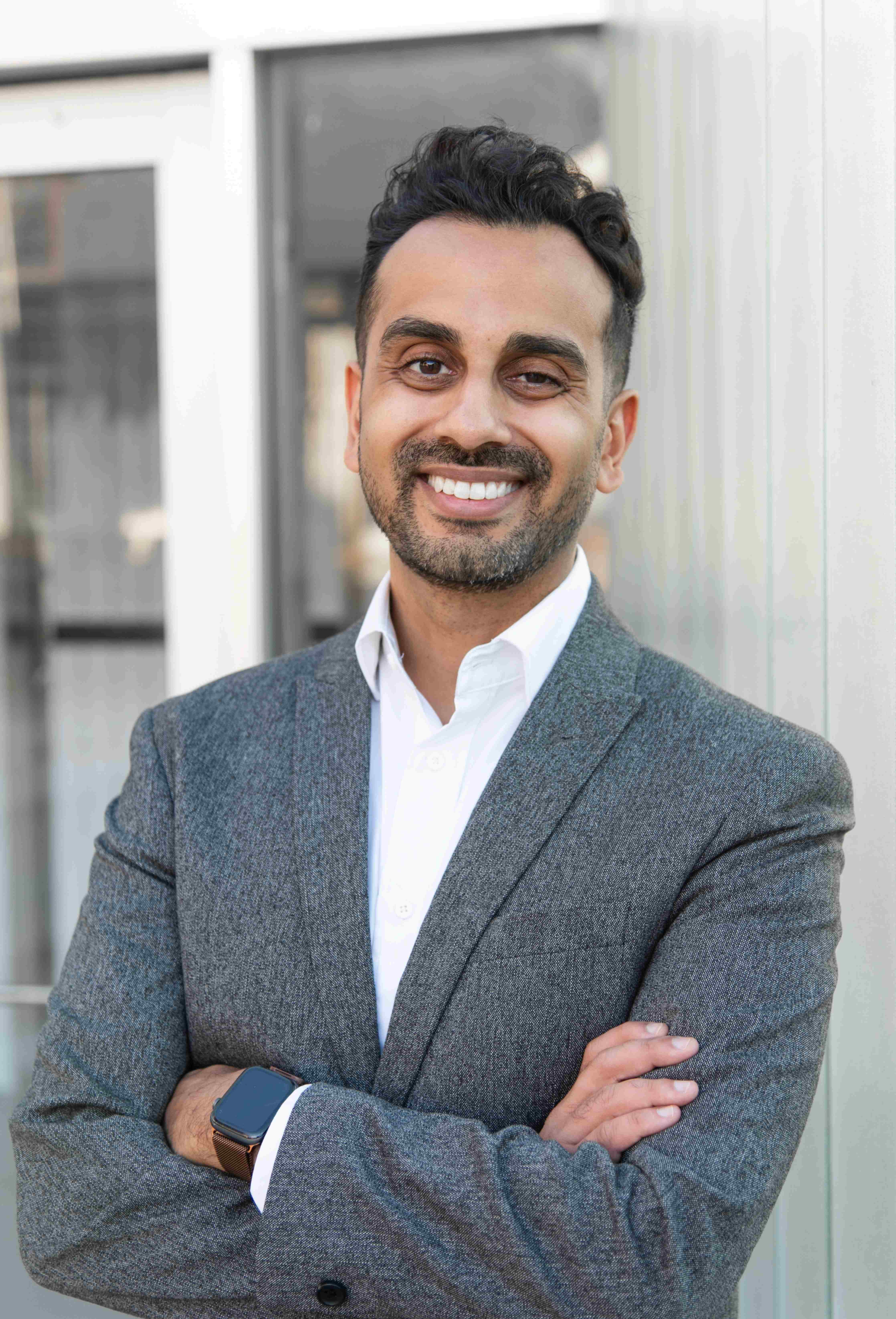
“It's the opportunity to be exposed to specialist-level palliative care in various care settings and recognize that palliative care is not a place, it's an approach to care.”