Get to know Aerospace Engineering alumnus, Alessandro Cunsolo!
We're connecting with Toronto Metropolitan University (TMU) alumni to see what they're up to today. This series of blogs will help you understand what life after graduating university can look like and might even give you inspiration for your future! Read their stories to see what could be waiting for you.

Alessandro Cunsolo graduated from TMU’s Aerospace Engineering program in 2021 before completing his Master’s of Aerospace Engineering in 2023. His experience at TMU led him to co-found the company TwistLace (external link, opens in new window) , a detachable tightening system for hockey skates. During our conversation, Alessandro spoke about the importance of finding your own community at university and using your passions to fuel your success. Read on to learn more about some of the many opportunities that are offered to students in the Faculty of Engineering and Architectural Science (FEAS)!
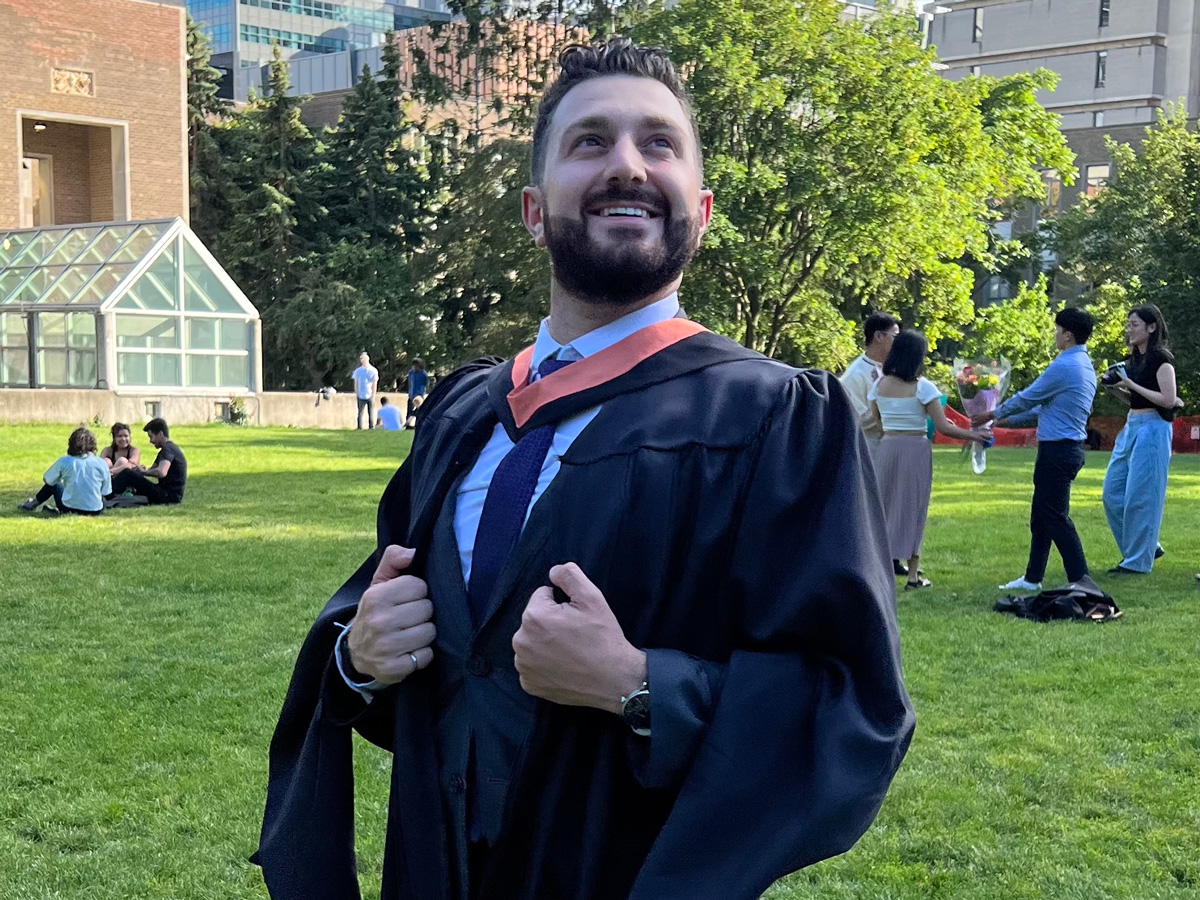
Claire: Why did you choose to study at TMU?
Alessandro: I’ve always been interested in the fields of aviation and engineering, and as a Toronto local born and raised, the Aerospace Engineering program seemed like the perfect opportunity to cross those two paths together. It was also one of few programs that offered undergraduate students the opportunity to specialize right from first year, and I was excited to dive right in.
I had a phenomenal experience in my undergrad, and TMU’s strong sense of community allowed me to meet many lifelong friends. While completing my capstone project in my final year — a modular satellite architecture, I became really interested in my area of study and decided to continue my research through TMU’s Master’s of Aerospace Engineering program.
C: What skills or experiences gained at TMU have helped you most in your career thus far?
A: Hard skills like computer-aided design (CAD), which was used in many of my courses, taught me how to design and develop systems digitally before creating them in real life. The iterative engineering design process was also instilled in us from the start in CEN 100 and refined over the years.
This allowed me to develop the skill of taking an idea or concept and transforming it into an actual physical product that you can use to solve problems. We took TwistLace from its first version to its next with the help of the master's course in human centric design. We took in the feedback from our first launch and improved the product with key end-user factors in mind. Being able to work on all of these projects, conduct research and apply these specific tools really helped me succeed within my post-grad dive into entrepreneurship.
The network that you gain while at TMU is also such a welcoming environment, and there are so many great people that are waiting to help guide and support you. These connections can really help you get things moving after you graduate, so I would say that making strong connections within your program is a great way to set yourself up for success.
C: What is TwistLace and what inspired you to co-found it?
A: TwistLace is an aftermarket tightening system for hockey skates and rollerblades that allows users to tie their equipment quickly, easily and without the hassle of traditional lacing. It's designed to increase accessibility in the skating community and get everyone on the ice faster. We're currently at market with our second version, which only requires a short installation to get started. The design has been successfully patented in the U.S. and we're continuously working on improvements to implement into future product generations.
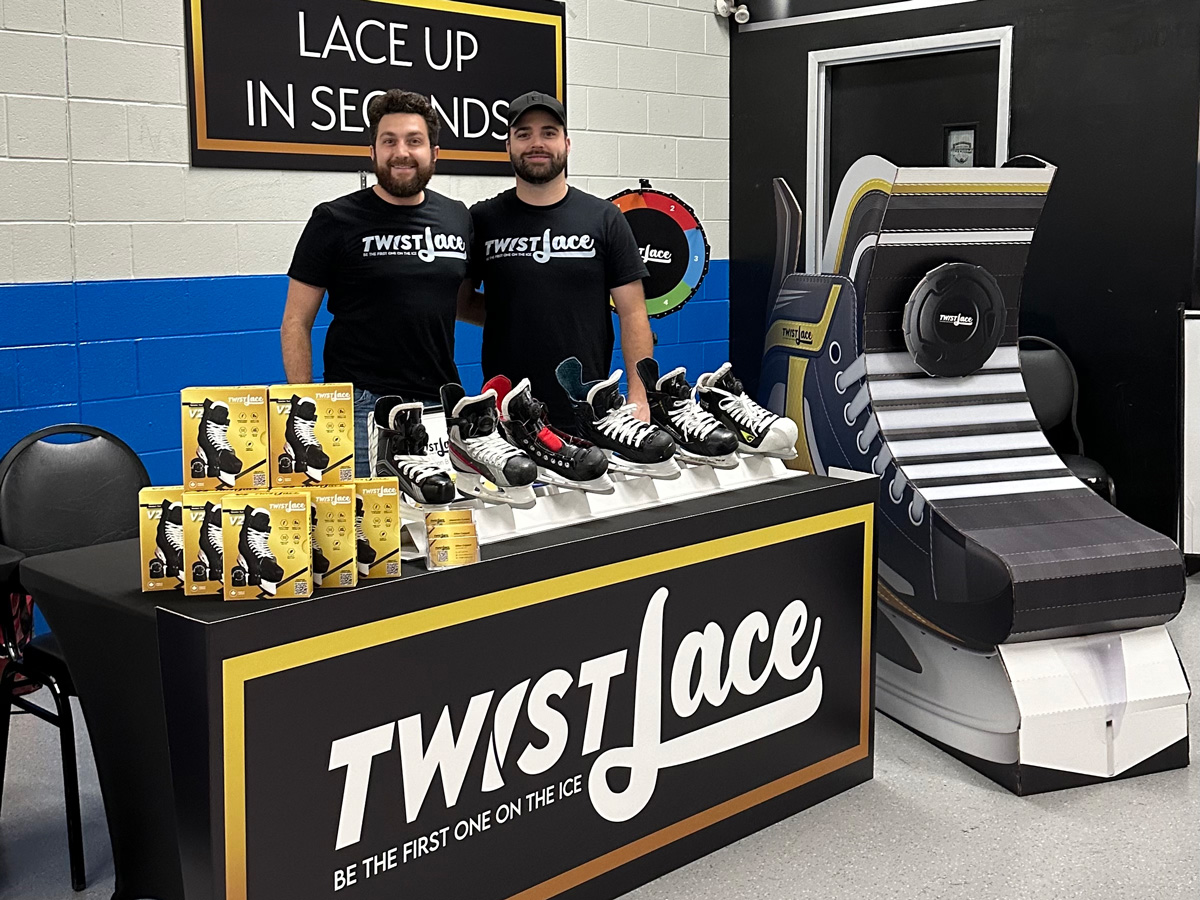
Alessandro and his fellow co-founder, Dillon Cappell, tabling at a recent hockey tournament.
My co-founder Dillon and I were inspired by our shared love for hockey and innovation. I used to skate often at Lake Devo [on campus] in between classes as a student at TMU, but found it really time consuming to get my skates on and off during my one-hour block of free time. Being an outdoor rink, I also found my fingertips freezing in the process. Dillon had also been experiencing lower back pain from being hunched over while tying. So, our goal was to create a product that would allow you to pop off your shoes, pop on your skates and be on the ice within 10-20 seconds. The best part about the whole experience was that after each prototype iteration was done and printed, we'd install them and head down to Lake Devo for late night shinny to test them out. Even our early prototypes allowed us to accomplish this goal while the product and business remained under development!
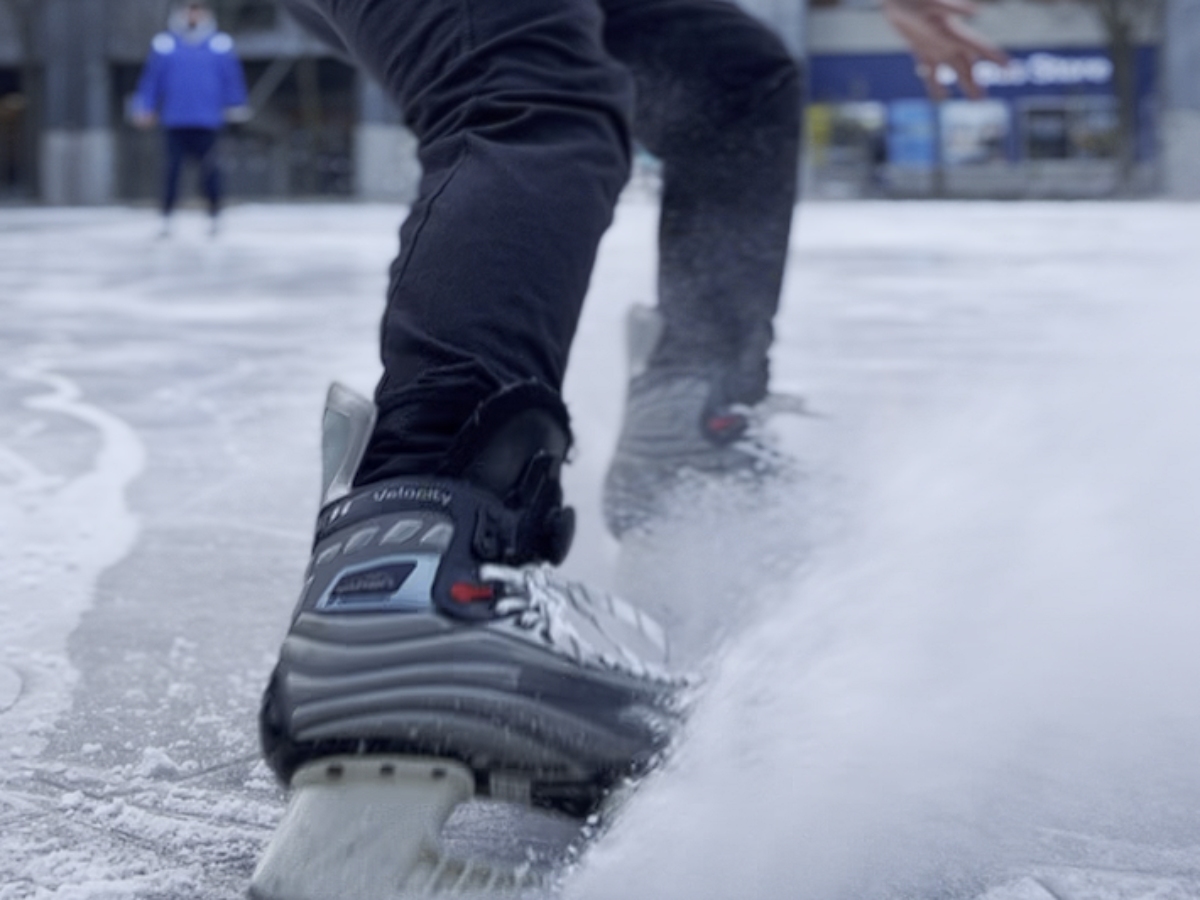
Alessandro and Dillon testing out their product at Lake Devo.
C: What is your favourite part about the work you do? What are some of the biggest challenges?
A: My favourite part is being able to invent something that brings forward a solution to a problem that myself and many others have personally experienced, and give it back to the world so they can use it as they will. I also love helping people and have the opportunity to be very creative in my work, so I’m also always finding the solutions to their problems through the technical skills that I obtained through my time as a student at TMU. It’s really rewarding to see change being made and problems being solved through my work, whether it's with TwistLace, custom manufacturing or design consultations.
Navigating the business side of the company is one of the biggest challenges. I’m a very technical person, so when you enter the world of business, it can be difficult to prepare for the non-technical challenges that you might face. This is why it’s so important to find people that you can work well with. Your colleagues might be able to recognize areas where you need to improve in ways that you can’t, and by recognizing these gaps, you’ll be able to move forward stronger as a team.
C: If you could go back in time to your first-year self what would you want them to know?
A: Don’t feel bad about going out on a Friday night with your friends after finishing those midterms — these are the people who are going to be with you and supporting you for the rest of your life. I also used to sometimes regress and ask myself “Am I doing this wrong? Should I be focusing more on academics?” But now I realize that it’s the university community, groups and design teams that allowed me to really learn about being a member of a team and get to where I am today.
I also think it’s important to study in fields that you’re genuinely interested in, because without that spark, it’s going to be pretty difficult to succeed. I made the decision early on that I was going to study engineering, and was determined to finish it as I was having a blast. Because I enjoyed what I was learning, and it allowed me to be my creative self, I was able to get through both programs successfully with a whole tool belt of skills to chase my entrepreneurial dreams with.
Thank you Alessandro for these helpful insights! It’s always great to hear about the long-lasting impact that TMU leaves on its students. It’s super important to identify your interests and incorporate them into your academic career so you can get the most out of your degree. To kickstart your own journey to success, make sure to check out the how to apply page where you’ll find everything you need to know about the post-secondary application process.
There’s more to come — keep an eye on the blog to hear from other TMU alumni!
Until next time,
Claire