All About the Tri-Mentoring Program
The Tri-Mentoring Program (TMP) is just one of the many great services that our university offers. It’s one that I have been a part of in the past and love to promote to future and current students. In my second year, I was a peer mentor to a first-year Creative Industries student. I loved being able to impart my wisdom to her and make her feel more comfortable in our program. Sharing more information about TMP is something I like to do, so I had a virtual chat with Jennifer Barcelona, the manager of the Tri-Mentoring Program, to learn more about the program.
The Tri-Mentoring Program has been part of our university for over 20 years, and the 2021-2022 academic year had more than 6000 student participants. TMP came out of the need to build a community for equity-deserving, racialized and marginalized students at our university. From here, students were matched with other students with similar identifiers to help share their knowledge on anything from where to buy textbooks, the best cheap eats near campus or how to navigate university life.
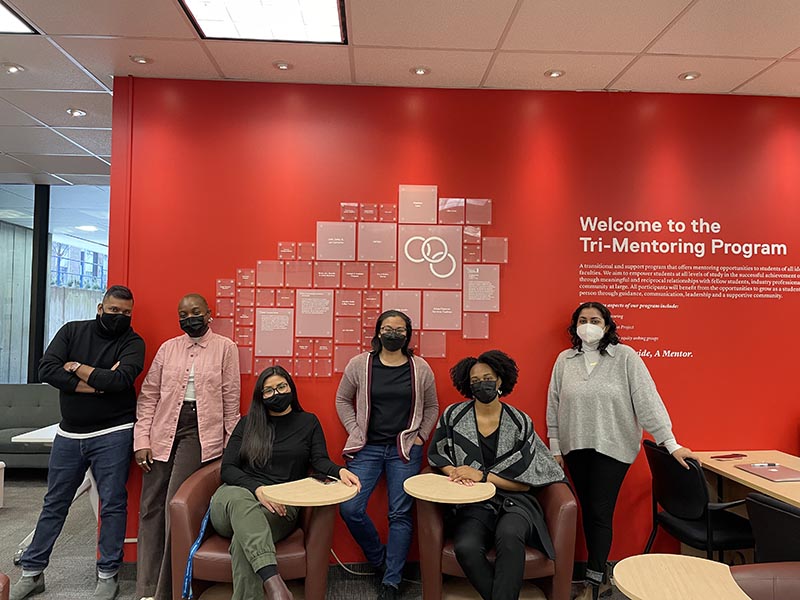
TMP Staff.
According to Jennifer, the aim of TMP is to “mentor each student using their individual experiences and help them find a sense of belonging on campus.” There are three main ways a student can mentor or be mentored within TMP.
The first way is through Peer Mentoring. In this program, first-year mentees are matched with upper-year students in their program or faculty. Matches are also made based on certain identifiers, such as gender and cultural background. I encourage all first-year students to sign up as a peer mentee, as it’s a great way to become familiar with your program and learn some tips and tricks from someone who has been there and done that.
The second mentoring program is Group Mentoring, where folks from equity-deserving groups “can come together, build community and foster a sense of belonging.” There are monthly community meetings where the groups meet up and connect with each other to talk about something they can all relate to and connect with while finding a sense of belonging on campus.
Career Mentoring is the third mentoring pillar of TMP. In this program, students who have previously been a peer mentor are matched with an industry professional to learn more about their career field of interest. Some of these mentors are university alumni, while others are from different institutions who are looking to share their time, experiences and knowledge with current students.
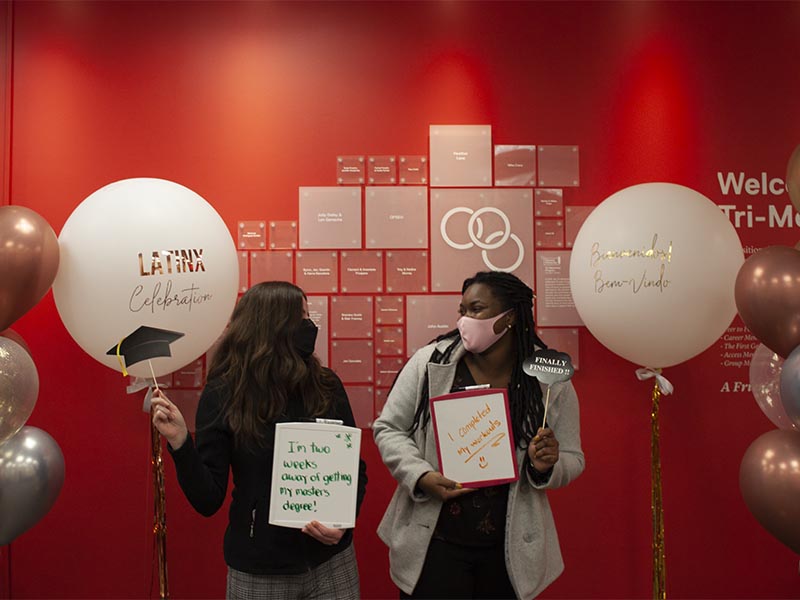
A photo from a TMP Latinx celebration event.
Jennifer’s favourite thing about working for TMP is being able to see students at the TMP office or at TMP events “be truly [who] they are and feel like they belong.” She says that seeing students find a home on campus within the program is a “feeling that always brings me back and motivates me to come to work.”
When asked why first-year students should get involved with TMP, Jennifer thinks they should do so in order to “find some sort of connection, whether it be through Peer Mentoring, Group Mentoring, Career Mentoring or just coming out to one of our events or workshops.” She said that just being involved in even one thing has the possibility to change a university experience completely. TMP is “a service to help students thrive and navigate university” and using TMP as a resource to either find connections or get students where they need to be would help them greatly.
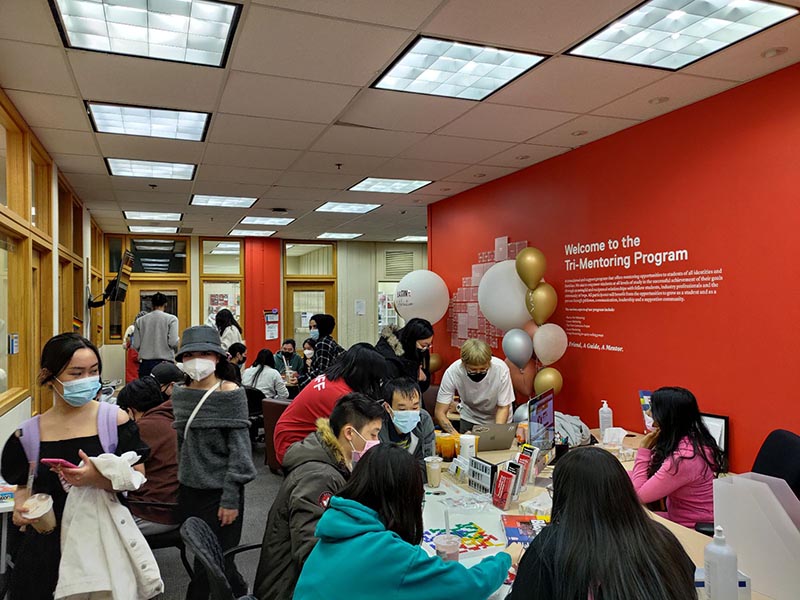
A TMP celebration event.
To get involved with TMP, students can simply visit their offices in the Podium building (POD-54) or visit the Tri-Mentoring website. Once they have their university email and student number, they can sign up to be a mentee on the community portal (external link, opens in new window) on the website. Matching students takes place from mid-August to October. Beyond being a peer mentee in their first year, students can continue participating in the program by being a peer mentor or participating in Career or Group Mentoring.
As someone who has personally participated in this program, I highly recommend all first-years sign up to be a peer mentee! Being matched with someone in your program is one of the best ways to learn the ins and outs of being a university student. Nobody will get it like they do! Jennifer is “looking forward to seeing what this next academic year brings the program in terms of folks growing, connection and belonging” — and so am I!