Graduate Program
The graduate program in Complex Systems, offering MSc and PhD degrees, is housed in the Department of Physics at Toronto Metropolitan University. The program is one of the few graduate-level programs in North America in this growing field.
The MSc and PhD Complex Systems programs are both thesis-based. In addition to coursework, students join a research group to carry out research that culminates in a written thesis and oral examination of their research.
The MSc program requires completion of a 4-year undergraduate Physics program, or students who have completed another 4-year undergraduate programs (e.g., Math, Computer Science, Engineering, Biology) are required to have completed the equivalent of a Minor in Physics. The PhD program requires completion of an MSc degree in Physics, or students who have completed a different MSc are required to have completed the equivalent of an undergraduate Minor in Physics. For additional MSc and PhD admissions requirements, please see the Department of Physics Graduate Admissions website.
For program funding, please see the Department of Physics Graduate Funding website.
If you are interested in the program, we encourage you to contact the faculty supervising the graduate students in this program.
If you have questions about the program, please contact biomed@torontomu.ca.
Required Complex Systems Courses
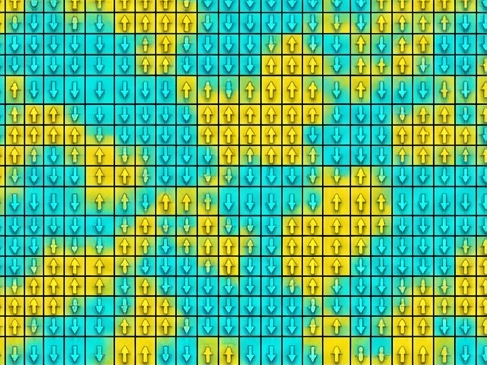
Many-body Theory
The study of systems with many degrees of freedom, including equilibrium and non-equilibrium phenomena. Topics include partition functions, mean-field theory, Markov processes, the master equation, Fokker-Planck equation, Langevin equation, diffusion, random networks, percolation, glassiness, and disorder.

Dynamical Systems
The analytical and numerical study of systems whose state changes in time, emphasizing qualitative behaviour. Topics include phase space, invariant sets, linear stability, bifurcations, fractals, and chaos; systems such as the Henon map, Lorenz equations, and Duffing oscillator; and both analytical and numerical approaches.
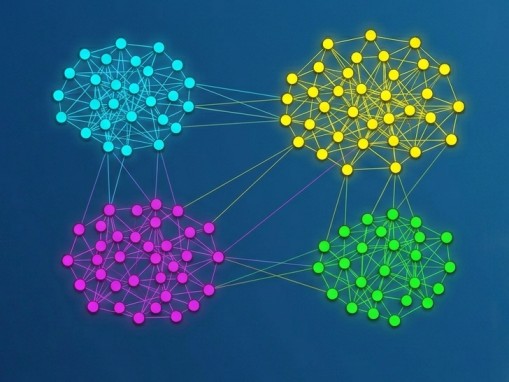
Complex Networks & Applications
Science of networks and their applications to diverse fields. Topics include graph theory, random network models, scale-free and small-world properties, community detection, degree correlations. Applications include biology and sociology, among other fields. Students will carry out analysis of network data sets.