How reviews influence product usage post-purchase: An examination of video game playtime
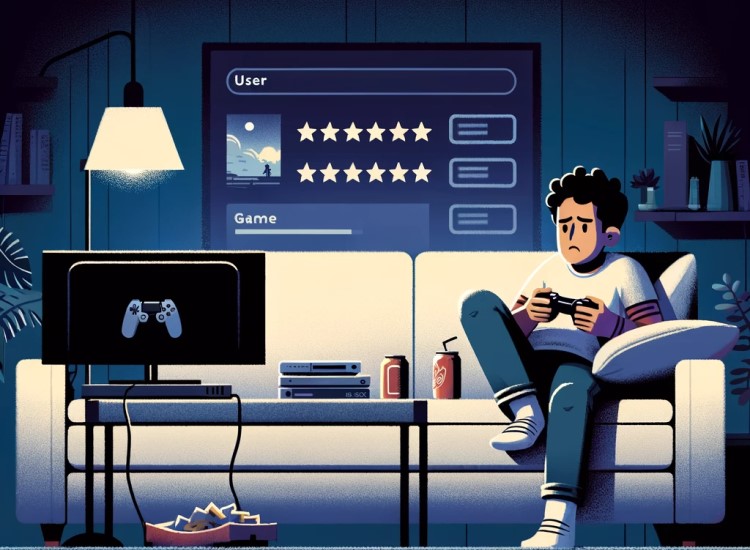
Traditionally, research on gaming has focused on how internal factors like game graphics, sound, and content hook players into playing longer and more often. But what about external factors like product reviews? Do they affect how long people play games after they've already bought them? Recent research out of the Ted Rogers School of Management and HEC Montreal says yes, they do, and for an interesting reason.
Whether you are a gamer or not, video gaming is big business, estimated at over $80 Billion in the US alone. Interestingly, however, is that a huge chunk of a game company’s revenue is not just from selling games but from in-game purchases and subscriptions. For some companies, these post-purchase revenue sources represent roughly 50% of their total revenue. So for them, keeping players engaged and playing is crucial.
This research steps into relatively uncharted territory. It examines how product reviews, typically thought to influence only potential buyers, actually impact the playtime of current game owners. Surprisingly, it finds that negative reviews can make current owners play less, despite personally liking the game. But why?
The research finds that after reading negative reviews for a product an individual already owns and enjoys, they subsequently worry about appearing as an "incompetent consumer." Basically, if a product gets bad reviews, continuing to use it might signal to others that you make poor purchasing decisions. This concern is particularly relevant in gaming, a highly social and visible activity, where revenues are closely tied to continued usage.
The study extends our understanding of product reviews beyond the influence on pre-purchase to post-purchase behaviors. This insight is vital because negative reviews can shorten the lifespan of a product like a video game, by reducing how long people use it, and with it the reduced revenue a company may get from continued game play.
This study offers valuable insights for game developers and marketers about the broader effects of product reviews. It encourages a rethinking of strategies to maintain consumer engagement, considering not just the game's internal features but also the external voices that shape player perceptions and behaviors.
To reach these conclusions, the researchers conducted field data analysis and two experiments. This comprehensive approach provides a nuanced view of the effects of negative reviews on current game owners, challenging the assumption that reviews only matter before the purchase.
In summary, this study paints a complex picture of how external factors, particularly product reviews, influence our engagement with products like video games after we buy them. It's a reminder that in our interconnected, opinion-driven world, the value and enjoyment of what we buy are not only shaped by our personal experience with the product itself, but also the voices that surround it. Philp, Matthew, and Marcelo Vinhal Nepomuceno (2024), “How Reviews Influence Product Usage Post-Purchase: An Examination of Video Game Playtime (external link, opens in new window) ,” Journal of Business Research, 172 (February), 114456.