A Multi-objective integrated approach to address sustainability in a meat supply chain
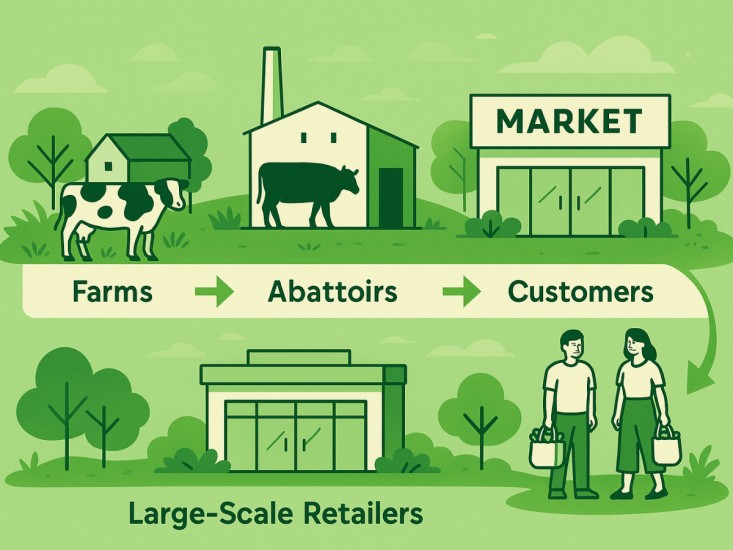
Over the past two decades, firms have made efforts to bring sustainability into running their supply chains. However, it is challenging to make supply chains truly sustainable, as they face several constraints. This is especially true in the food industry, as its operations heavily rely on natural resources, and its outputs directly affect the health of people in general. This study seeks to make meat supply chains more sustainable by considering three primary areas: cost, social responsibility, and environmental impacts. To do this, we developed a mathematical model that allows food processing companies to make better decisions on choosing suppliers, production planning, and product distribution. The model also includes a mechanism for the quantification of the environmental attributes of different suppliers. This mechanism benefits from two decision-making tools that help rank the suppliers based on how well they meet sustainability objectives. We then developed a new method to generate a list of balanced solutions, in which cost, environmental, and social trade-offs can be clearly considered. Finally, we tested the model using data from a meat supply chain in Ontario. The results show that the model can obtain practical solutions and that food processing firms can considerably improve their social and environmental performance with minimal cost sacrifice. Mehdi Najafi & Hossein Zolfagharinia (2024). A Multi-objective integrated approach to address sustainability in a meat supply chain (external link, opens in new window) . Omega, Volume 124, 103011. DOI: 10.1016/j.omega.2023.103011