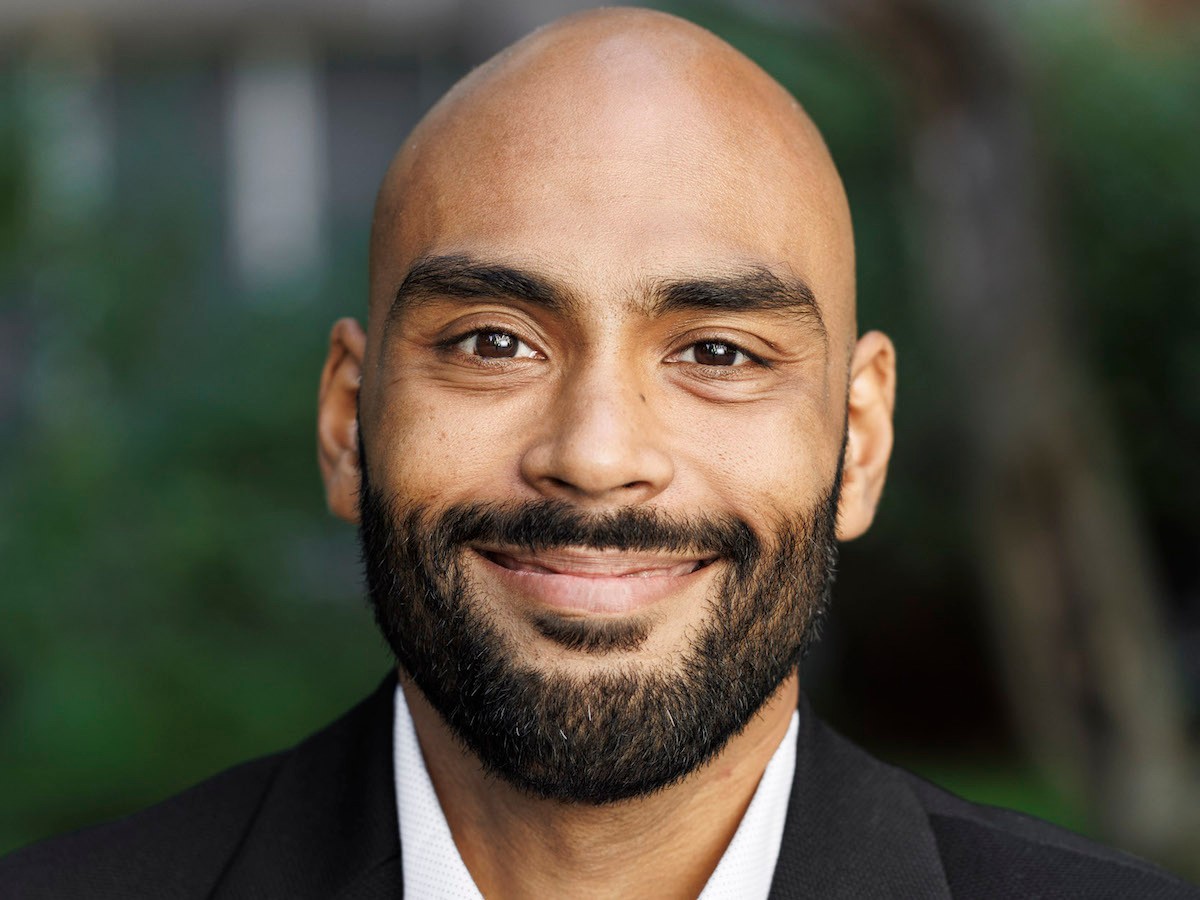
Dr. Ryan Persram
Curriculum Vitae / (PDF file) Click Here to View > (opens in new window)
Biography:
Dr. Persram is an Assistant Professor in the Department of Psychology at Toronto Metropolitan University. Dr. Persram earned his PhD in Psychology at Concordia University in Montreal with research interests in developmental psychology and youth development. Additionally, he completed postdoctoral fellowships at McGill University and Queen’s University, as well as collaborations across both institutions in association with PREVNet, a nationally recognized research network focused on promoting wellbeing and healthy youth relationships.
Dr. Persram’s research examines the correlates and consequences associated with youth interpersonal relationships. Specifically, he investigates how positive and negative experiences with siblings, peers, and romantic partners can promote and hinder youth adjustment. He is particularly interested in the unique and joint contributions of these relationships in relation to youth development and adjustment. Dr. Persram’s research also considers how contextual factors, such as gender identity and other sociodemographic aspects (e.g., family functioning, cultural background, SES) shape youth relationship development and individual adjustment. His work incorporates both quantitative and qualitative research methods.
Dr. Persram collaborates regularly with researchers and partners nationally (e.g., Ontario, Quebec), and globally (e.g., United States, United Kingdom, Colombia). His research has been funded by the Social Sciences and Humanities Research Council (SSHRC) and the Fonds de Recherche du Québec – Société et Culture (FRQSC).
Selected Publications
Palachi, A., Gauvreau, S., Ngyema Nang, G., Dryburgh, N. S. J., Bukowski, W. M., & Persram, R. J. (in press). Relational profiles of early adolescents’ relationships with parents, siblings, and friends: Links with social-behavioural outcomes. Journal of Social and Personal Relationships. https://doi.org/10.1177/02654075261447022 (external link, opens in new window)
Forbes, P., Persram, R. J., & Howe, N. (in press). “When you’re helping a person with a problem and they’re having the problem, you kind of feel the same way”: Internal state language in adolescents’ self-disclosures to siblings and friends. Journal of Early Adolescence. https://doi.org/10.1177/02724316261438750 (external link, opens in new window)
Amani, S., & Persram, R. J. (2026). Maternal attachment among Iranian mothers: Adaptation and validation of the Maternal Attachment Inventory. Current Psychology, 45(421), 1-12. https://doi.org/10.1007/s12144-025-08911-8 (external link, opens in new window)
Commisso, M., Persram, R. J., & Bukowski, W. M. (2025). Contextual variations in the effects of active isolation, passive isolation, and friendship on trajectories of depressed affect in late childhood. Development and Psychopathology, 38(1), 368-379. https://doi.org/10.1017/S0954579425100308 (external link, opens in new window)
Persram, R. J., Dirks, M. A., Recchia, H. E., & Craig, W. (2026). Relational typologies with siblings and best friends in adolescence: A latent transition analysis. Journal of Social and Personal Relationships, 43(1), 524-547. https://doi.org/10.1177/02654075251345283 (external link, opens in new window)
Persram, R. J., Howe, N., & Bukowski, W. M. (2023). The moderating effect of sibling trust on internalizing difficulties in early adolescence. Merrill-Palmer Quarterly, 69(2), 139-157. https://doi.org/10.1353/mpq.2023.a923222 (external link, opens in new window)
Persram, R. J., & Konishi, C. (2023). Differential effects of maternal- and paternal-adolescent attachments on friendship security and intimacy. British Journal of Developmental Psychology, 41(1), 66-78. https://doi.org/10.1111/bjdp.12433 (external link, opens in new window)
Bukowski, W. M., DeLay, D., Dirks, M. A., Lopez, L. S., Persram, R. J., & Santo, J. B. (2021). Contextual variations in associations between measures of aggression and functioning with peers: A replication study. Developmental Psychology, 57(12), 2022-2031. https://doi.org/10.1037/dev0000958 (external link, opens in new window)
Paine, A. L., Karajian, G., Hashmi, S., Persram, R. J., & Howe, N. (2021). “Where’s your bum brain?” Humour, social understanding, and sibling relationship quality in early childhood. Social Development, 30(2), 592-611. https://doi.org/10.1111/sode.12488 (external link, opens in new window)
Persram, R. J., Panarello, B., Castellanos, M., Astrologo, L., & Bukowski, W. M. (2021). Measurement burst designs to improve precision in peer research. Cambridge University Press.
Interested in Joining the Lab?
Dr. Persram directs the ASPIRE Lab at TMU. The focus of the lab is to explore how specific social partners (e.g., siblings, friends, romantic partners) uniquely and jointly contribute to adolescent wellbeing and development. The overall aim of the lab is to identify contextually relevant experiences that promote strong and healthy relationships and mental health.
The ASPIRE Lab is looking for passionate and driven individuals (all levels) who are interested in contributing to this research program and expanding the lab’s expertise on youth interpersonal relationships and development. If you are interested in joining our team or are interested in potential opportunities, please send Dr. Persram an email at ryan.persram@torontomu.ca.