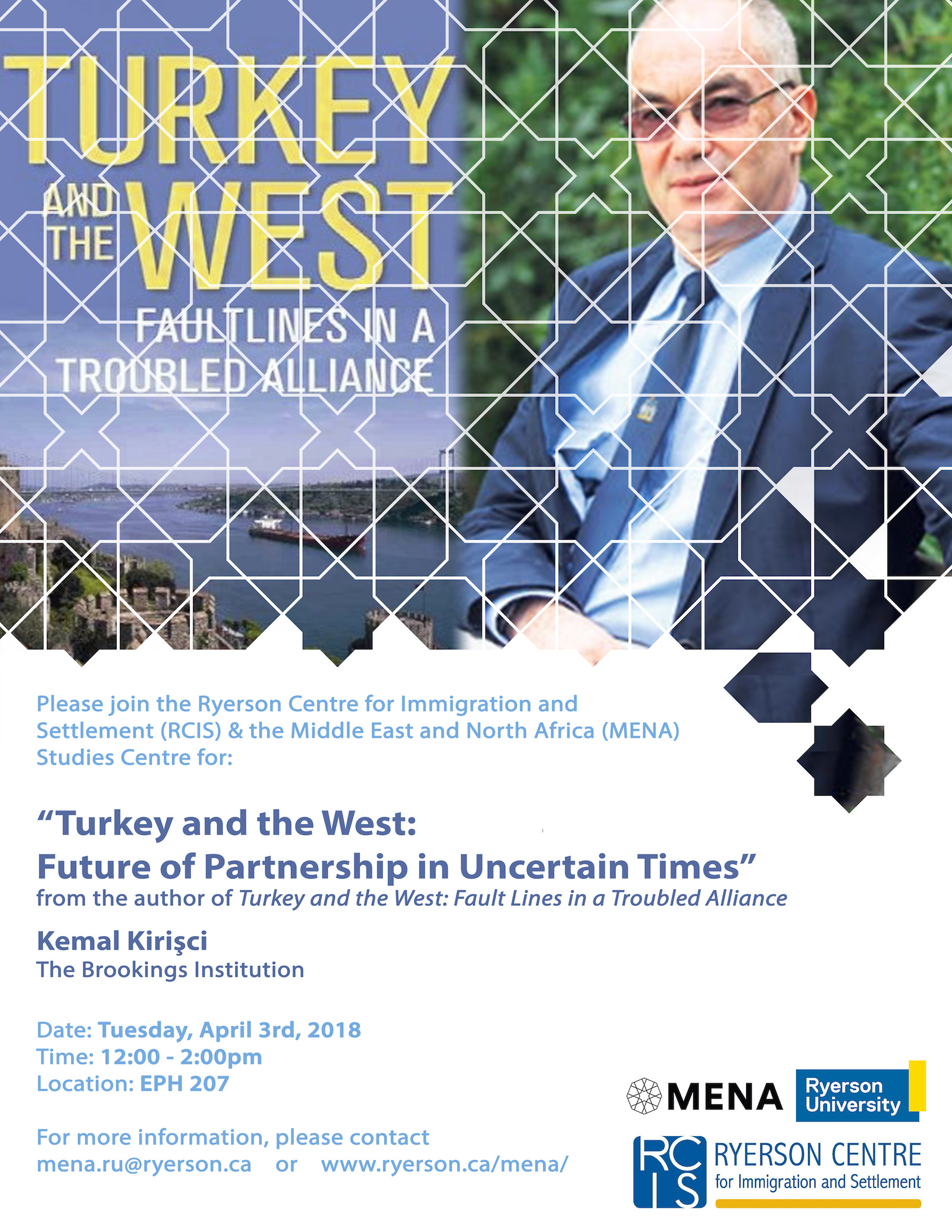
Turkey and the West: Future of Partnership in Uncertain Times
- Date
- April 03, 2018 - April 04, 2018
- Time
- 12:00 p.m. - 2:00 p.m. ET
Where: EPH 207
Presentation abstract:
Turkey has been a long-standing ally of the West. This alliance first began to deepen when Turkey became anchored in the emerging international liberal order in the 1950s, and was further strengthened when the European Union (EU) recognized Turkey as a candidate country for accession in 1999. Membership negotiations started in 2005, after Turkey had pushed through a series of impressive reforms. In hindsight, Turkey was living its “golden years” politically, economically and diplomatically – so much so that it was touted as a model for the region. Yet, the picture today is very different. Turkish democracy is in tatters and Turkey’s relations with the West – with both the EU and the U.S. – are at its lowest point. The West is also facing growing internal and external challenges. These include managing the flow of migrants from the Syrian civil war, currently numbered at 3.5 million, according to United Nations High Commissioner for Refugees (UNHCR). Since the European migration crisis that exploded in 2015 – with all its economic, societal and political repercussions – the idea of pursuing a transactional relationship with Turkey is gaining traction against the traditional policy of anchoring Turkey in the trans-Atlantic community through shared liberal values. As Turkey gears up for parliamentary and presidential elections in 2019, Kemal Kirişci, the TÜSİAD Senior Fellow and the Director of the Turkey Project at the Brookings Institution, will present his recent book Turkey and the West: Fault lines in a Troubled Alliance (Brookings Institution Press, 2018), and reflect on what has happened to Turkey and to Turkey’s relations with the West.