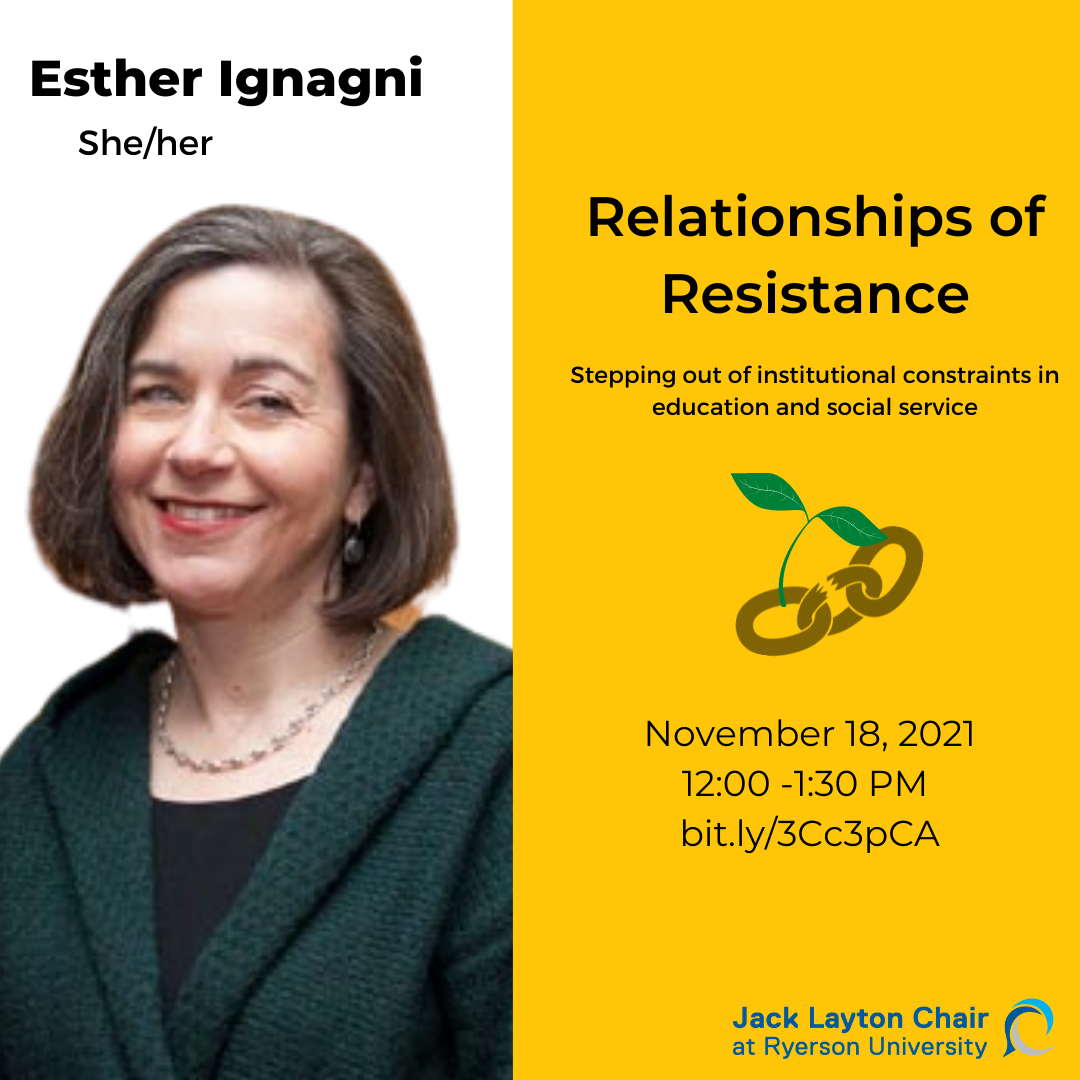
Relationships of Resistance
- Date
- November 18, 2021
- Time
- 12:00 PM EST - 1:30 PM EST
- Location
- Online via Zoom
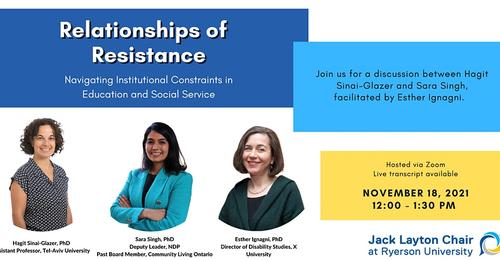
This session focuses on the powerful forces of institutional structures as they constrain the experience of service users and the role of service providers. With this in mind, the speakers discuss the importance of resistance through relationships to make possible creative forms of caring that resist these institutional constraints. Relationships are vital to work against exclusion and to bridge access to care and education.
Hagit Sinai-Glazer (she/her) reports on her study focused on how the facets of everyday practice among social workers in Israeli public social services are shaped by social, professional, and institutional structures and organizations. She also discusses how social workers and service users find ways to work with, through, and against these constraints.
Sara Singh (she/her) reports on her study of the diffusion of Inclusive Post-Secondary Education for students with intellectual disabilities. She discusses the central role of relationship as a form of advocacy for change and the key role of the social systems and interpersonal relationships in fully engaging persons with cognitive disabilities.
Speaker Bios
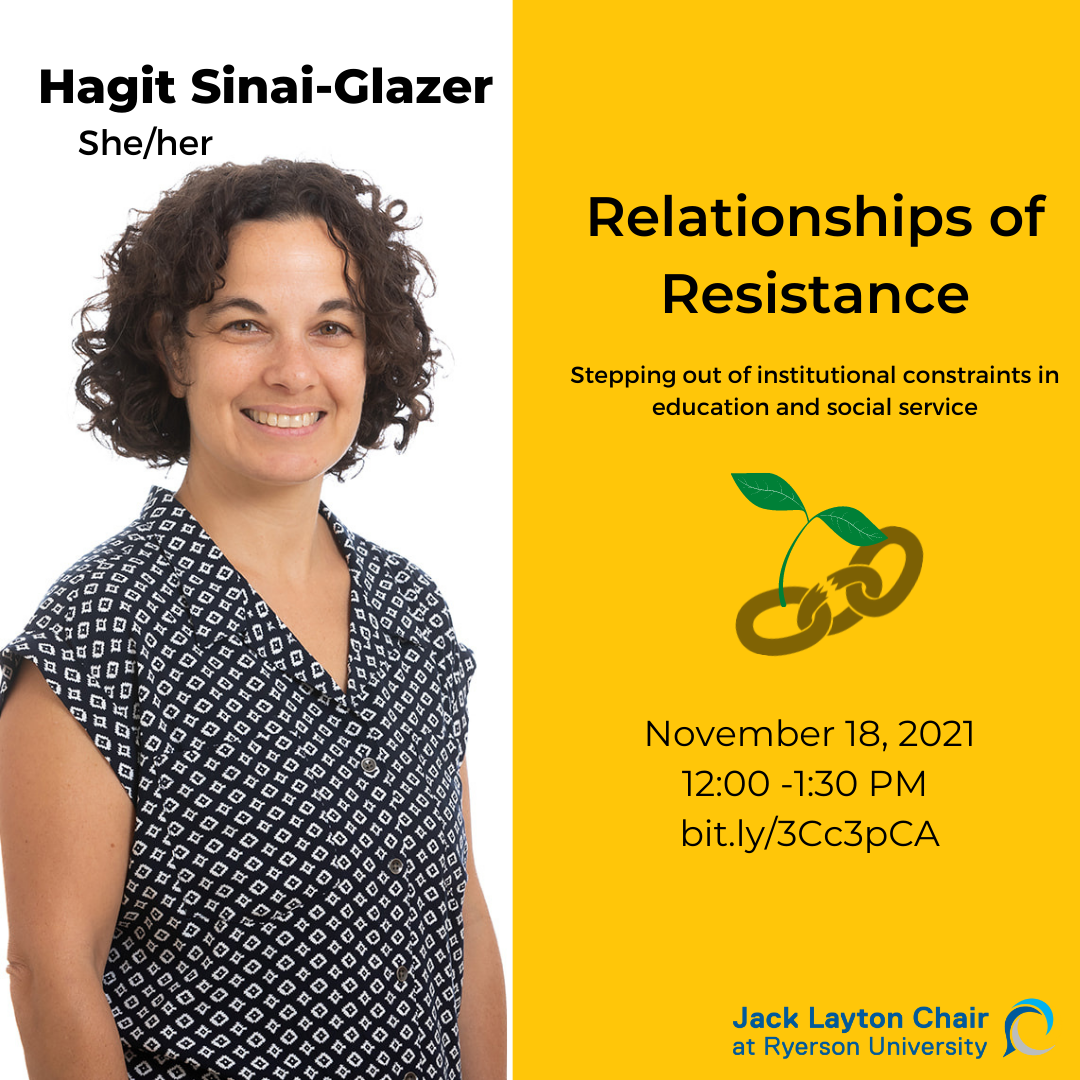
Hagit Sinai-Glazer
Dr. Sinai-Glazer (she/her) is an assistant professor in the School of Social Work at Tel-Aviv University. Hagit completed her PhD at McGill University School of Social Work, earning the Director’s prize for best dissertation. In 2020-2021 Hagit was an Azrieli postdoctoral fellow, conducting innovative ethnographic work in Israel’s public social services. In her research, Hagit traces how facets of everyday practice in public social services are shaped by social, professional, and institutional structures and organizations, and how social workers and service users find ways to work with, through, and against these constraints.
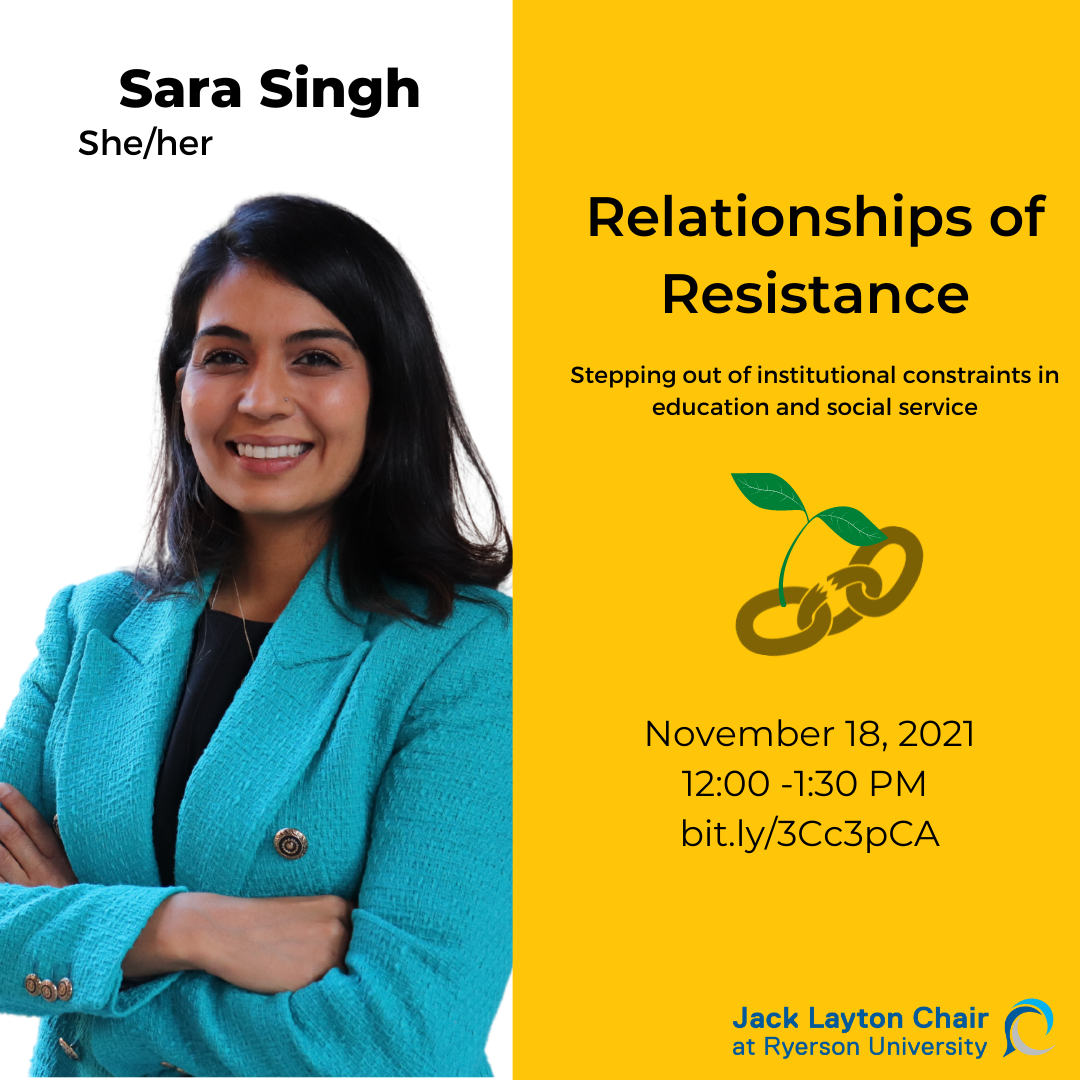
Sara Singh
Sara Singh is currently a Member of the Provincial Parliament in Brampton Centre, she also serves as a deputy leader of the Ontario New Democratic Party. She is a community advocate, educator and artist. She is the co-founder of Broadening Horizons an arts-based organization engaging young people in taking action on social justice issues. She has completed a PhD in Policy Studies at Ryerson University, specializing in social policy. She also holds an M.A in International Development Studies from Saint Mary’s University in Halifax, Nova Scotia, and B.A in Political Science from York University’s Glendon College. She is passionate about creating change and addressing social justice issues in the community.