Future Communications Conference | Open House
Dive into the future of communication and culture at 'Future Communications! A ComCult Conference,' where students showcase groundbreaking research and creative projects in thematic panels.
The theme “Future Communications” can be interpreted broadly to include investigations of all aspects of culture, media, politics, policy, technology, and creative practice.
Paper presentations, poster presentations, panel discussions, workshops, and creative artwork, both ongoing and completed research is welcome. The conference is intended especially to support the development of student researchers in early stages.
Next conference: Friday, December 12, 2025
Conference Themes
Friday, December 12, 2025 at York University (Keele Campus), Toronto, Ontario, Canada
This year’s theme, Encoded Worlds, invites us to think about how communication systems shape the ways we live, relate, and imagine possible futures. The nine sessions are organized into three thematic blocks that reflect the core questions guiding this year’s conference agenda:
- Group A: Digitality, Identity, and Culture (The ‘Self’ and the ‘Screen’)
How digital platforms and cultural practices shape who we are, how we express ourselves, and how communities take form. - Group B: Technology, Governance, and Ethics (The ‘System’ and the ‘Rules’)
How infrastructures, platforms, and automated systems influence governance, power, and the ethical conditions of everyday life. - Group C: Media, Space, and Materiality (The ‘World’ and the ‘Environment’)
How communication is grounded in physical, spatial, and environmental systems, and how these settings shape collective experience.
Conference Schedule
- 10:00 AM – 10:30 AM - Registration
- 10:30 AM – 12:00 PM (90 minutes) - Session Block 1
- Session 1A: Identities in Motion: Diaspora, Memory, and Representation
This session explores how communities use media for resistance and identity building, and how contested political history is fought over and defined through film and news.
- Session 1B: Encoded Governance and Platform Power
This session explores how digital platforms and algorithms act as tools of political and economic control, creating systemic bias, exclusion, and global surveillance.
- Session 1C: Urban Worlds and Spatial Imaginaries
This session examines how city policy and gentrification attempt to control urban life, exploring how marginalized communities challenge these systems by creating new cultural maps and asserting their presence in public spaces.
- Session 1A: Identities in Motion: Diaspora, Memory, and Representation
- 12:00 PM – 12:15 PM Refreshment Break
- 12:15 PM – 1:45 PM (90 minutes) - Session Block 2
- Session 2A: Creativity, Embodiment, and Cultural Practice
Creative researchers use making, performance, sound art, and fabrication to explore how identity, resistance, and queer-feminist ecologies are produced through the body.
- Session 2B: Algorithmic Systems and Affective Governance
This session examines how algorithms and media infrastructures are deployed by states and corporations to manage emotion, reproduce bias, and enforce geopolitical power, from historical ideological education to the political economy of surveillance.
- Session 2C: Material Infrastructures and Environmental Media
This session uses creative works and critical research to expose the hidden environmental and ethical costs of digital infrastructures, offering new forms of ecological communication that challenge violence and reconnect us with the natural world.
- Session 2A: Creativity, Embodiment, and Cultural Practice
- 1:45 PM – 2:00 PM Refreshment Break
- 2:00 PM – 3:30 PM (90 minutes) - Session Block 3
- Session 3A: Narrative, Affect, and Decolonizing the Self
This session shows how powerful narratives - from cinema and speculative fiction to personal stories - are used to challenge external control over our cultural identity and our physical bodies.
- Session 3B: Datafication, Platforms, and Digital Economies
This session critically examines how platforms, credit systems, and smart cities function as powerful financial tools that extract data, reinforce economic inequality, and govern both individual behavior and urban space.
- Session 3C: Space, Safety, and Embodied Futures
This session investigates how we design future technologies and policies, from smart wearables to urban planning, to create safer, more accessible spaces for vulnerable people and bodies.
- Session 3A: Narrative, Affect, and Decolonizing the Self
- 3:45 PM – 6:00 PM Conference Reception and end of term mixer. Everyone is welcome.
The 8th Annual Future Communications graduate student conference invites master’s and doctoral students to join us in an afternoon of dynamic discussions, creative presentations, and interdisciplinary exchange. This year’s theme, "Echoes and Amplifications: Memory, Media, and Marginality," explores the ways in which media and communication practices intersect with memory, power, and marginality.
We encourage broad interpretations of this theme, welcoming investigations into all aspects of culture, media, politics, policy, technology, and creative practice. We are particularly interested in how media both reflects and reshapes narratives of marginalized communities, how stories from the margins are preserved or erased, and how new technologies are amplifying or silencing certain voices.
Location: TMU Campus DCC 7th Floor
Conference Agenda
| Time | Session |
| 11:30 am – 12:00 pm | Registration Participants check in, receive conference materials, and network. Light refreshments will be served. |
| 12:00 pm - 1:15 pm | Session 1 Panel 1A: Weaving Memories: Amplifying Marginalized Voices Through Storytelling Panel 1B: Digital Echoes: Unveiling Media Bias and Representation Online Panel 1C: Feminist Intersections: Media, Identity, and Empowerment |
| 1:15 pm - 1:45 pm | Refreshment Break |
| 1:45 pm - 3:00 pm | Session 2 Panel 2A: Decolonial Dialogues: Global Tales of Resistance Panel 2B: Activist Media: Catalysts for Social Justice and Change Panel 2C: Navigating Digital Frontiers |
| 3:00 pm - 3:30 pm | Refreshment Break |
| 3:30 pm - 4:45 pm | Session 3 Panel 3A: Intersectional Identities: Race, Gender, and Sexuality in Media Panel 3B: Empowering Communities and Fostering Engagement |
| 5:00 PM – 7:00 PM | Reception and End of Term Mixer |
After a hiatus due to the pandemic, Future Communications! was back, in-person, with a dynamic showcase of student research and creative projects.
The December 2023 conference explored diverse themes within the realms of nationhood, policy, politics, theory, and digitality. In the session on "Nationhood, Policy, and Politics," topics ranged from an examination of resistance to revising Canada's 1991 Broadcasting Act and regulating online streaming to a critical analysis of the intersections of homonationalism and #BlackTransLivesMatter. The "Theoretical Explorations" session delved into areas such as the science of projectification, capitalism's impact on existentialism, feminist perspectives on photography, and the reclamation of viewing agency. The final session on "Data and Digitality" covered exploration of Netflix's interactive ambitions, investigation into the neoliberal imagination regarding data, and examination of spatializing algorithmically mediated cyberspaces. The conference thus provided a comprehensive exploration of contemporary issues at the intersection of communication, technology, and society.
| Time | Programming Guide |
| 12:45 to 1:00 pm | Welcome and Registration |
| 1:00 to 2:15 pm | Session 1: Nationhood, Policy, and Politics |
| 2:15 to 2:30 pm | Refreshment Break |
| 2:30 to 3:45 pm | Session 2: Theoretical Explorations |
| 3:55 to 4:55 pm | Session 3: Data and Digitality |
| 5:00 to 7:00 pm | Conference Reception co-hosted by the ComCult Graduate Student Association. |
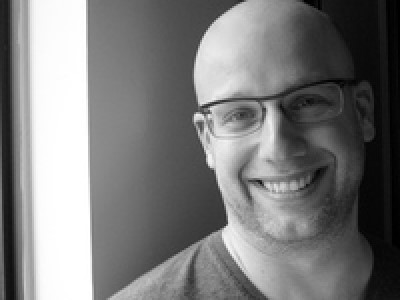
Mark Hayward (York University) - “Platform Multiculturalism: Histories and Futures of Media Diversity in Canada”
What kinds of futures might we imagine for media supporting and serving cultural and linguistic diversity in Canada? How might the history of the role media has played in Canadian multiculturalism contribute to discussions about media, identity and culture? Focusing on how traditional media (radio and television in particular) are adapting to the dynamics of contemporary digital media economies, Dr. Hayward explores how the contested and conflicted history of media diversity in Canada might contribute to the critique and transformation of ideas of multiculturalism in light of the emergence of platform media.
Mark Hayward is an associate professor in the Department of Communication Studies at York University and the author of the forthcoming Identity & Industry: Making Media Multicultural in Canada (MQUP).
| Time |
Programming Guide |
| 9:00 – 9:30 | Welcome and Registration |
| 9:30 – 11:00 |
Conference Sessions A
|
| 11:05 – 11:15 | Refreshment Break |
| 11:15 – 12:45 | Conference Sessions B
|
| 12:50 – 13:25 | Lunch and POSTER SESSION |
| 13:30 – 15:00 | Conference Sessions C
|
| RECEPTION AND KEYNOTE | |
| 17:00 – 18:00 | Light Refreshments |
| 18:05 – 19:30 | Keynote: Dr. Mark Hayward, York University “Platform Multiculturalism: Histories & Futures of Media Diversity in Canada” |
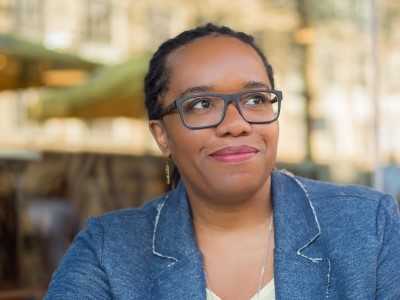
Cheryl Thompson (Toronto Metropolitan University) -"Reading Black Canadian Newspapers in the 1970s and 1980s: How Black Beauty Culture Entered Department Stores and Drugstores"
In 2018, Dr. Cheryl Thompson joined the School of Creative Industries as Assistant Professor. She earned her PhD in Communication Studies from McGill University under the co-supervision of Dr. Will Straw and Dr. Charmaine Nelson. Her first book, Beauty in a Box: Detangling the Roots of Canada’s Black Beauty Culture will be published with Wilfrid Laurier Press in April 2019. Prior to her position at TMU, Cheryl was a Banting Postdoctoral Fellow (2016-2018) at the University of Toronto and the University of Toronto Mississauga (UTM) at the Centre for Drama, Theatre and Performance Studies and in the Department of English and Drama. In 2017, Cheryl gave a TEDx Talk at the University of Toronto Scarborough, titled “Why Positive Thinking is Not Enough.” In addition to her academic writing, Cheryl is a frequent contributor to Spacing.ca, and has published articles in the Canadian Theatre Review, Rabble.ca, Toronto Star, Montreal Gazette, GUTS Magazine, and ByBlacks.com.
| Time | Programming Guide | |
| 9:30 am – 10:00 am | Coffee, Registration, Meet and Greet | |
| 10:00 am – 11:45 am | Panel Sessions A A1: Digital Discourses A2: Technological Impacts and Applications A3: Roundtable: The Extra-linguistic: Research Creation as Methodology |
Art Practice Display in Victor Phillip Dahdaleh Building 3009 |
| 11:45 am – 12:00 pm | Refreshment Break | |
| 12:00 pm – 1:30 pm | Panel Sessions B B1: Technology and Cultural Practices B2: Spaces: Material and Metaphorical B3: Roundtable: Methods and Methodologies in Communication and Cultural Studies Research Creation Presentation and Artist Talks |
Research Creation Presentation and Artist Talks (Dahdaleh Building 3009) |
| 5:00 pm – 6:00 pm | Light Refreshments | |
| 6:00 pm – 7:30 pm | Keynote Address: Dr. Cheryl Thompson: “Reading Black Canadian Newspapers in the 1970s and 1980s: How Black Beauty Culture Entered Drugstores and Department Stores.” | |
| 8:00 pm – close | Conference Reception co-hosted by the ComCult GSA | |
Colleen Derkatch (Toronto Metropolitan University) teaches undergraduate and graduate courses in rhetoric and writing studies, and supervises graduate students in rhetoric, health humanities, and science and technology studies. Her research aims to understand and explain how language motivates and shapes human activity—how language produces, demarcates, and communicates systems of knowledge, expertise, and authority; how it organizes experience; and how it orients us toward certain beliefs and behaviours and away from others.
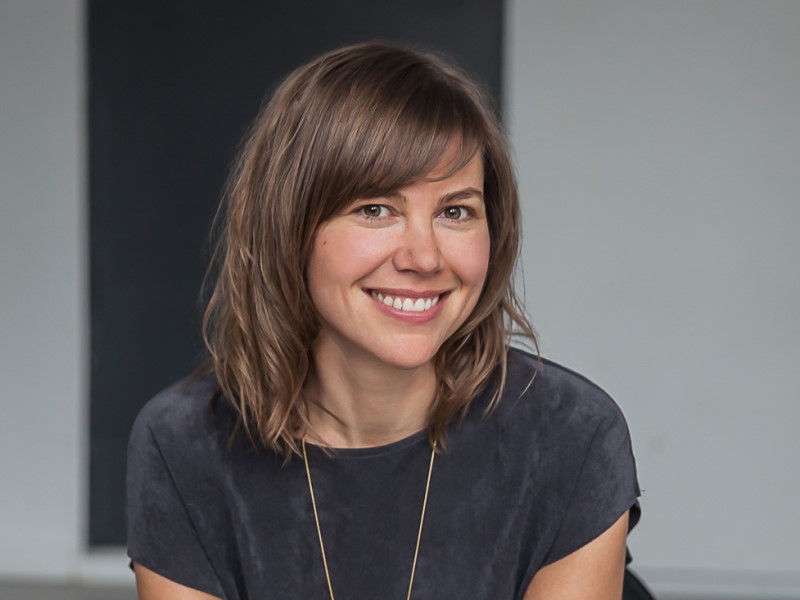
Nicole Cohen (University of Toronto), author of Worker’s Rights: Freelance Journalism in a Digital Age (2016, McGill-Queen’s University Press)
Dr. Cohen is an assistant professor at the Institute of Communication, Culture, Information, and Technology at the University of Toronto Mississauga and holds a graduate appointment in the Faculty of Information. She is the author of Writers’ Rights: Freelance Journalism in a Digital Age (McGill-Queen’s University Press, 2016), which won the Gertrude J. Robinson Book Prize from the Canadian Communication Association in 2017.Nicole researches in the area of political economy of communication, particularly labour and organizing in the media and cultural industries, media work and journalism. Her research has been published in South Atlantic Quarterly, The Communication Review, Canadian Journal of Communication Studies, Democratic Communique, and several edited books in communication studies. Nicole collaborates on the international SSHRC-funded project, Cultural Workers Organize.
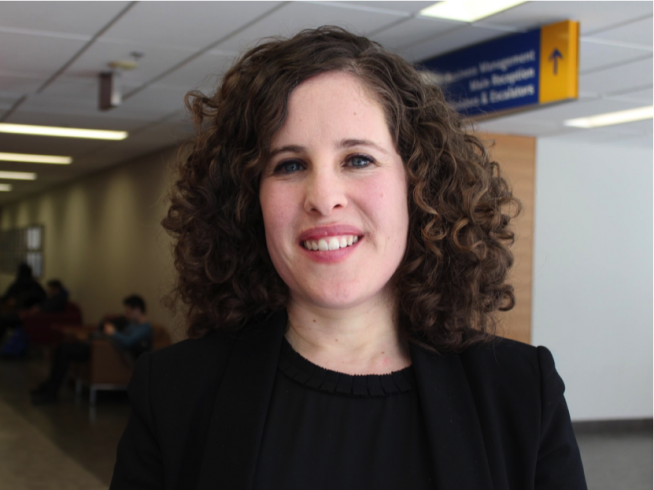
Penelope Ironstone (Wilfrid Laurier University), Associate Professor, Department of Communication Studies and MA in Cultural Analysis and Social Theory. President of the Canadian Communication Association and the book review editor for the Canadian Journal of Communication.
Tom Sherman is an American-Canadian artist working in video, audio, radio, performance, sculpture and text/image. He is also a writer of nonfiction and fiction. He is a recipient of Canada's Governor General's Award in Visual and Media Art.
Note to presenters
Each presenter will have 15 minutes for their presentation. Once everyone has presented, there will be 20 minutes question and answer session.