Social Media and the Struggle to Reclaim Iran’s Historical Identity
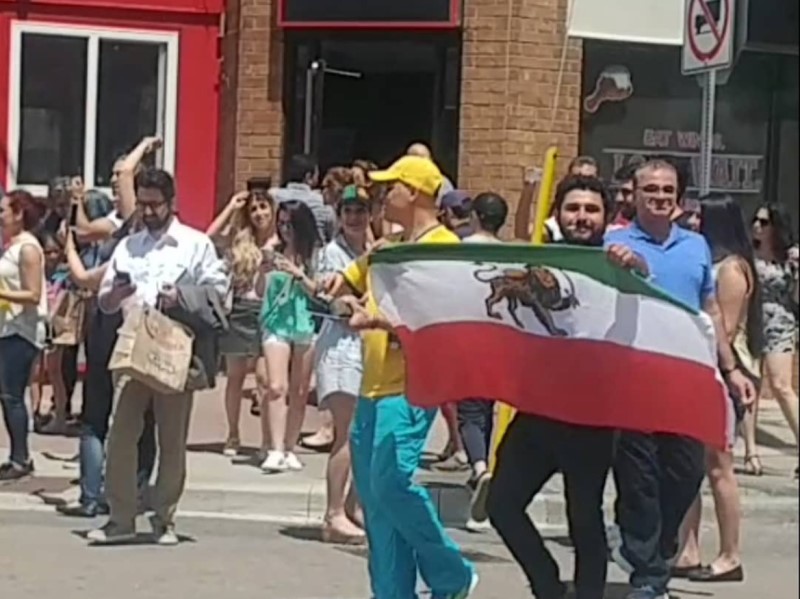
A public demonstration by Iranians opposing the current Iranian regime and supporting democratic and human rights reforms. Photo: Sayeh Khajeheiyan
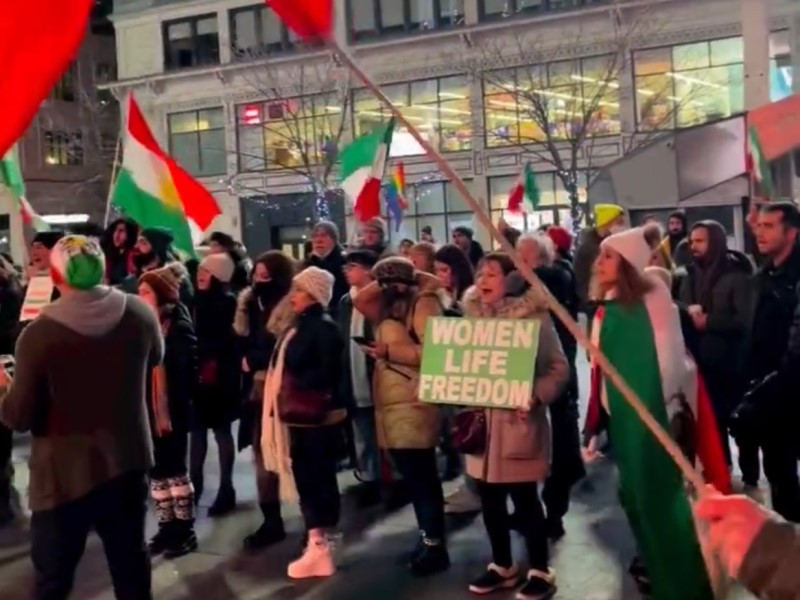
An anti-regime protest by Iranian-Canadian in Toronto, expressing solidarity with movements for women’s rights and freedom in Iran. Photo: Sayeh Khajeheiyan
Social media has become a powerful enemy of state censorship. It can expose truths, amplify voices, and enable resistance.
If the humanities cannot improve the human condition, what other legitimate purpose do they serve? Academia can play a vital role in the everyday struggles of humanity; otherwise, it risks disappearing into endless debates that lead nowhere. Iran offers an obvious example of why this engagement matters. Millions of people in Iran live under the domination of a dictatorship and a brutal regime that censors their thoughts and beliefs and exploits their resources. Intellectuals and artists are forced to flee the country or spend their lives in prison. At times, they are even sentenced to death simply for expressing themselves.
Globalism vs Nationalism
For the past 47 years, the Islamic government of Iran has sought to eliminate Iran’s rich cultural heritage. It promotes the false narrative that Iranian civilization had no significant achievement before Islam, an outright lie refuted to deploy the nation from its identity. School history textbooks have been revised to exclude references to the nation's monarchic era, and a significant part of Iran’s historical legacy has been erased. Within this context, nationalism turned into a powerful form of resistance, particularly as the regime systematically suppressed national symbols and prohibited demonstrations.
The Iranian regime has adopted a globalist strategy aimed at supporting regional movements across the Middle East, channeling the country’s resources into building proxies in the region. This is pursued under the banner of resistance, even as Iranian citizens endure severe economic hardship and increasing poverty. This globalist agenda seeks influence beyond Iran’s borders, while nationalism, rooted in the everyday concerns of the Iranian people, has re-emerged as a form of resistance. People express a clear desire to avoid regional conflicts and reject the government's support for proxy forces. Their message is clear: they desire peace, stability, and a focus on rebuilding their own nation. They do not want to fight other nations’ battles.
What a fortunate coincidence that we live in the era of communication. Social media has become a powerful enemy of state censorship. It can expose truths, amplifying voices, and enabling resistance. Yet, these same platforms can also distort, or delay collective action. This complex duality makes it an important time to study the role of digital media in activism, especially through real-life examples like the ongoing situation in Iran. A significant question is: what is the dynamic between the traditional media and social media in the local activism? How could people improve it to better support collective movements since 2008? whom can people trust (or not trust) in a digital landscape where information is easily manipulated?
Impressions in Social Media
The visual nature of social media is key here: as the regime attempts to divide the nation from its roots by repressing cultural symbols, people fight back by sharing images of Persian kings, ancient symbols, and celebrating national events, to defending their cultural heritage. These symbols are more than just cultural artifacts; they are emblems of a larger political struggle against the state’s ideology. This act is merging nationalism with resistance and their heritage becomes the symbol of their struggles against political oppression.
Historical continuity or change?
Observations show a deep cultural continuity dating back to the seventh century and efforts of a nation to preserve its culture against foreign ideologies. Cultural heritage is inherently political because cultural symbols, language, traditions, and historical narratives, are deeply tied to power, identity, and control. Throughout history, the preservation of cultural heritage has served as a powerful means of resisting cultural erasure, what can be described as cultural apartheid. Notably, from 2008 to the present time, we have witnessed a growing resurgence of this resistance, notably through digital platforms that allow people to reclaim and magnify suppressed cultural identities.
The struggle to preserve Iran’s cultural memory is ongoing, but digital platforms are giving people new ways to fight back and connect. By sharing images, stories, and history online, Iranians are not just resisting erasure - they are imagining a freer future together. Studying these movements reminds us that culture can inspire action, and that collective voices, amplified online, can spark real change.
About the author: Sayeh Khajeheiyan is a Ph.D. student in Communication and Culture, with an academic background in cultural heritage conservation, archival studies, and art history. Their research focuses on the intersections of Middle Eastern politics, digital activism, and cultural studies, with particular attention to activism and the role of cultural heritage in resistance movements. Through an interdisciplinary lens, Sayeh examines how digital platforms are used to preserve cultural memory and mobilize collective action.
Insights & Ideas is a ComCult blog series showcasing the research and expertise of ComCult students. Designed to engage a broad audience, the series features op-ed-style posts that connect academic insights to real-world issues, making complex ideas accessible and relevant. Each entry highlights the unique perspectives and innovative thinking within the ComCult program. We invite you to explore more stories that amplify research and inspire ideas! (News and Events Archives)