Tehranto: Stories of Home and Belonging from Toronto’s Iranian Diaspora
Team Members
Funders
Insight Development Grant from the Social Sciences and Humanities Research Council (SSHRC-CRSH)
Description
Although Toronto’s Iranian diaspora is one of the largest outside Iran—second only to Los Angeles—and increasingly visible and politically active, Tehranto: Stories of Home and Belonging from Toronto’s Iranian Diaspora is the first extended interdisciplinary study of this community. Addressing gaps in migration scholarship on Iranians, which has tended to prioritize economic integration and fixed categories such as race, religion, and ethnicity, this project adopts an intersectional approach that centers emotions as a lens for understanding belonging, migration, and place-making. In doing so, it contributes to broader discussions of Toronto’s evolution as a city shaped by diversity and multiculturalism.
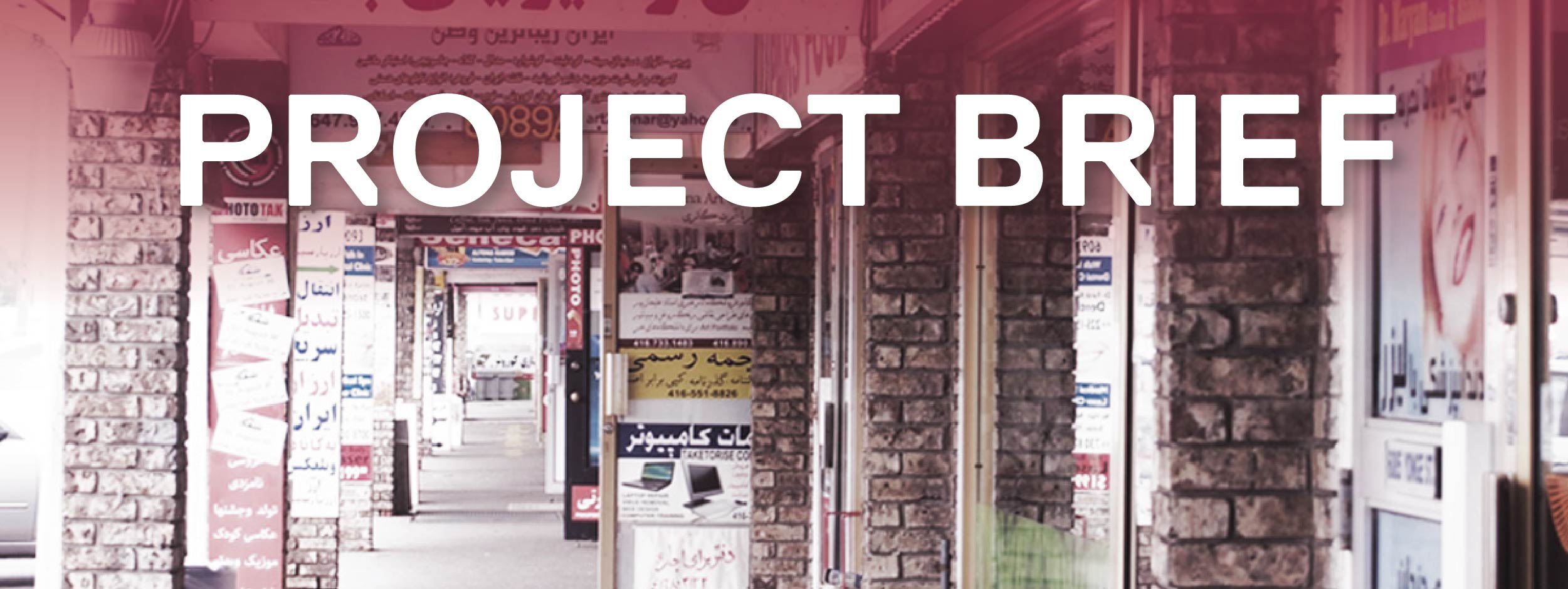
Grounded in deep knowledge of Iranian diasporic culture, the project examines the growth and influence of Toronto’s Iranian community over more than four decades of immigration, situating this history within the transformation of “Tehranto” from a predominantly White Anglo-Saxon area into a vibrant Iranian hub. By mapping this spatial and social change, the study explores how “home” is constructed, experienced, and challenged, particularly for diasporic Iranians whose attachments are shaped by emotional and material ties to Iran and by complex migratory trajectories that often involve multiple homes before settlement in Toronto.
Centering the life narratives, recollections, and memories of Iranian migrants in Toronto, the project analyzes three interconnected dimensions of belonging: the mobilization of nostalgia and its cultural and material expressions; the emotional dimensions of homemaking and homeownership; and the concept of return, encompassing imagined and, at times, actual engagements with Iran. Together, these perspectives illuminate the emotional geographies of migration and deepen understanding of how diasporic communities shape—and are shaped by—urban spaces.

Methodologies
The research team will use interviews, public readings, photovoice, and subjective cartography to collect data while advancing knowledge mobilization.
- Phase 1 includes public readings and gathering archival, media, and social media data to map the development of Iranian businesses and community spaces in Toronto.
- Phase 2 focuses on collecting qualitative data through interviews, participant observation, photography, and emotional mapping during urban and domestic tours with participants. This ethnographic approach will reveal the diverse experiences of home and belonging within Toronto’s Iranian community.
- In Phase 3, the investigators will collaborate with TMU’s Centre for Digital Humanities and the Library Collaboratory to develop an interactive digital platform using geolocated storytelling applications. Participants will connect memories and emotions to places in Toronto and abroad, creating layered, transnational “home-city biographies.”
- Phase 4 will result in a digital map installation and public exhibition showcasing participants’ stories, photographs, and emotional maps. Hosted at TMU, this installation will serve as both an archival record and a dynamic storytelling platform highlighting the Iranian diaspora’s migration and homemaking experiences.
Project Outcomes
This project is entering its second phase. Researchers have organized 3 public readings so far and are planning a 4th in conjunction with a global conference on the Iranian diaspora in May 2026. Researchers have conducted a series of interviews with members of the Iranian community in Toronto and are actively building an archive of stories, photographs, and emotional maps.