Truth Telling: gardens, farming and food experiences at the Mohawk Institute Indian Residential School
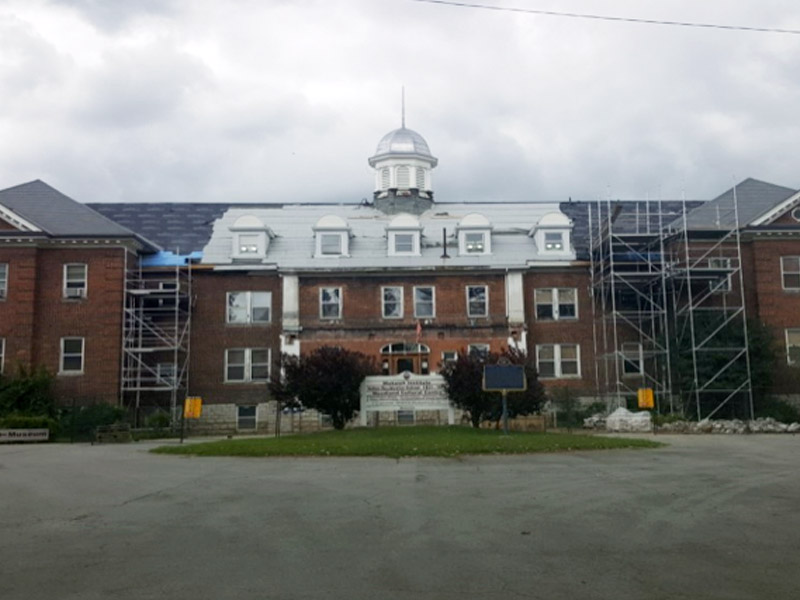
The project describes experiences and perceptions of gardens, farming and food in relation to the Mohawk Institute Indian Residential School; and, the Indigenous community-led programs designed to improve food access and food sovereignty. The purpose of the project is to share the experiences of those who attended the Mohawk Institute Indian Residential School with the aim to build knowledge towards Truth and Reconciliation Call to Action #65 (to advance understanding of reconciliation). This project aims to:
- Describe the experiences, perceptions and impacts of those who worked in gardens and farms while attending the Mohawk Institute Indian Residential School.
- Describe how community garden initiatives are perceived by Indian Residential School survivors and their families.
- Identify, from the perspectives of Indian Residential School Survivors, their families and community stakeholders, recommendations for food security initiatives that include truth, reconciliation and self-determination of Indigenous peoples.
Experiences of Food, Gardens and Farming While Attending Indian Residential Schools in Canada
In June 2025, Dr. Sandra Juutilainen and the team of researchers behind the ongoing Truth Telling project published a scoping review sharing their latest research.
Dr. Juutilainen is an Assistant Professor at the School of Nutrition at Toronto Metropolitan University. Her areas of expertise include Indigenous health and wellness; food security and food sovereignty, and critical dietetics.
Simms, C., Juutilainen, S., Freeman, B., Morrow, T., Massarella, S., Yessis, J., Hanning, R., Dias, L., & Ng, E. (2025). Experiences of Food, Gardens and Farming While Attending Indian Residential Schools in Canada: A Scoping Review. Canadian Journal of Dietetic Practice and Research, 1–12. https://doi.org/10.3148/cjdpr-2025-014 (external link)
Abstract
The negative experiences of Indigenous children who attended Indian residential school are well documented. A scoping review of the peer-reviewed and grey literature was conducted, following the methodological framework of Arksey and O’Malley (2005). Most documents focused on the impacts of residential schooling among First Nations, but some included Métis and Inuit. Sixty-eight articles were selected for inclusion, analyzed and categorized by theme. Themes identified stemming from Indian residential schools’ food policies and practices included disruption in traditional food ways; underfeeding, child labour; and increased rates of obesity and diabetes later in life. Future strengths-based research utiliz-ing Indigenous methodologies is needed to examine how allies and Indigenous communities are involved in actions to restore traditional food systems.
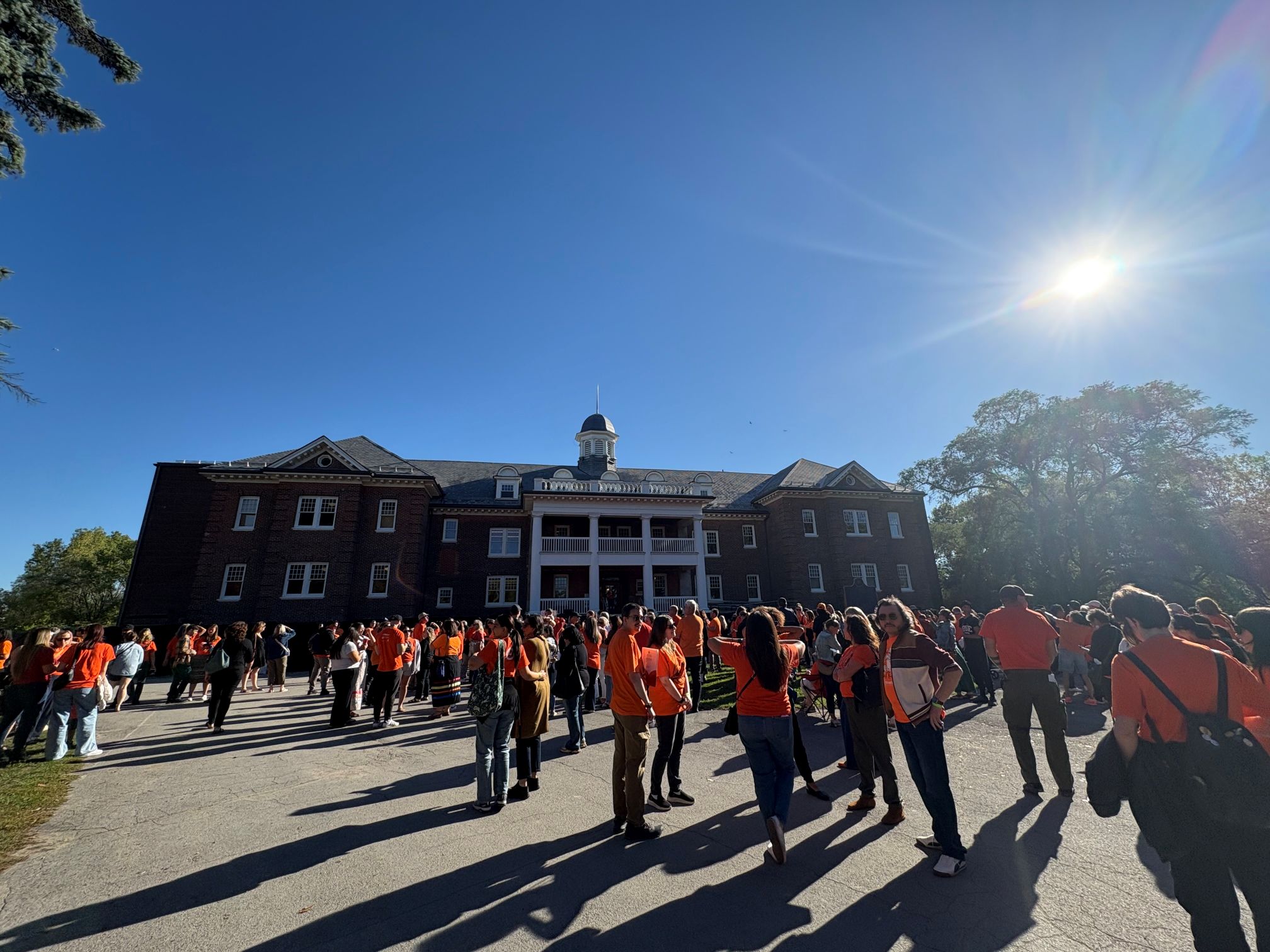
On September 30, the the National Day for Truth and Reconciliation, the former Mohawk Institute Residential School was reopened as the new Interpretive Historic Site and Educational Resource. The Mohawk Institute was the longest-running Indian residential school in Canada.
Behind the Bricks
The Life and Times of the Mohawk Institute, Canada’s Longest-Running Residential School
Behind the Bricks, published September 1, 2025, is the story of the Mohawk Institute, Canada’s first and longest-running residential school and a model for the entire residential school system.
Teri Lyn Morrow, Bonnie Freeman, and Sandra Juutilainen coauthored chapter 9 in the book.
ęhǫwadihsadǫ ne :ˀhniˀ adigyenǫ :gyeˀs ganahaǫgwęˀ ęyagǫnhehgǫhǫ :k / They buried them, but they the seeds floated around what will sustain them.
Morrow, T. L., Freeman, B., & Juutilainen, S. (2025). ęhǫwadihsadǫ ne :ˀhniˀ adigyenǫ :gyeˀs ganahaǫgwęˀ ęyagǫnhehgǫhǫ :k / They buried them, but they the seeds floated around what will sustain them. In R. W. Hill Sr., A. Norman, T. Peace, & J. Pettit (Eds.), Behind the bricks: The life and times of the Mohawk Institute, Canada’s longest-running residential school (pp. 253–270). University of Calgary Press. (external link) https://press.ucalgary.ca/books/9781773856520 (external link)
Abstract
Our chapter, ęhǫwadihsadǫ ne:ˀhniˀ gadigyenǫ:gyeˀs ganahaǫgwęˀ ęyagǫnhehgǫhǫ:k / They buried them, but they the seeds floated around what will sustain them, presents a case study examining the intergenerational impacts of attendance at the Mohawk Institute Indian Residential School on Haudenosaunee food systems, relationships with land, and family food practices. Grounded in the Two Row research paradigm and Haudenosaunee epistemologies, the study draws on semi-structured interviews with a Cayuga residential school Survivor, Beverly Albreight, and her daughter, Elizabeth Maracle. Their narratives reveal how the denial of language, ceremony, and traditional foodways at the Mush Hole1 - along with punitive and nutritionally inadequate feeding practices - disrupted cultural knowledge, damaged relationships with food, and contributed to long-term emotional, physical, and spiritual consequences. The findings highlight how these experiences shaped later family dynamics, including food insecurity, hoarding, and disconnection from land-based practices and ceremony, as well as efforts to reclaim cultural knowledge through ceremony, gardening, seed stewardship, and community teachings. By situating these personal experiences within broader histories of colonial food policies, trauma, and the revitalization of traditional foodways via Indigenous food sovereignty. As Haudenosaunee women scholars, we endeavour to build a narrative that underscores the strengths of Haudenosaunee families and the centrality of food, language, land and ceremony in processes of healing.
1. It became known as The Mush Hole, because of the bland porridge (in contrast to their more nutritious corn-based porridge) that Indigenous children were fed by the church and government officials running the school. Source: https://earthtotables.org/essays/mush-hole/
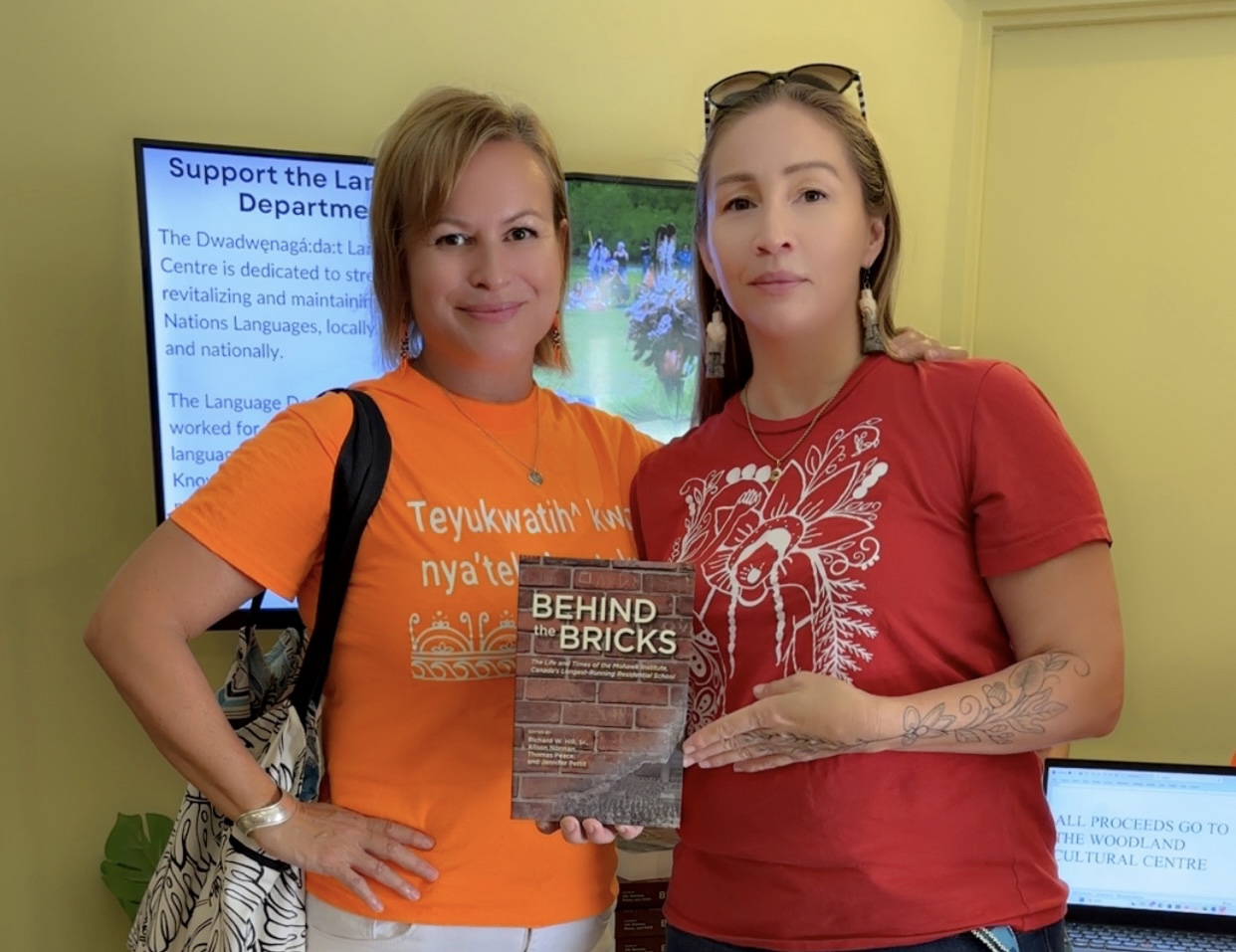
Dr. Sandra Juutilainen (L) and Teri Lyn Morrow, along with Dr. Bonnie Freeman (not pictured) co-wrote a chapter in the book Behind the Bricks: The Life and Times of the Mohawk Institute, Canada’s Longest-Running Residential School.
Contributors
Principle Investigator: Dr. Sandra Juutilainen
Six Nations Community Advisors: Sherlene Bomberry; Teri Morrow, RD, MA; Chandra Maracle PhD(c)
Collaborators: Six Nations Council; Dr. Bonnie Freeman (McMaster University) Dr. Rhona Hanning (UWaterloo); Dr. Jennifer Yessis (UWaterloo); Dr. Heather Manson (Public Health Ontario).
sandra.juutilainen@torontomu.ca
Funding
Social Sciences and Humanities Research Council (Insight Development Grant No. 430-2018-0341) $68,194.