SDG 14: Life Below Water
2025 SDG report
SDG 14: Life Below Water
TMU prioritizes SDG 14: Life Below Water through both academic and research initiatives focused on water governance and sustainability. The university works to advance policies for sustainable water use and to protect aquatic ecosystems. Campus-wide programs have also been implemented to reduce water usage and preserve water quality.
24 publications related to SDG 14 published in top research journals (THE Sustainability Impact Ratings)
Our goals in action
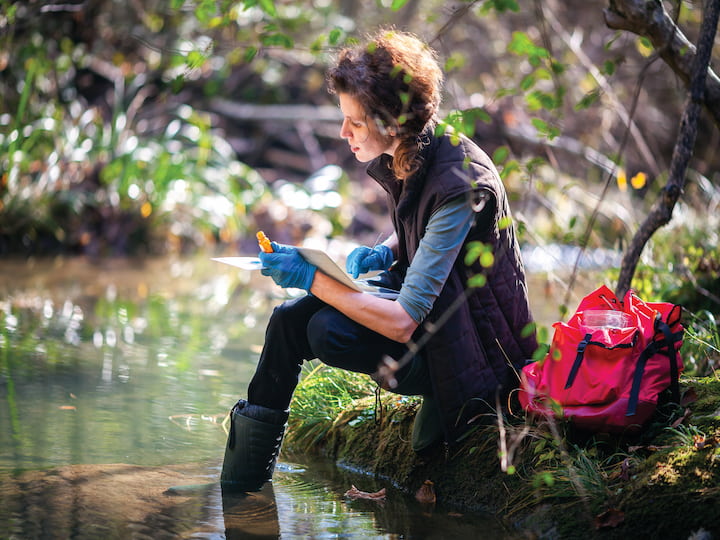
TMU offers a wide range of academic opportunities for students to study the sustainable management of water resources and the effects of human activities on aquatic ecosystems. Through campus volunteering opportunities, TMU students can actively support environmental conservation efforts, including protecting aquatic ecosystems, while developing leadership skills. Student-led initiatives, clean-up events, and sustainability programs provide hands-on experience in environmental advocacy.
- The Geoffrey F. Bruce Graduate and Postdoctoral Fellowships are designed to support the next generation of freshwater leaders, policy researchers and practitioners and increase excellence in public policy to ensure the sustainability of Canada's freshwater resources.
- The Sustainability Ambassador Program is a volunteer leadership program open to undergraduate and graduate students. Students work with peers to lead and inspire students, faculty and staff with initiatives, presentations and campaigns that promote sustainability. Work is conducted with guidance from TMU’s Sustainability Office and in collaboration with university researchers and institutional partners.
- The Living Planet @ Campus is a project led by World Wildlife Fund Canada (WWF Canada) in partnership with the Sustainability Office. Living Planet @ Campus allows students to take meaningful actions to protect the environment and improve sustainability practices within their own lives and on campus. The program offers a number of opportunities for students to build their resumés and contribute to positive change, such as community clean-ups, hackathon competitions, and grant funding.
- The Living Planet Leader is a self-guided program that allows TMU students the flexibility to choose initiatives that are meaningful to them while building the skills and experiences needed in the field of sustainability. Students can also apply for funding to lead conservation projects at TMU that are in line with the goals of the Sustainability Office.
Research at TMU focuses on understanding and protecting aquatic ecosystems through studies on water pollution, wastewater management, and marine resource conservation. TMU researchers are exploring aquatic ecosystems, sustainable fisheries, and marine conservation policies to help protect water resources in Canada and beyond. Our work contributes to global initiatives aimed at preserving biodiversity and ensuring the long-term health of our oceans and other bodies of water.
- Urban Water TMU has numerous projects to find solutions to pressing issues related to wastewater and environmental pollution. The institute also hosts a seminar series open to the public.
- The Spatial Ecology Lab conducts research on land-water ecosystems, urban watersheds and human factors in watershed stewardship to better understand the impact of environmental stressors on species and on ecological functions.
- TMU’s Emerging Contaminants Lab develops innovative methods to further the understanding of the environmental fate and transport mechanisms that govern the behaviour of plastic contaminants in the aquatic environment. Staff at the lab work on interdisciplinary projects ranging from identifying the properties that drive plastic additive patterns in urban waters to the investigation of plastic contaminants in Arctic seabirds.
- Research led by TMU civil engineering professor Rania Hamza offers a promising approach to protecting water sources from PFAS (also known as “forever chemicals”) using aerobic granular sludge, an innovative biofilm-based treatment, in which microorganisms stick together and to surfaces. Once trapped in the sludge, PFAS can be targeted by advanced technologies, such as thermal destruction using incineration or chemical decomposition.
- New School Foods, incubated in TMU’s Science Discovery Zone, worked with food science professor Dérick Rousseau of the Food and Soft Materials Research Group, to perfect patented muscle fibre technology, leading to the launch of the world’s first plant-based salmon filet that looks, cooks, tastes and flakes like wild salmon. The technology can be extended beyond salmon or fish – potentially to other meats, offering an environmentally-friendly alternative.
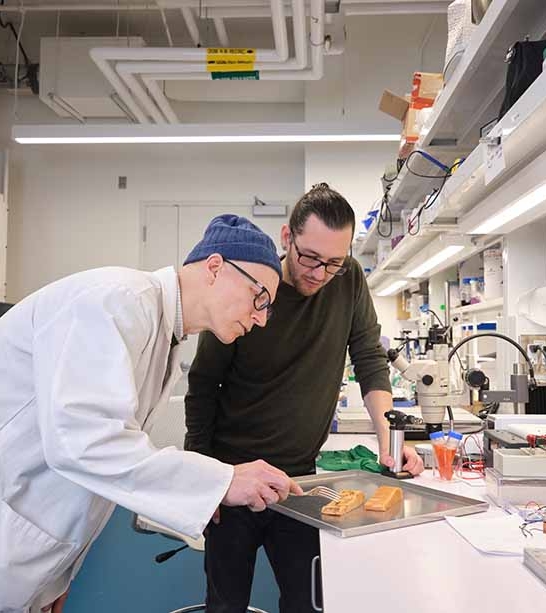
(Photo: Harry Choi)
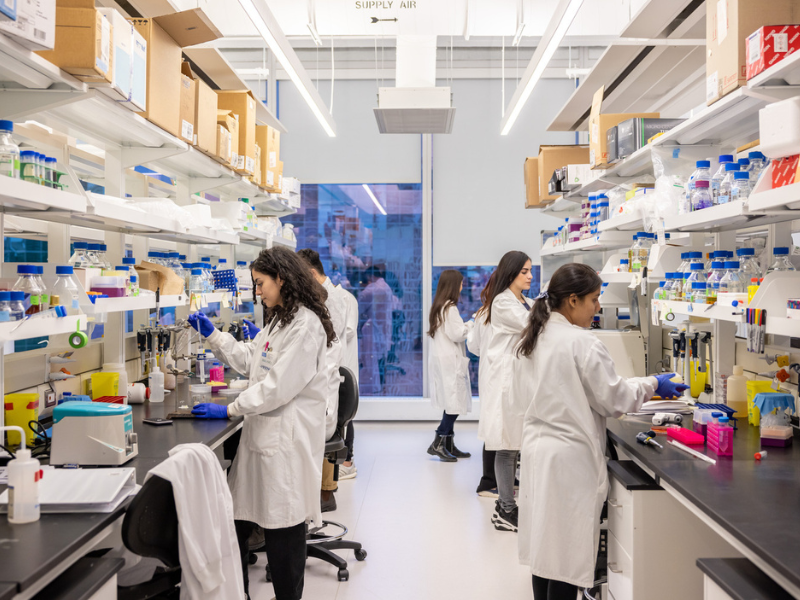
TMU is committed to sustainable operations by reducing its impact on water through responsible purchasing, efficient water management, and eco-friendly campus practices. The university implements strategies to minimize water waste, improve stormwater management, and reduce pollution. These efforts align with TMU’s broader sustainability goals, fostering a campus culture that prioritizes environmental responsibility.
- TMU Eats is working to increase plant-based and sustainable food options and making improvements to our operations aimed at reducing food-related waste and minimizing our use of single-use plastics. Working with local producers, we’re reducing the carbon footprint of our supply chain and supporting a more sustainable and ecologically conscious food system.
- TMU’s Green Labs Program presents an opportunity for lab users to lead by example and implement safe and sustainable solutions to reduce the environmental footprint of their labs. Participants learn about best practices, exchange ideas, participate in events and competitions, and access resources to succeed. Areas covered in the program include sustainable waste management, water conservation, chemical handling, and sustainable purchasing.
- Each year, TMU’s facilities team completes testing of backflow preventers (devices in place to avoid contaminating potable water in water mains). The campus also has 30 premise isolation devices that fall under The City of Toronto BackFlow Prevention Program, which the university tests annually, with results sent to the city.
TMU collaborates with local governments and organizations to maintain clean waterways, assess water quality, and advance research on aquatic sustainability. Through collaborations and community-driven projects, the university helps address pollution, habitat degradation, and conservation challenges. These efforts contribute to healthier water systems that support biodiversity and local communities.
- Urban Water TMU and Facilities Management and Development partnered with WWF-Canada on a project to reduce the university’s use of road salt in the winter. Reducing the amount of road salt applied to urban surfaces is key to mitigating the impacts on water quality and aquatic ecosystem health. The university’s groundskeeping team creates a liquid brine solution (a mixture of salt and water) and applies the spray solution to de-ice campus walkways and stairways in anticipation of snowfalls and freezing rain. Using this method, TMU’s annual road salt use is reduced by one third (more than six tonnes) on campus and costs are reduced by approximately 30 per cent.
- Representatives from government and industry joined with technical experts for a September 2025 workshop (external link) at TMU on managing PFAS (“forever chemicals”) in water. The event was organized by Urban Water TMU, with speakers including TMU professors Roxana Suehring and Patricia Hania.