SDG 3: Good Health and Well-Being
2025 SDG report
SDG 3: Good Health and Well-Being
Through our academic programs, research and community partnerships, Toronto Metropolitan University is committed to advancing health and well-being on campus, in our local community, and around the world. We are dedicated to fostering a holistic approach to health that addresses physical, mental and social well-being.

16% of TMU graduates are from health-related programs (2025)

16 accredited residency programs at TMU’s new School of Medicine
Our goals in action

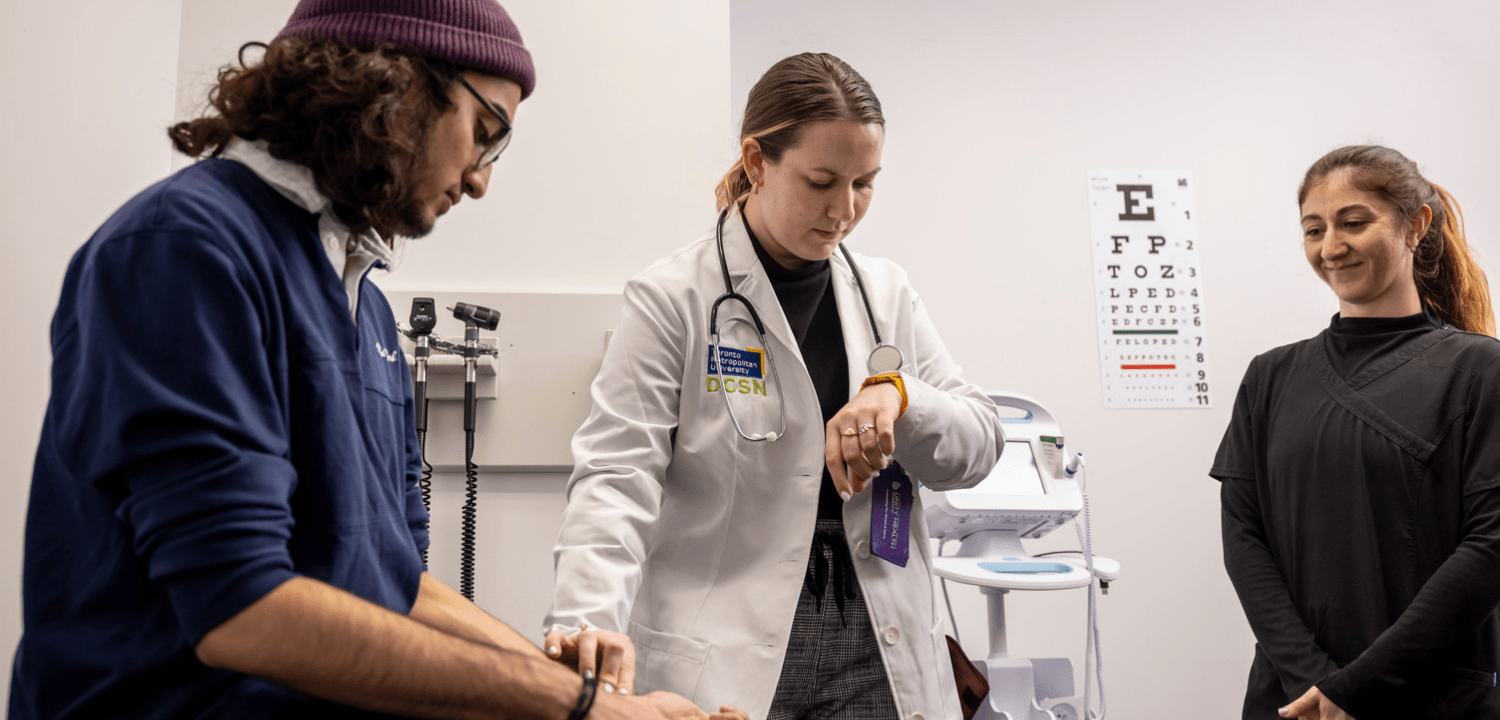
TMU offers a diverse range of academic programs across various credential levels and disciplines that focus on health and well-being. Highlighted by our new School of Medicine, these programs prepare students to tackle the complex health challenges of today and tomorrow.
- In 2025, TMU launched its new School of Medicine, which focuses on primary care for diverse, underserved populations. The school aims to produce compassionate, future-ready clinicians through community-engaged education, scholarship, and service. The school aspires to eliminate health disparities and advance health as a human right by working with communities to achieve health equity.
- The Daphne Cockwell School of Nursing offers various nursing programs, including a Collaborative Nursing Degree (BScN), Post-Diploma Degree Completion (BScN), Master of Nursing (MN) and Nurse Practitioner certificates. It also offers an interdisciplinary Urban Health PhD program focused on leadership in healthcare. The school collaborates with William Osler Health System on an academic practice partnership (external link) to build a skilled healthcare workforce.
- TMU offers one of only two Bachelor of Health Sciences in Midwifery programs in Ontario. There is also an accelerated post-baccalaureate program for those with a health-related degree and labor/delivery experience, with placements available in Northern Ontario, Francophone, or Indigenous communities.
- TMU also offers various programs related to health management and administration, including a Bachelor of Health Administration (BHA), Bachelor of Applied Science (BASc) in Public Health, BASc in Occupational Health and Safety, and a Master of Science (MSc) in Occupational and Public Health. A new Health Services Management major in the Bachelor of Commerce program prepares students to meet the growing demand for skilled professionals who can manage effectively within the complex Canadian healthcare system.
- For adult learners, the Chang School of Continuing Education offers various certificate programs in health and well-being topics, and the Ted Rogers School of Management offers the Foundations of Health Administration and Community Care Mini-Masters to newcomer women.
- The Health & Technology Symposium, held in November 2025 at the Ted Rogers School of Management, critically examined how technology, including artificial intelligence, digital diagnostics, predictive mapping, wearable sensors, robotics and virtual care, is reshaping the ways people experience care and how health systems operate. The event featured a keynote talk, three cross-disciplinary panel discussions and networking opportunities, bringing together a diversity of perspectives from multiple faculties and schools across the university. Speakers and attendees also explored opportunities for new research collaborations and possible future projects.
As a hub of health research, TMU is advancing both the clinical and social aspects of health and well-being. Our work is conducted in partnership with industry and healthcare organizations, contributing to innovative solutions and improved health outcomes.
- The Canada Excellence Research Chair (CERC) in Health Equity and Community Wellbeing program, led by professor Karen Soldatic, focuses on community partnerships to improve health outcomes for all, challenging expert-driven approaches and promoting a preventative, community-engaged model. It uniquely applies a critical disability lens to address health disparities and integrate community knowledge into healthcare systems.
- TMU biomedical and mechanical engineering professor Scott Tsai and a colleague from the University of Toronto have developed GET-EVs Kits – a novel, high-yield system for isolating extracellular vesicles (EVs). These tiny, bubble-like particles found in bodily fluids such as blood, saliva, and urine carry crucial information about cell health and disease. The kits’ clean EV samples allow scientists to more accurately measure indicators of disease presence, progression and response to treatment. The invention is poised to transform how we predict, diagnose and treat serious diseases, including cancer, Alzheimer’s and diabetes.
- A promising advancement in targeted drug delivery for cancer therapy was developed at the Institute for Biomedical Engineering, Science and Technology (iBEST) – a partnership between TMU and St. Michael’s Hospital, a member of Unity Health Toronto. A unique combination of ultrasound and nanomedicine, which uses low-intensity ultrasound waves to activate drug-coated gold nanoparticles inside the human body, can deliver a higher dose of tumour-fighting drugs where they’re needed most. The project has united researchers with expertise in physics, engineering and computational modelling, as well as hospital clinicians and researchers. Farshad Moradi Kashkooli, a Natural Sciences and Engineering Research Council of Canada Banting postdoctoral fellow at TMU's Department of Physics, was awarded the 2024 Polanyi Prize in Physics for his innovative research in cancer treatment.
- To shorten fetal MRI interpretation times, improve diagnostic accuracy and reduce reporting wait times, professor Dafna Sussman of the Maternal-Fetal Imaging LabSussman led research to develop the Fetal Assessment Suite (FetAS). FetAS is a secure, easy-to-use, web-based platform that uses machine learning to automatically process fetal MRI scans and help identify potential abnormalities. It works by combining dozens of lab-developed algorithms that enhance image quality, correct image distortions, outline fetal organs and track growth and development. It also flags areas that may be abnormal, allowing clinicians to focus their attention where it matters most.

TMU prioritizes the health and well-being of its campus community by implementing initiatives that promote wellness. Our campus environment supports physical and mental health, ensuring that all members have access to the resources they need to thrive.
- The Community Wellbeing (CW) department at TMU takes a systems-level approach to address issues impacting wellbeing across the campus community, including both students and staff at the university. CW’s goal is to proactively identify and address issues with the overall aim of reducing strain on downstream services and increasing wellbeing across the TMU community.
- The Environmental Health and Safety (EHS) team at TMU leads, guides and supports environmental health and safety excellence and innovation to enable us to achieve our vision and priorities. The team partners with all academic and administrative departments and provides technical expertise, education and leadership to help build capacity and innovative solutions to cultivate safe, healthy and environmentally responsible operations, teaching and research.
- TMU offers an Indigenous Wellbeing and Cultural Practice Leave. Eligible Indigenous staff from Canada can take up to five paid days per year to support healing and wellbeing, including cultivating cultural interests and practices. The leave is a direct response to recommendations from the TRC Community Consultation Summary Report and Standing Strong Task Force Report, as well as the broader historical context in which Indigenous People have systematically been denied the right to practice their cultural and spiritual traditions.
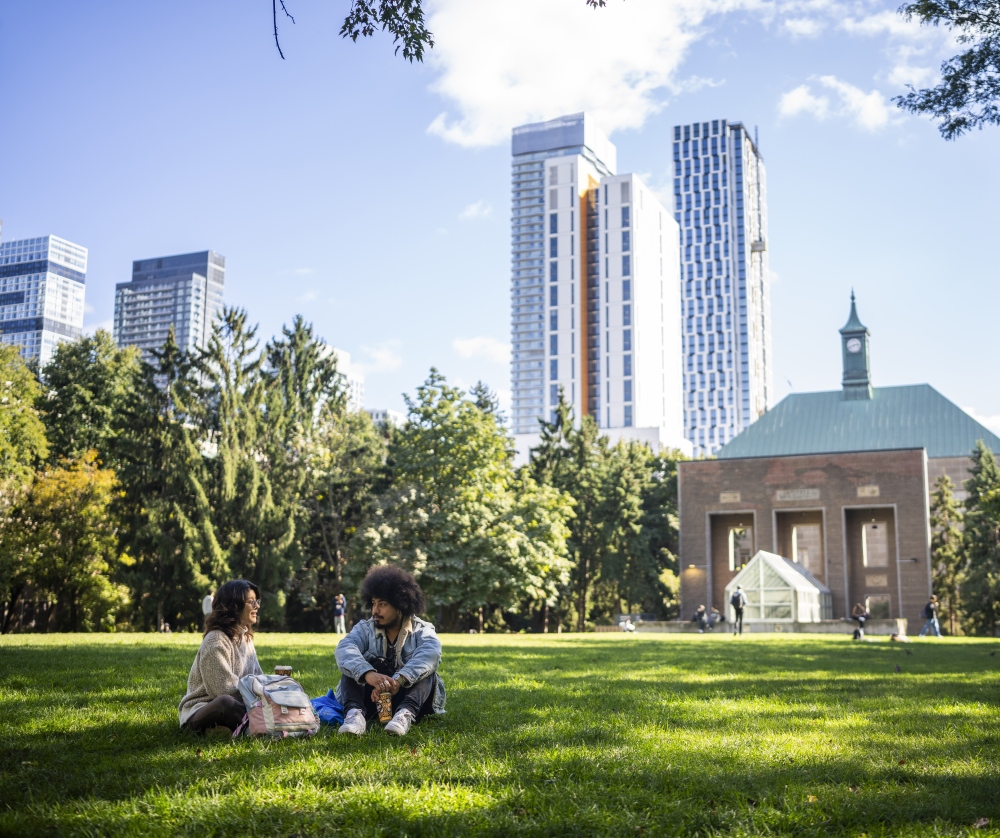
TMU is dedicated to supporting students’ physical and mental health through a variety of services and wellness initiatives. We offer opportunities for fitness, stress relief and overall wellbeing, helping students to balance their academic and personal lives.
- The Medical Centre on campus offers health services to TMU students, staff and faculty, including physicals, mental health assessments, assessments for common medical problems, immunizations, and medical certificates. The Medical Centre is a non-profit unit of Student Wellbeing that aims to promote a healthy environment for work and study.
- TMU offers counselling services for students, including those experiencing mental health crises and those seeking other forms of support.
- At our two fitness centers, the Recreation & Athletics Centre and the Mattamy Athletic Centre, as well as through various initiatives on campus, TMU strives to provide spaces where our community members can engage in a wide range of physical activities to stay fit. TMU’s Recreation & Active Wellbeing web page can help you find an activity or program that’s right for you.
TMU actively works to be a good neighbour by supporting individuals struggling within our community. We share knowledge beyond our borders, collaborating with local and global partners to promote health and well-being for all.
- TMU has established partnerships with the City of Toronto, Toronto Public Health, Toronto Police Service, and local businesses and nonprofits to support the wellbeing and safety of our community. This includes initiatives to respond to medical emergencies, offer harm reduction support, de-escalate threatening situations and bring appropriate services to street-involved individuals who may be experiencing addictions, challenges with mental health and who are unhoused.
- In 2025, the Government of Ontario announced funding to establish teaching clinics and interprofessional primary care teams associated with TMU’s School of Medicine. The clinics will train family doctors and other health professionals, such as nurse practitioners and physician assistants, while providing direct care to connect about 300,000 more people to primary care.
- TMU has been accepted as a new member of the World Health Organization’s (WHO) Disability Health Equity Network. Launched in June 2025, the WHO Disability Health Equity Network is a global effort to close avoidable health gaps between people with disabilities and the general population. It focuses on leadership by persons with disabilities, political prioritization, inclusive health systems and strengthening data. Led by Karen Soldatic, the Canada Excellence Research Chair in Health Equity and Community Wellbeing and professor in the School of Disability Studies at TMU, the membership makes TMU one of only three Canadian research organizations in the network.
- The Future of Health Care program is an innovative partnership between the Peel District School Board and TMU’s School of Medicine and Faculty of Community Services, designed to expose students to different career paths in healthcare. Over 1,100 students from Peel had the opportunity to engage with leaders in healthcare, explore future pathways, and imagine what’s possible. The series is designed to boost representation in healthcare fields.