SDG 7: Affordable and Clean Energy
2025 SDG report
SDG 7: Affordable and Clean Energy
Through our academic programs, research activity, Zone Learning and campus operations, TMU is actively contributing to developing and ensuring access to affordable, reliable, sustainable and clean energy for all. The university’s Sustainability Action Plan and related guidelines for campus activities further demonstrate our commitment to take tangible steps towards a sustainable future.
Moreover, TMU is recognized as a leader in clean energy development for its research excellence and incubation programs at the Centre for Urban Energy.
In 2025, 40% of the energy used on campus was from low-carbon or no-carbon sources from the Ontario electricity grid, such as nuclear, wind, solar and hydro.
$17M in funding raised by startups at the Clean Energy Zone incubator, housed at the Centre for Urban Energy
Our goals in action
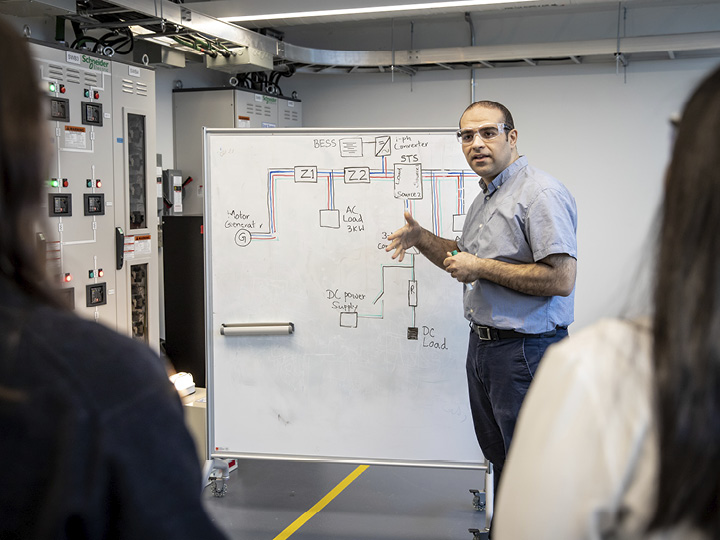
TMU’s leadership in advancing clean energy development and storage reaches across our teaching facilities. In addition to offering courses that promote clean energy to our full-time students, we support lifelong learning and professional development opportunities for people outside of our university community in an effort to extend our impact.
- TMU offers a variety of courses related to energy development and storage. Students interested in taking energy-related courses can choose from options across various disciplines, as listed in (google doc) TMU’s sustainability course inventory (external link) .
- TMU offers a Professional Master’s Diploma in Energy and Innovation. The program equips participants with the knowledge and skills required to function competently as operators, officers, administrators, managers, technicians, analysts, policy advisors and more in the Canadian energy sector.
- The Green Labs Program at TMU presents an opportunity for lab users to lead by example and implement safe and sustainable solutions to reduce the environmental footprint of their labs. Participants learn about best practices, exchange ideas, participate in events and competitions, and access resources designed to help them succeed.
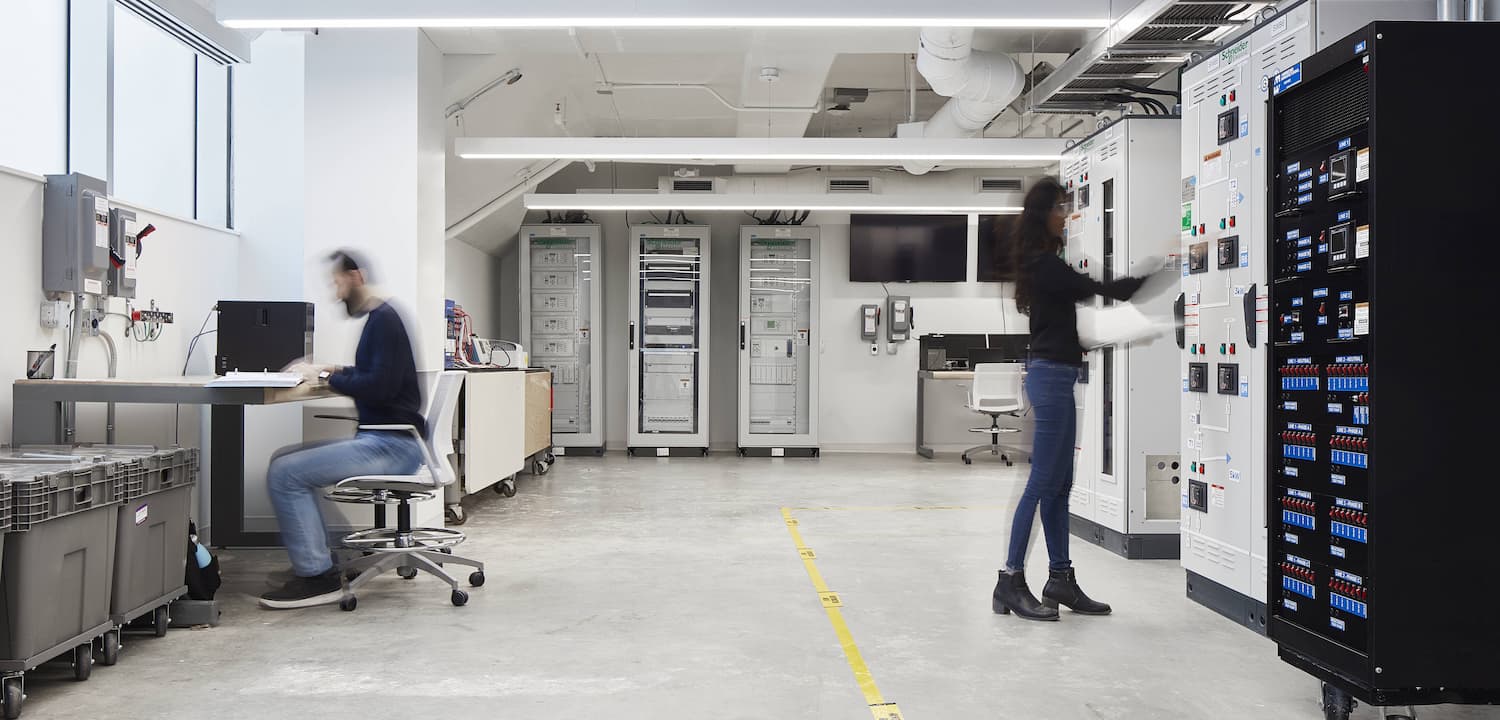
At TMU, we are known leaders in clean energy research. Our reputation is based on our advanced research facilities and the strong partnerships we have forged with universities, government and industry to develop clean energy solutions. Our contributions to the field are broad, ranging from supporting clean energy projects in government facilities to incubating clean energy startups and evaluating innovative energy storage options.
- The Centre for Urban Energy (CUE) at TMU is a partnership with industry, government and top researchers from across Canada and the world that develops and commercializes sustainable, innovative and cost-effective clean energy solutions and technologies. CUE combines engineering, science, environmental issues and infrastructure management to tackle challenges, such as the development of clean energy technologies; the advancement of smart grid technologies; the integration of energy storage, electric vehicles and renewables; energy conservation and demand management; alternative local energy generation; carbon footprint reduction; and net-zero buildings and infrastructure.
- Information technology management professor Atefeh Mashatan and engineering professor Reza Arani are leading a three-year research project that will identify potential quantum threats to the cybersecurity of smart grid technology and develop mitigating solutions to protect critical energy infrastructure. In collaboration with Hydro Quebec, evolutionQ and Crypto4A, they aim to create a blueprint for how the energy sector can mitigate the risks of quantum threats and incorporate quantum-resistant cybersecurity into their smart grids.
- At the Nano-Engineering Laboratory for Energy and Environmental Technologies (NLEET), led by chemical engineering professor Hadis Zarrin, researchers are engineering advanced nanomaterials, such as graphene, hexagonal boron nitride, and MXene, to create flexible, self-powered wearables that integrate energy storage, harvesting and sensing. By designing new materials and scaling their production, the team is creating lightweight, durable and low-maintenance wearables that reduce reliance on batteries. With features like self-repair, water resistance and fire retardancy, these innovations support cleaner technologies and more accessible health monitoring for everyday use.
- Through her Sustainable Water-Energy Nexus (WEN) for a Circular Economy project, Zarrin is working alongside faculty from the State University of São Paulo to develop more sustainable, cost-effective systems to produce green hydrogen. The project will also explore renewable energy sources like solar and wind to power water electrolysis and treated wastewater as a hydrogen production source. Ultimately, Zarrin aims to make these technologies accessible and beneficial to diverse users, including those from socio-economically marginalized communities.
Driven by our commitment to being leaders in clean energy, TMU has taken serious steps to reduce energy-related emissions on campus. Among them, we have put procedures in place to ensure that our campus facilities are responsible consumers of energy— today and well into the future.
- Our (google doc) Sustainable Building Guidelines (external link) ensure that our commitment to carbon reduction and environmental sustainability is reflected in the design and creation of our spaces. The guidelines include robust energy and greenhouse gas (GHG) emissions performance targets, waste reduction, diversion goals and other requirements that promote sustainable building design. The guidelines apply to all capital projects (new construction, additions and major renovations) and minor renovations with carbon and energy implications (as applicable), and should be included in all requests for proposals.
- TMU’s (PDF file) Energy Conservation and Demand Management Plan helps guide efforts to reduce campus energy consumption, operating costs and greenhouse gas emissions and improve energy efficiency. The plan also fulfills the Ontario Regulation 507/18 reporting requirement.
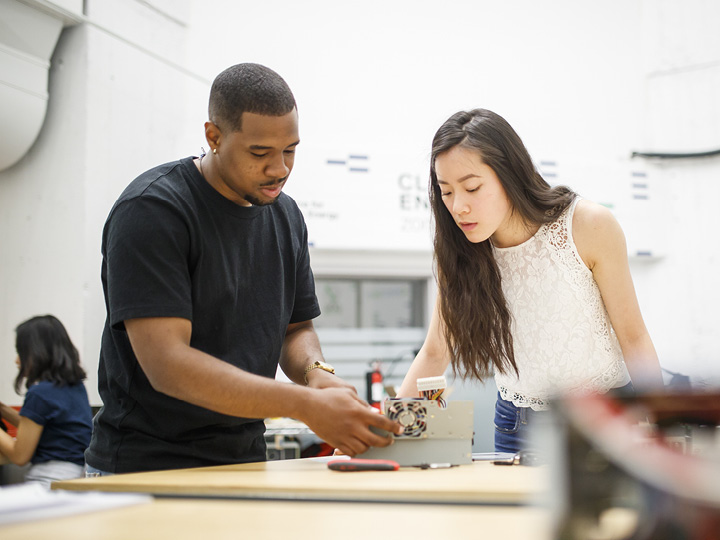
At TMU, creating a full experience for our students means shaping and empowering them to become the leaders of tomorrow. That’s why, in addition to the courses, labs, Zone Learning and on-campus initiatives geared towards supporting and advancing affordable and clean energy, we host dedicated events to provide students with additional opportunities to learn more about and discuss our shared goal.
- The Centre for Urban Energy hosts an annual Clean Energy Expo, which includes opportunities for researchers and graduate students to address important energy challenges in energy storage, smart grid, renewables and more. The event also allows students to network with professionals in the energy sector.
At TMU, leading the way in clean energy research is, first and foremost, a means to creating real impact in our community. As such, beyond committing to reducing emissions on campus, we are working with the government to develop strategies to advance clean energy, support responsible investment decisions, and help develop and grow cutting-edge businesses advancing clean energy initiatives.
- TMU’s Sustainability Action Plan is a five-year plan to guide transformative change and empower our community members to contribute meaningfully towards a greener, more inclusive future. The plan includes a goal of achieving net-zero Scope 1 and Scope 2 emissions by 2045.
- TMU’s Clean Energy Zone, housed at CUE, is an incubator focused on clean, sustainable energy innovations including electric vehicles, renewable energy, energy storage and distribution, microgrids and net-zero city building. It brings researchers, students and industry partners together to commercialize sustainable solutions that address societal needs and provide real environmental, social and economic impact. Members of the Clean Energy Zone develop their ideas while learning new skills to improve their business acumen and technical expertise. Zone members can access state-of-the-art research labs, co-working spaces and curated mentorship from industry partners, academic researchers and faculty.