Community Impact
Celebrating the scientist in all of us under the sun and moon
On April 8th, 2024, parts of Southern Ontario had the rare opportunity to witness a total solar eclipse.
This celestial event offered a unique chance to capture the imagination of the public while sharing moon research and highlighting international contributions to space exploration – and the faculty took full advantage. Leading up to the eclipse, SciXchange, the office for outreach for the Faculty of Science, organized a series of initiatives to build excitement and awareness of the eclipse. These included virtual youth workshops, a video series titled Under One Moon (external link) , talks with astronomers and interactive booths and galleries at the Ontario Science Centre in Toronto and the Butterfly Conservatory in Niagara Falls.
SciXchange also hosted two watch parties. These events provided safe and accessible opportunities for the public to view the eclipse, with over 1,400 eclipse glasses given out to attendees. Hundreds of people gathered on campus in the Kerr Hall quad to witness the partial eclipse, while several hundred more gathered at the Butterfly Conservatory to experience totality. Groups of students, families and youth took advantage of the eclipse glasses and resources and spent the afternoon connecting over the once-in-a-lifetime phenomenon.


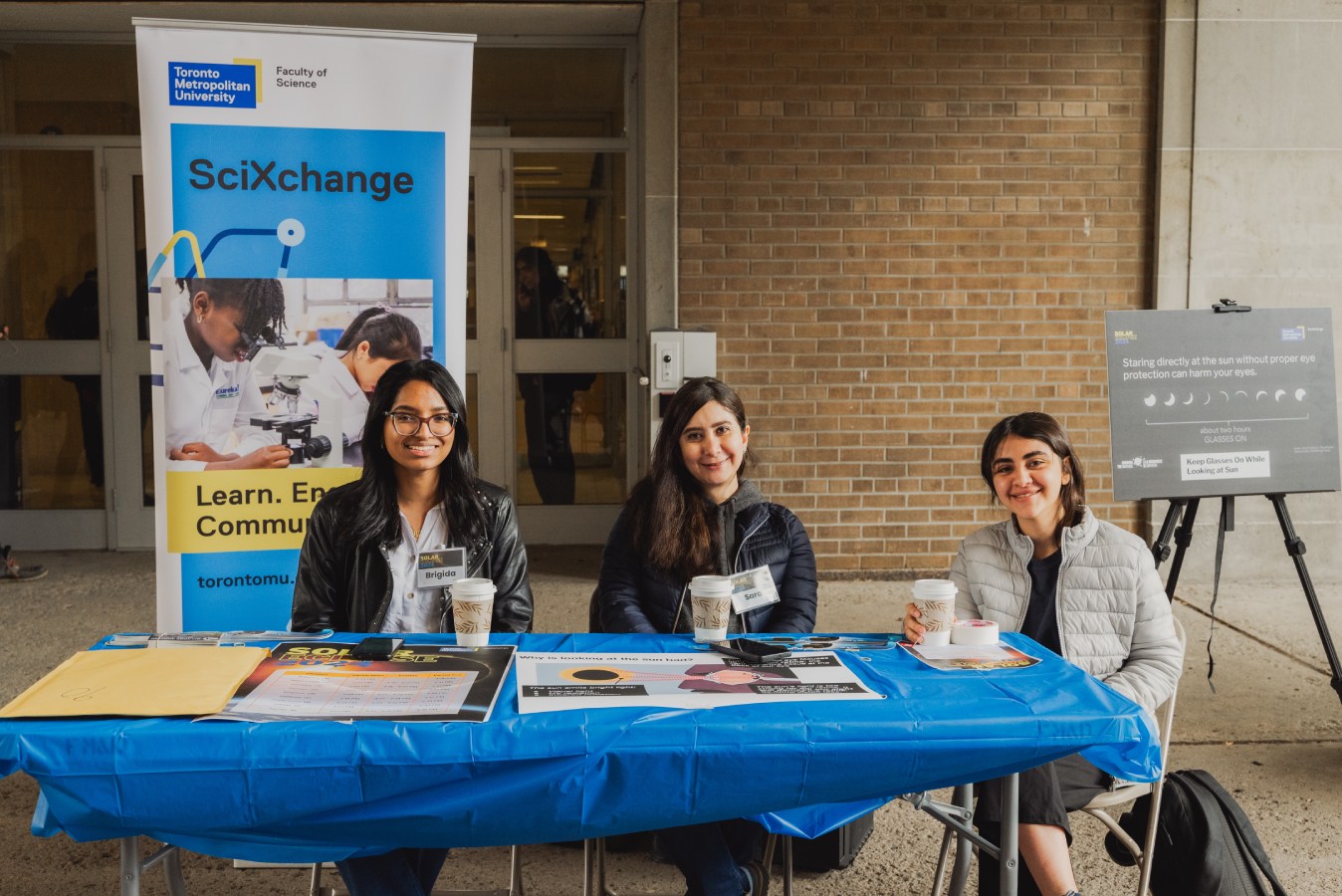
SciXchange volunteers hand out eclipse glasses to community members in the Kerr Quad.
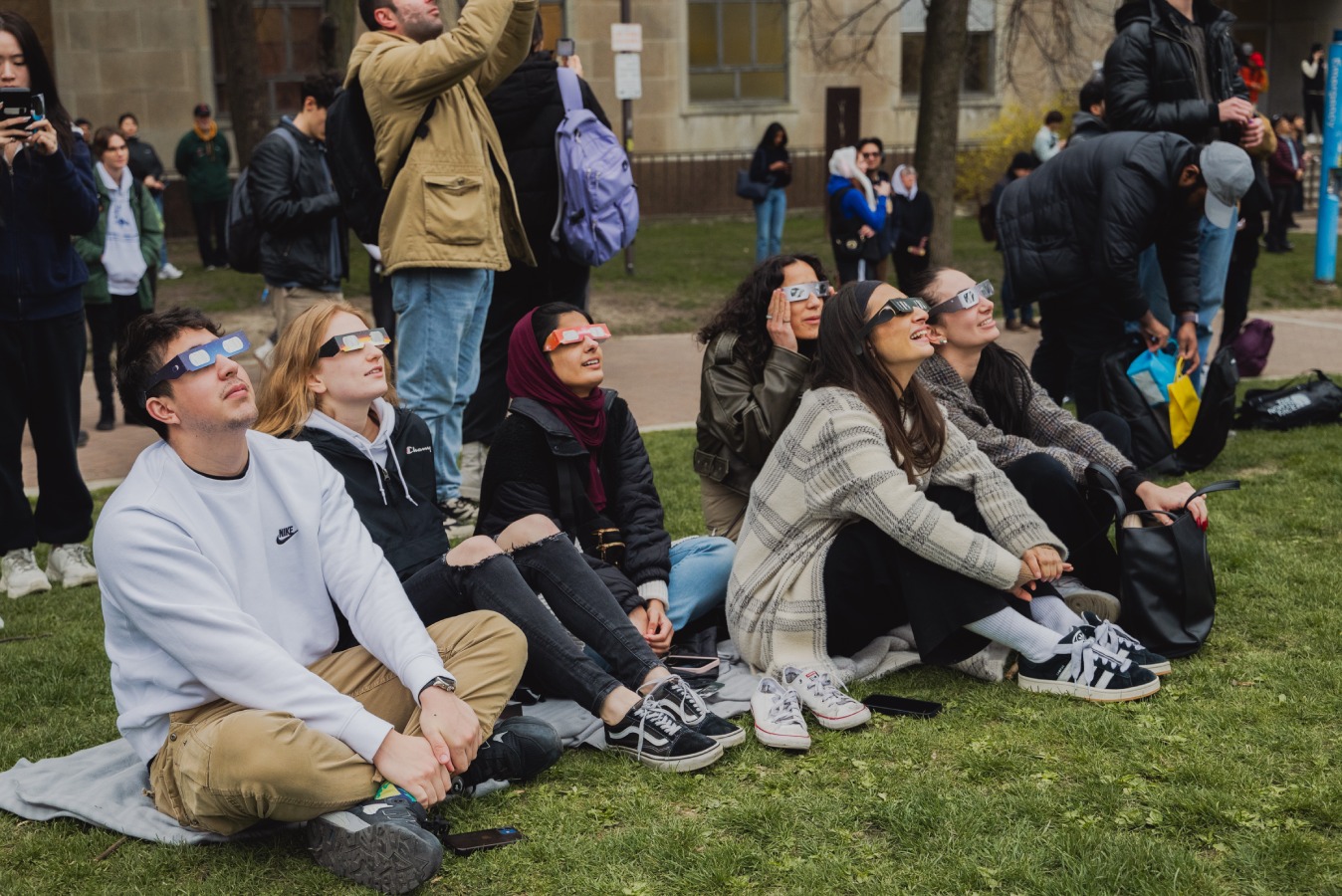
Molecular science PhD student Reeda Mahmood and classmates look up at the sky at the TMU watch party.
Embedding Indigenous ways of knowing, being and doing at the faculty’s core
The faculty is committed to honouring reconciliation, decolonization and Indigenous ways of knowing, being and doing, and this year was its busiest yet with Indigenous programming. In 2024, the Faculty of Science participated in community events such as the TMU Pow Wow, an interactive hide-tanning workshop, organized Indigenous learning circles for graduate students and teaching staff, and continued efforts to incorporate Indigenous perspectives into the curriculum.
As part of Indigenous Education and Treaties Week at TMU, the faculty also introduced a new learning event featuring an immersive experience with Haudenosaunee Storyteller Samantha Doxtater using a portable planetarium. This powerful experience deeply resonated with both students and community members, fostering a profound connection to Indigenous storytelling and astronomy.
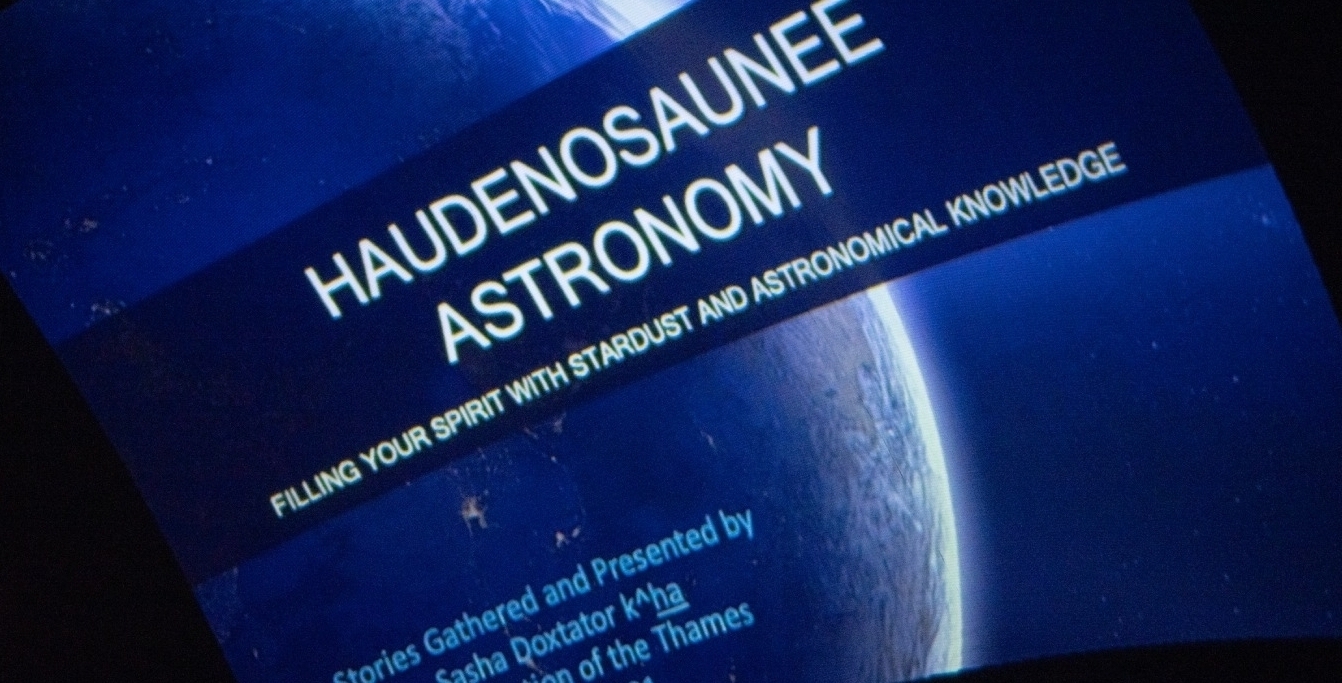
Projection of the Haudenosaunee Astronomy presentation.
“Experiencing these teachings within the immersive setting of the planetarium was truly impactful and brought a profound connection to these deeply moving cultural stories. The space allowed us to not only view the stars as our ancestors did but also to connect with the stories, wisdom, and knowledge that guided us for many generations. Chi miigwetch for providing us this beautiful experience right here on campus.” - Sierra Lefave, Student
Student-led cultural programming created opportunities for Indigenous students to connect with cultural teachings and practices in meaningful ways while sharing their culture with the community. Events included drum and moccasin-making workshops, social fires, and the second Medicine in the Garden event, organized by medical physics student Sommerly Grimaldi-Ertl, which explored traditional plant knowledge and its applications in medicine.
The faculty continued to support staff training and curriculum development to embed Indigenous Knowledge. This year, Brooke Filsinger, Advisor to the Dean in Indigenous Education, received funding from the Indigenous Curriculum Development Fund to develop an academic calendar for the TMU community. This calendar will consider both Indigenous teachings and seasonal knowledge and responsibilities, along with the Faculty of Science academic calendar, acting as a temporal map or guide for students, staff and faculty.
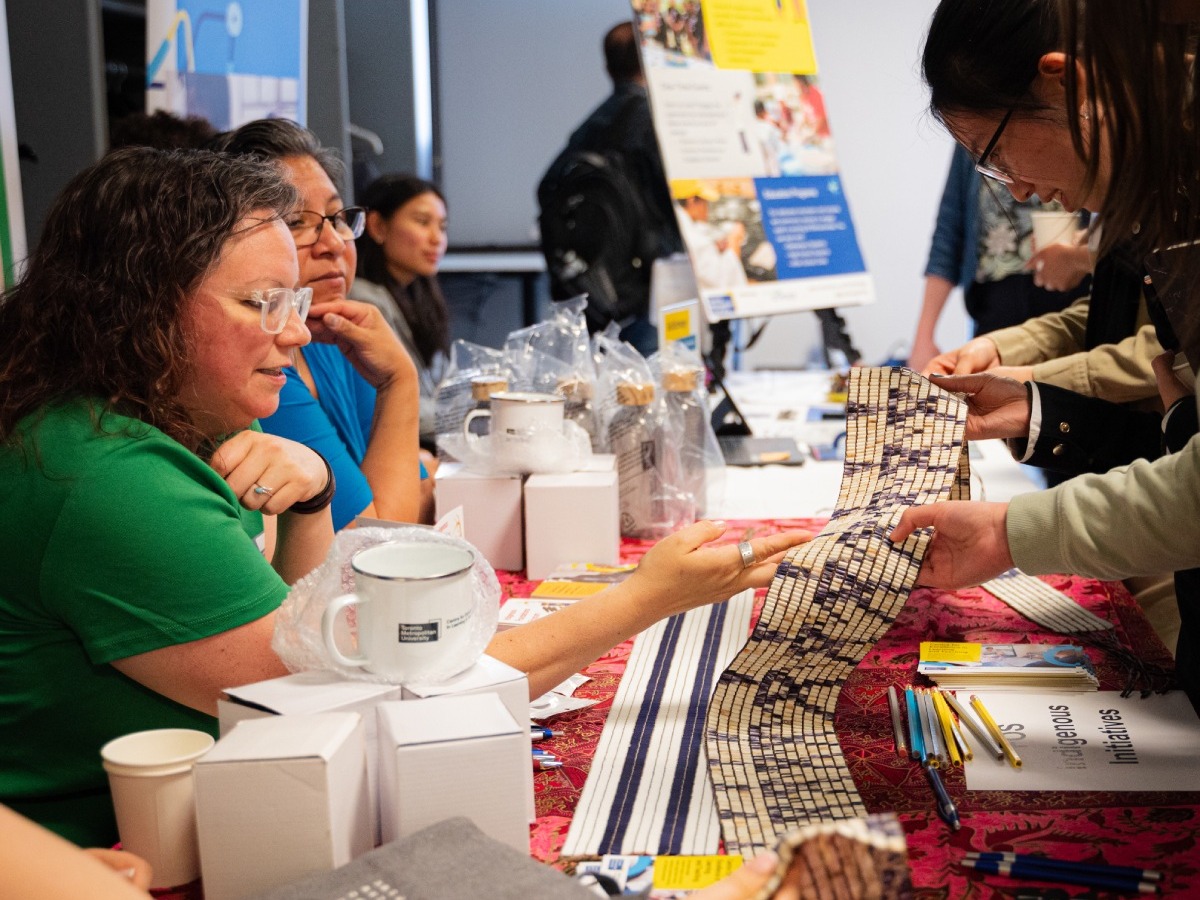
Brooke Filsinger, Advisor to the Dean, Indigenous Education, showcases a wampum belt at the 2024 FOS Research Symposium.
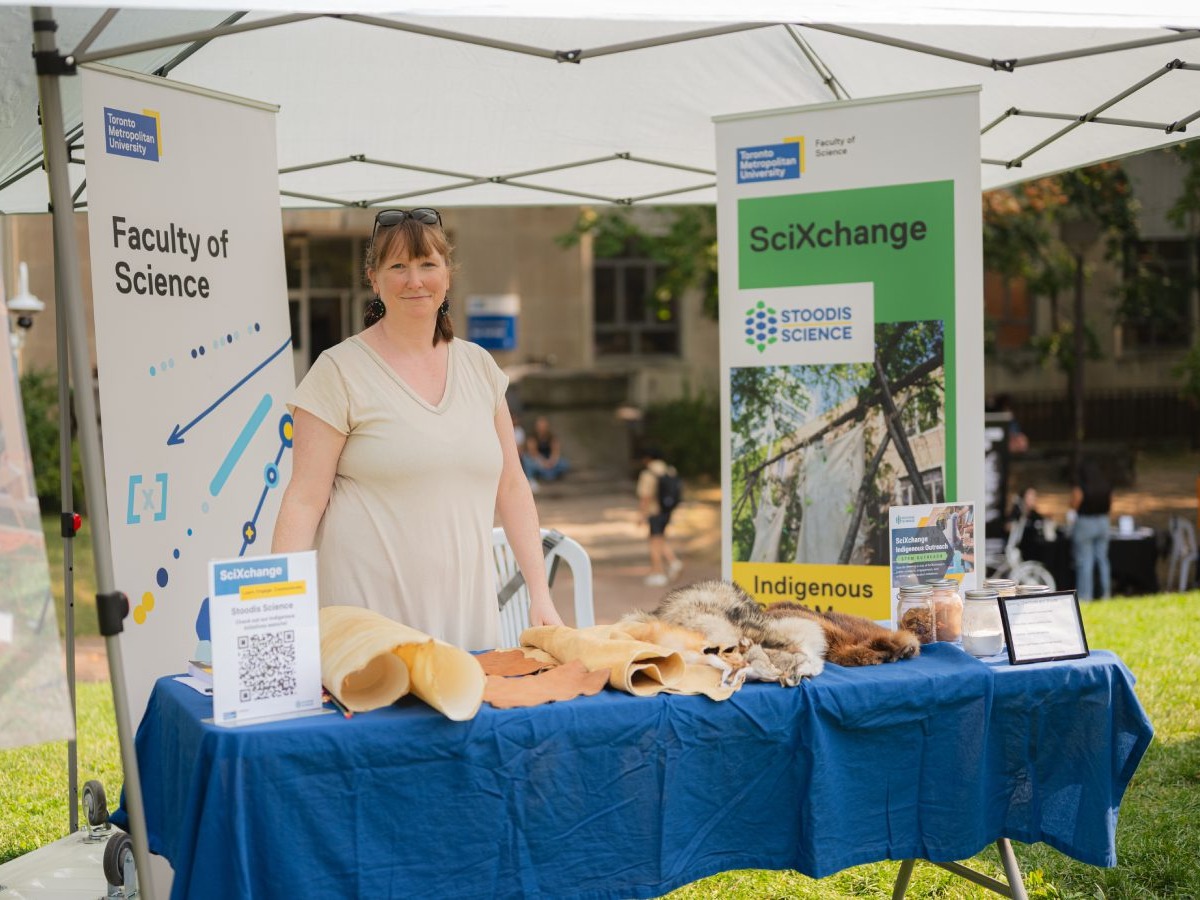
Leigh Paulseth, Enrichment & Outreach Coordinator, SciXchange, shares information on Stoodis Science and hide tanning at the TMU Pow Wow.
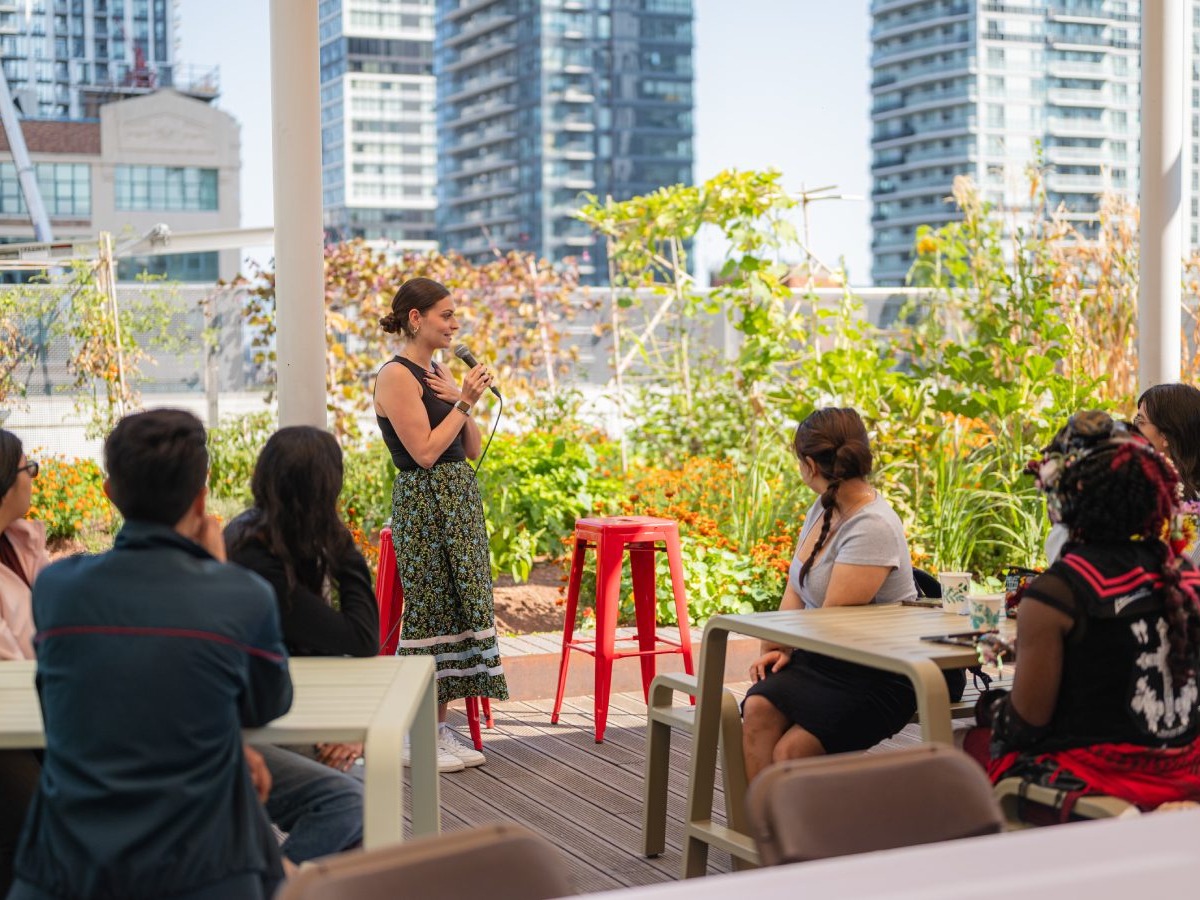
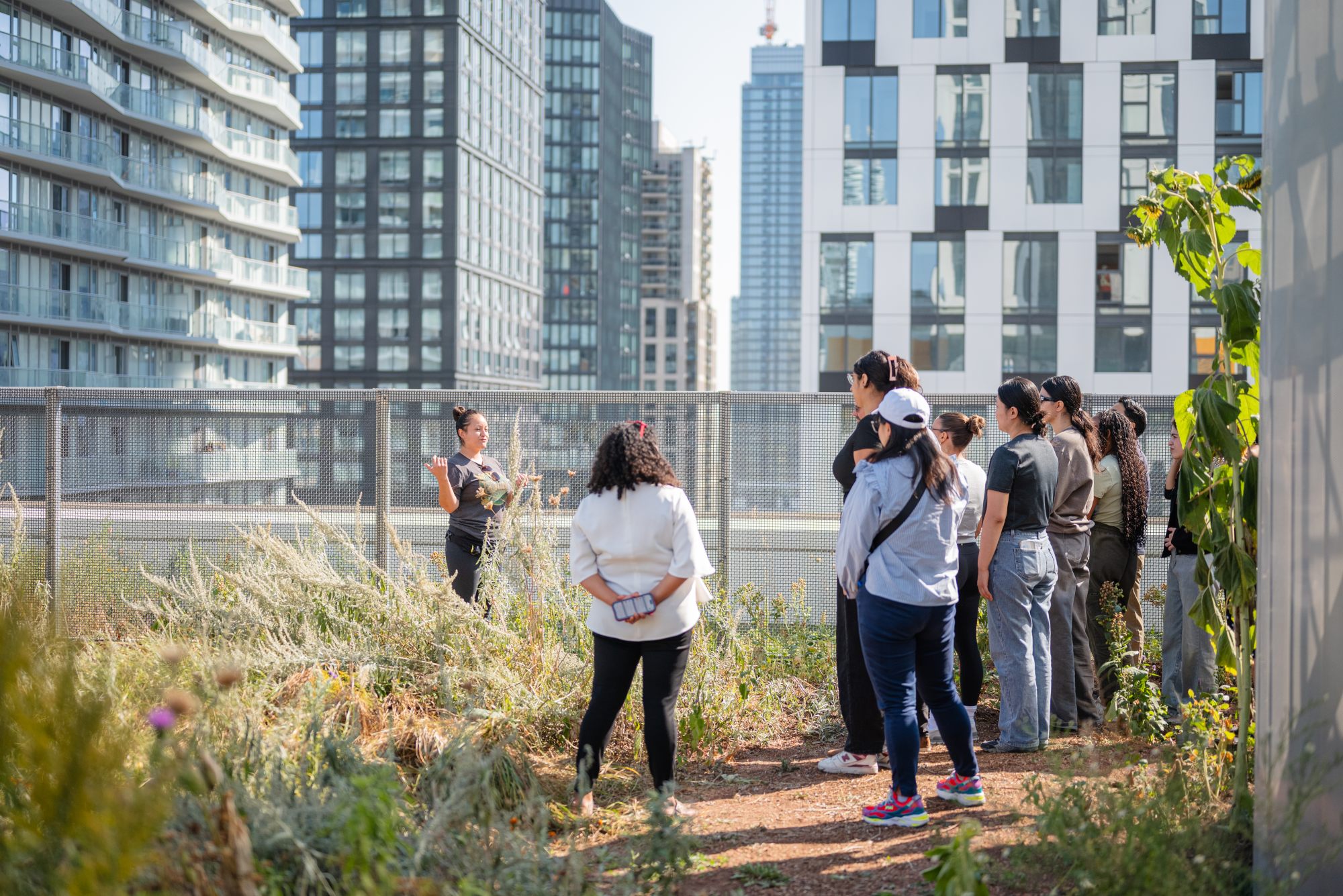
Medical physics student Sommerly Grimaldi-Ertl hosts the Medicine in the Garden event at the Daphne Cockwell Health Sciences Complex rooftop farm.
Delivering science beyond the city walls
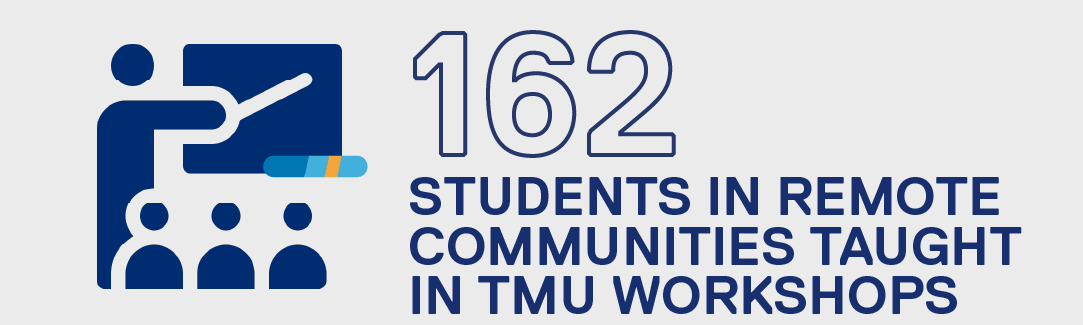
This year marked the faculty’s first rural outreach trip to enrich science education in remote communities. Over three days, a team of SciXchange volunteers travelled north of Toronto, visiting three elementary schools in Whitney, Maynooth and Combermere, Ontario.
The group delivered interactive workshops to classrooms, with activities such as building soap-powered boats, medical imaging lessons based on research from professor Miranda Kirby, coding and programming using pocket-sized computers called micro:bits, and designing space rovers using concepts of gravity and air resistance.
The group was well received and their presence in the classrooms served as inspiration for students while opening doors to further partnerships and access to STEM education beyond the city. This trip is supported by Let's Talk Science (external link) and is part of the faculty’s ongoing initiative to bring science to classrooms and make science education accessible to all.
“What motivated me to volunteer in the SciXchange Rural Outreach Trip was the opportunity to make science more accessible by bringing hands-on science programming to underserved communities. It was really inspiring to see the enthusiasm in the students during our activities, especially with the medical physics imaging science activity that my lab group developed.” - Meghan Koo, Physics PhD Candidate

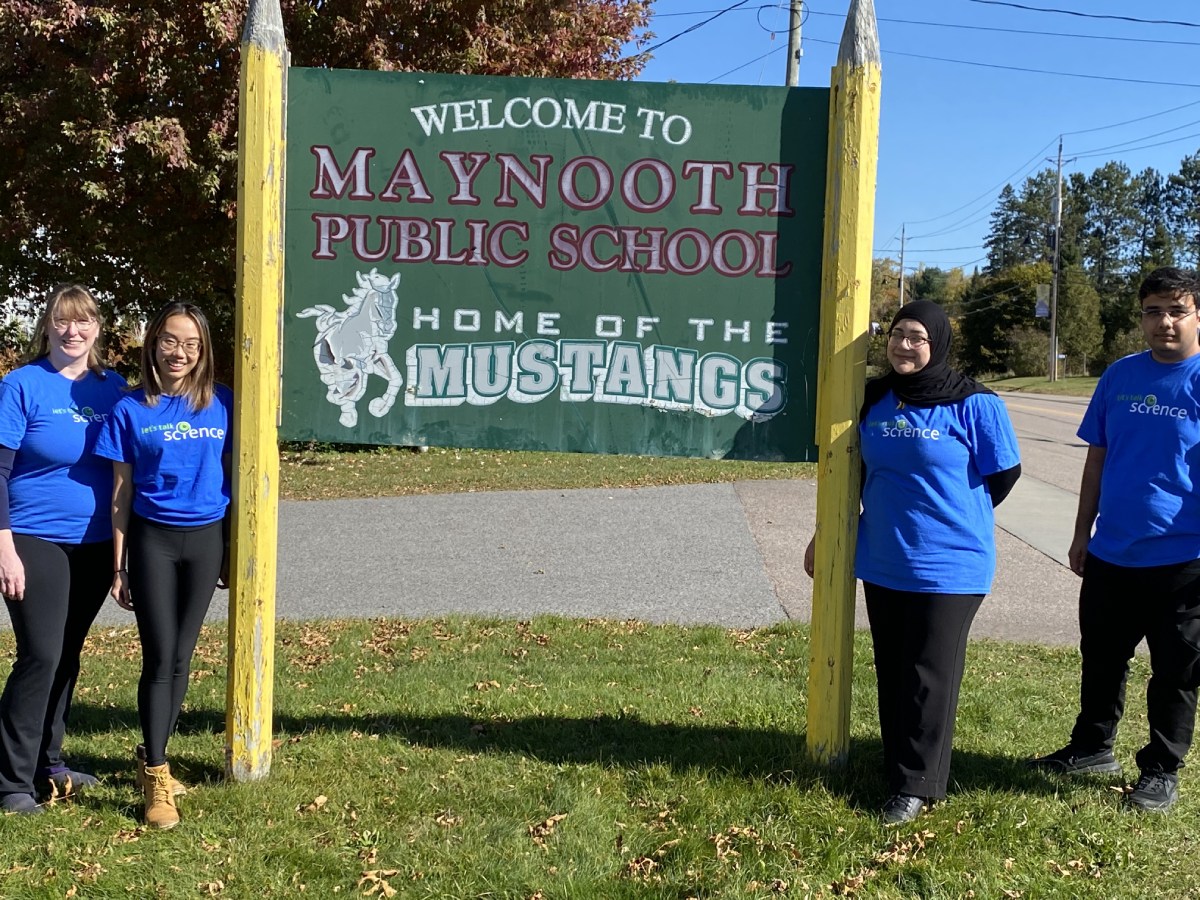
SciXchange staff and volunteers Leigh Paulseth, Meghan Koo, Zayneb Al-Hantoshi and Ali Hashmi at Maynooth Public School.
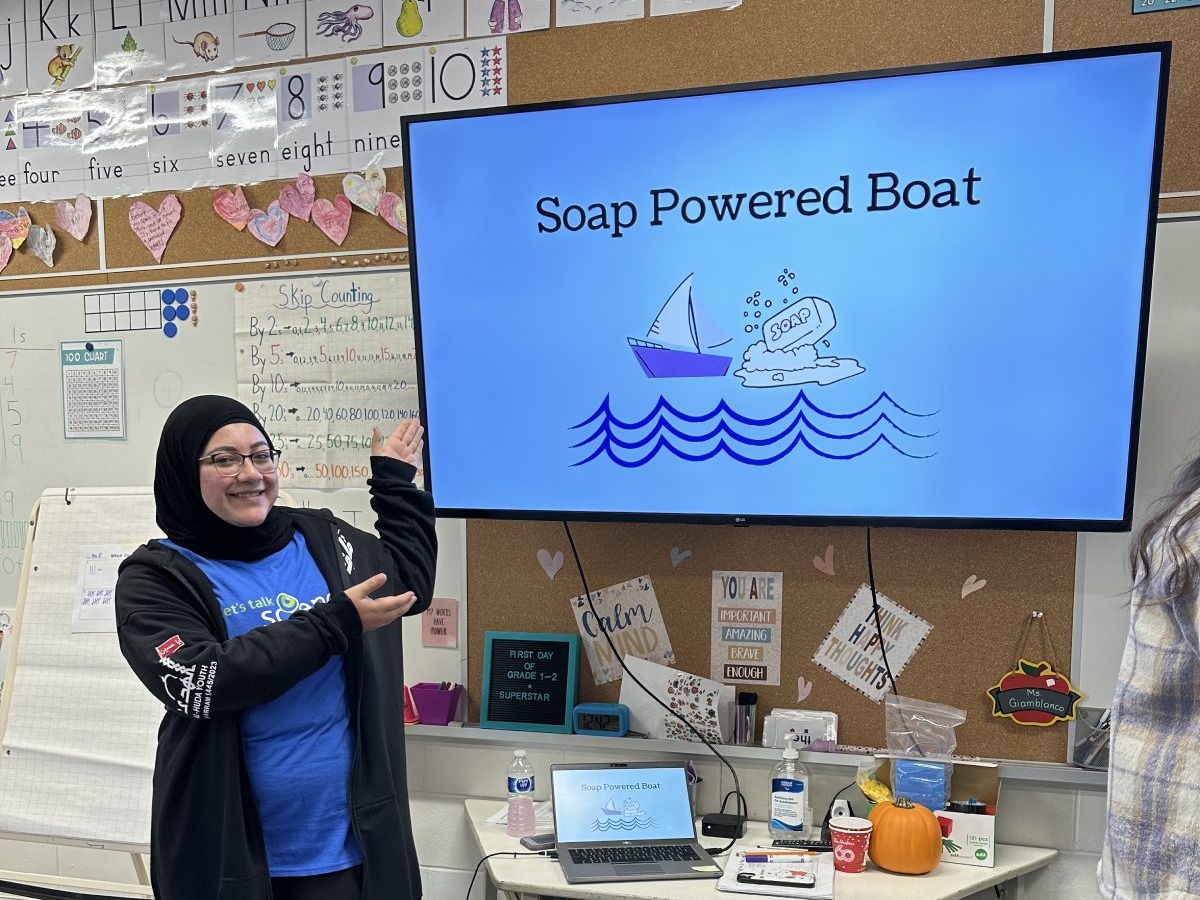
Biomedical sciences student volunteer Zayneb Al-Hantoshi presents the soap-powered boat lesson to a classroom.