TMU student builds platform to help South Asian Canadians prevent diabetes
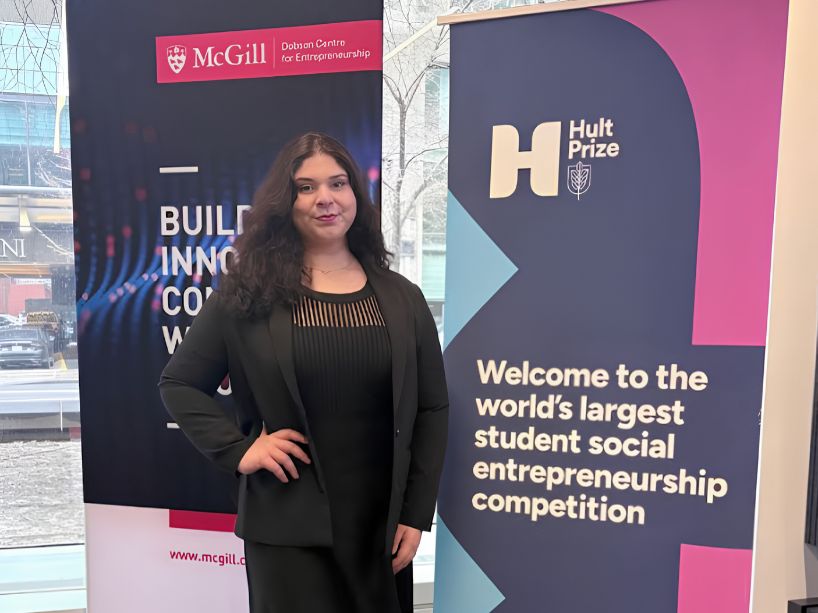
Ayman Begum watched her father develop high cholesterol and type 2 diabetes in his late 40s. Years later, as she began a BSc in nutrition and food studies at TMU, a close female relative was diagnosed with prediabetes and high cholesterol.
Years later, Begum started a BSc in nutrition and food studies at TMU in Fall 2025. Around that time, a close female relative was diagnosed with prediabetes and high cholesterol levels.
A warning with no road map
“She got this warning in her late 30s, and a chance to act sooner than my father to prevent diabetes. The doctor told her to eat healthier and get 30 minutes of exercise a day, but struggled to understand how to apply that advice to the Pakistani foods she grew up eating, or how to make lifestyle changes to turn that advice into sustainable, daily eating habits,” Begum says.
“This family member was overwhelmed, fearful and felt disconnected from her Pakistani culture and traditions.”
Begum looked for a practical, culturally inclusive tool to help. “It didn’t exist,” she says.
Introducing MyMealAid
That gap inspired Begum to create MyMealAid, a prediabetes preventive nutrition platform for patients from immigrant and multicultural households. It will first serve South Asians in Canada.
The tool aims to bridge the gap between general nutrition advice and daily eating habits. “People don’t want to give up their cultural foods and need help putting cultural nutritional guidance and lifestyle changes into practice,” says Begum.
Why it matters
The Public Health Agency of Canada reports that diabetes is 2.3 times more common among South Asian adults than among white adults. University of Toronto research (external link) shows South Asians also develop prediabetes 15 years earlier than Canadians of Western European descent.
How the platform will help
Between health-care appointments, MyMealAid will offer culturally relevant meals designed by registered dietitians, an AI assistant that answers nutrition questions, personalized goal setting with weekly check-ins, and nutrition education focused on diabetes prevention.
“Patients can also access dietitian-led workshops and generate progress summaries to share with their healthcare provider or dietitian,” Begum adds.
Five registered dietitians from multicultural backgrounds are part of her startup team.
Competitions and early support
Begum’s team was one of only 28 Canadian teams chosen to pitch at the Hult Prize Nationals in Montreal in April. It was also a top-seven finalist in the People category at the Desjardins Cooperathon and was accepted into TMU’s DMZ Basecamp, a summer program for student entrepreneurs.
“At DMZ Basecamp, we started to build the platform, recruit the team, and refine our idea,” she says.
The idea also changed. Begum first planned a broad platform for all multicultural communities and many health risks. “The feedback from DMZ Basecamp made me realize we had to start with one community and one health risk.”
What’s next
MyMealAid is preparing for its first usability beta in December 2026 followed by further testing in spring/summer 2027. Begum hopes to explore a small health-care feasibility pilot in summer 2027 onwards, potentially collaborating with registered dietitians and primary care providers such as community health centres and family health teams.
“Our first priority is to understand whether people find MyMealAid practical, culturally relevant and easy to use. In the long term, we hope to evaluate whether the platform can support sustainable lifestyle changes and contribute to reducing the risk of type 2 diabetes,” Begum says.
Her long-term goal is to support people facing other health risks, including high blood pressure, high cholesterol and nutrient deficiencies such as low vitamin B12 or iron.
Learning and building at once
Begum says her studies and her startup feed each other. “Building this startup is so connected to my education. As I learn about nutrition in class, I can apply the knowledge in my startup every day.”
She hopes to show that entrepreneurs aren’t only business students. “It’s great to show that students from nutrition and food sciences can be entrepreneurial – and not only business students. “I’m the first in my family to pursue entrepreneurship, and I’ve always had the drive and ambition to build something meaningful that creates a positive impact in people’s lives.”