Meet the 2026 TMU Massey College fellows
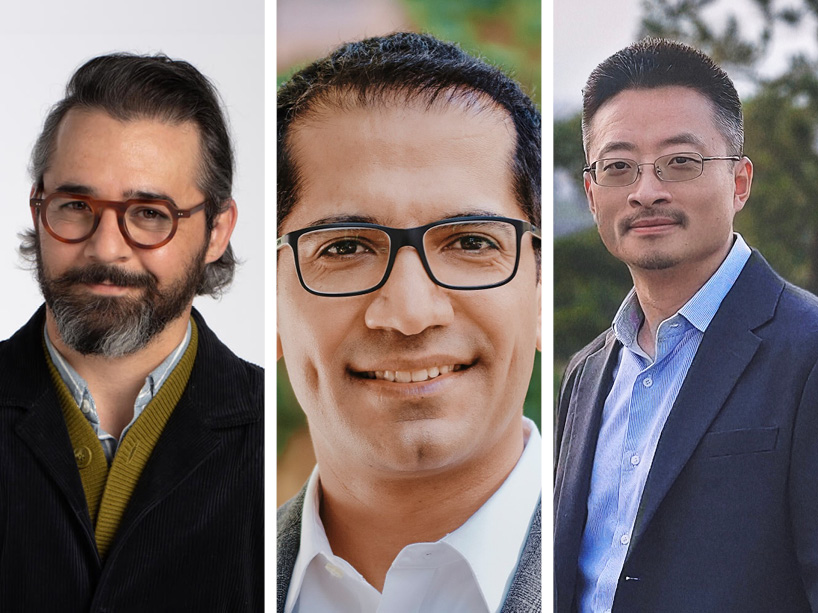
Three TMU professors – Dave Colangelo, Ali Tavallaei and Hongbing Yu – were named 2026–27 Massey College fellows. Massey College’s Visiting Fellows program (external link) brings scholars, researchers and arts professionals who are on sabbatical into a vibrant interdisciplinary community, where they can exchange ideas and bring fresh perspectives to their work.
The year-long fellowship means the researchers can pursue projects that could change how we experience public spaces, understand cultural identity and bring medical discoveries into patient care.
- Dave Colangelo: exploring how public media architecture can forge connection
- Ali Tavallaei: helping cardiovascular innovations reach patients
- Hongbing Yu: rethinking how we understand culture and identity
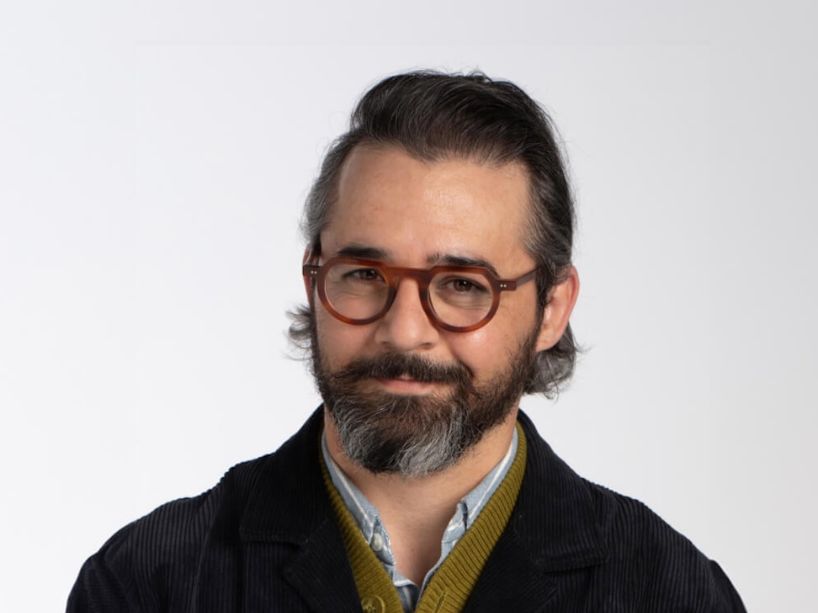
Keen observers walking on campus might have noticed the LED light colours on the Nelson Mandela Way street poles or the Church Street bridge are oftentimes tied to a theme – red and white for Canada Day, or orange for Truth and Reconciliation Day, for example.
The initiative, TMU Lights, is just one expression of Professor Dave Colangelo’s work. For Colangelo, the screens and lights in our urban environment can be used for more than just lighting our paths and displaying advertisements. They can be places where people could encounter art and learn about their communities.
Media architecture looks at the intersection between the built environment and communication, Colangelo explains. The professor of Digital Creation and Communication in the School of Professional Communication is exploring how digital signs and LED facades communicate with people moving through a city and how they can foster civic engagement. During his Massey College fellowship and sabbatical, he is working with colleagues on the third installment of the Media Architecture Compendium, a book series which features projects recognized by the Media Architecture Biennale, (external link) events that he has helped to organize over the past decade.
One project highlighted in the book is Declaration House in Philadelphia (external link) . With the support of Monument Lab (external link) , a non-profit public art, history, and design lab in Philadelphia, artist Sonya Clark presented a video of the eyes of Robert Hemmings’s descendants through the windows of the historic site where the Declaration of Independence was signed by Thomas Jefferson. Hemmings was an enslaved valet of Jefferson.
“To me, that’s a really interesting example of using screens in public space in a powerful way that challenges historical narratives and moves away from treating screens as spectacle and towards using them as tools for cultural communication and stewardship,” says Colangelo.
From supporting Indigenous placemaking to civic engagement, Colangelo is continuing to explore what artists could do with media architecture. “Unless we pay attention to these spaces and question the status quo, we lose opportunities to connect with each other and to use these spaces of communication for the public good,” he says.
At Massey College, Colangelo is looking forward to conversations with fellows and visiting scholars from a range of disciplines. He sees the fellowship as a chance to reconnect with a wider intellectual community while developing the next stage of his work.
“It’s a chance to refocus, recharge and share moments of insight and inspiration,” he says.
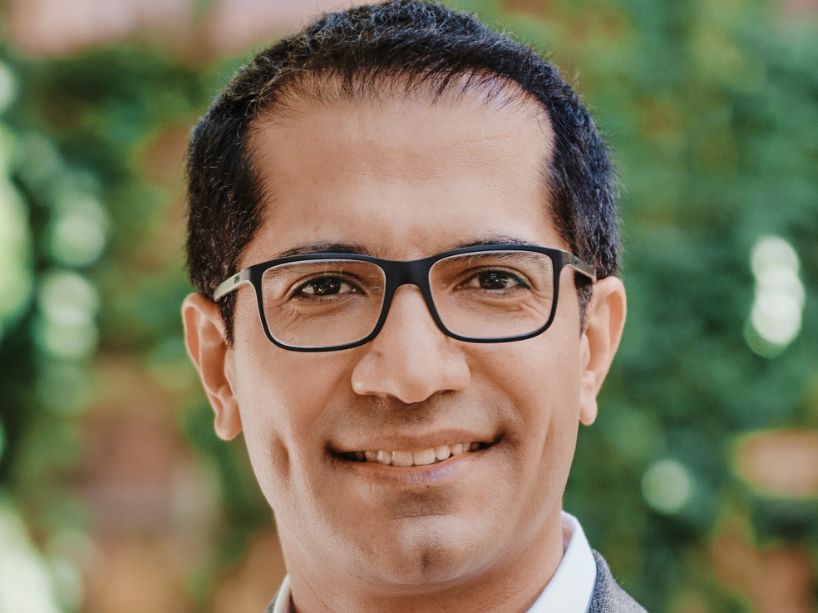
Think of a stent used to open a blocked artery. Before that innovation helped countless patients, it had to be tested, approved, manufactured and adopted by hospitals. For Professor Ali Tavallaei, the fellowship year is a chance to explore how more Canadian medical innovations can make that journey.
Tavallaei is a Canada Research Chair Tier 2, Systems and Devices for Cardiovascular Interventions and professor of electrical, computer and biomedical engineering at TMU. He develops medical devices and robotic systems to improve cardiovascular care. His goal is to make minimally invasive treatments more precise and reliable.
One project, CathPilot, aims to help clinicians steer instruments through blocked arteries. Catheters are long, flexible tubes controlled from outside the body, making their tips difficult to position precisely.
“CathPilot is designed to give clinicians more stable, precise control inside blood vessels,” says Tavallaei. “Our initial focus is helping them guide instruments through blocked arteries so the vessels can be reopened and blood flow restored.”
But developing a promising device is only one step. Tavallaei says researchers must also consider manufacturing costs, regulatory requirements, investment and how hospitals will pay for and adopt a new technology.
At Massey College, he hopes conversations with clinicians, policymakers, investors and scholars will broaden his perspectives on medical innovation and the role of ethics and public trust in its use.
“By the end of the year, I hope to have built collaborations across disciplines and identified practical ways to help more Canadian medical discoveries reach patients,” he says.
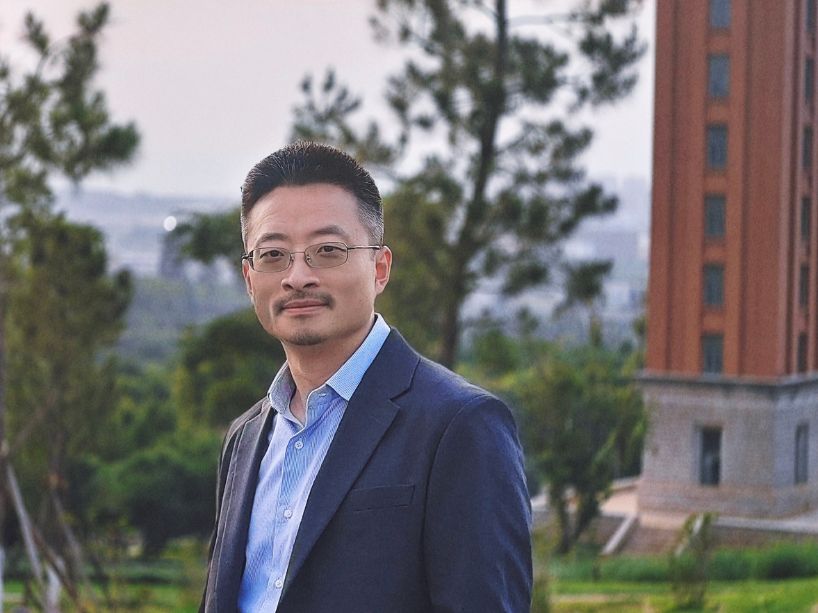
For Professor Hongbing Yu, a Massey College fellowship is a chance to explore how people make sense of a changing world and how fixed ideas about culture can get in the way of understanding one another.
Yu, a professor in TMU’s Department of Languages, Literatures and Cultures, has developed an approach he calls critical cognitive semiotics. Semiotics is commonly construed as the inquiry into how different kinds of signs, from words and images to gestures, are created and used for meaning-making and communication. Yu's work brings together the study of meaning, cognitive science, cultural critique, and East Asian philosophy to examine the widely varied processes of how people make sense of the world.
“We navigate life through models, but we often mistake these simplified models for actual, complex reality,” says Yu. His research challenges the idea that cultural identity is fixed and is instead shaped by real individual interactions.
By encouraging attention to individuals instead of stereotypes, Yu hopes this perspective can help shape more inclusive approaches to immigration and cultural integration. He is also interested in how reliance on algorithms can narrow what people encounter and how they understand others. “My research looks at how we can reclaim our active meaning-making agency to protect our mental vitality from digital overload,” Yu says. Building on this, Yu will also explore how the human mind can maintain balance in our fast-paced digital world.
“This fellowship offers a wonderful opportunity to strengthen collaborative ties between TMU and U of T to address contemporary social challenges,” says Yu.
Massey College and TMU: continuing the legacy
“Our TMU Massey fellows bring distinct perspectives to questions that touch our daily lives,” says Roberta Iannacito-Provenzano, provost and vice-president, academic. “This fellowship will provide opportunities to test ideas across disciplines and build relationships that can carry this work further. I’m excited to see what those conversations make possible.”
TMU has a long-standing connection with Massey College. Previous fellows include Jane Griffith, Lia Langworthy, Hyacinth Simpson, James Nadler, Monique Tschofen, Jonghun Park, Asmaa Malik, Ruth Panofsky, Carolyn Kane and Atefeh Mashatan – scholars whose research and creative work have deepened understanding of some of society’s most pressing challenges.