Richard Avedon at The Image Centre: portraits capture life’s etchings
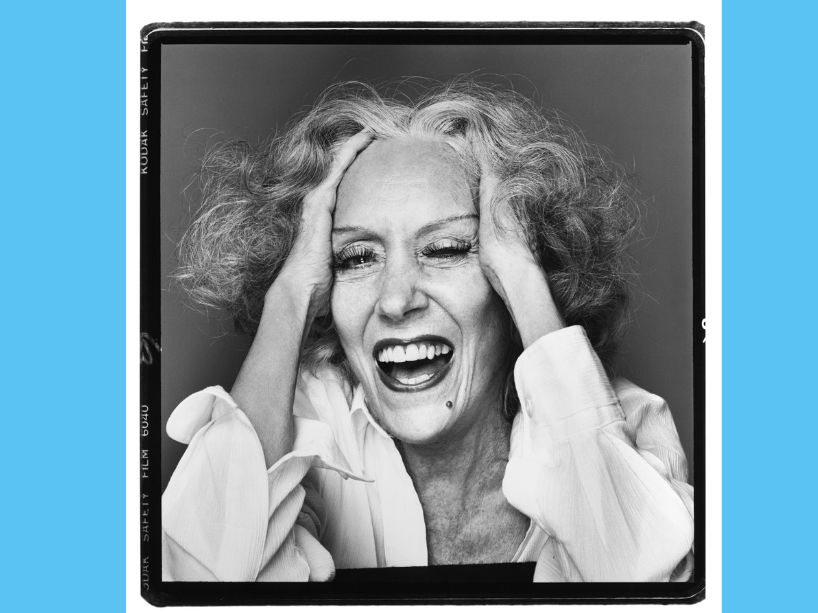
In the age of Artificial Intelligence and artifice permeating visual culture, The Image Centre (IMC) at TMU announces an exhibition of Richard Avedon's portraits that asks viewers to reevaluate perspectives on the physical realities of aging.
Nearly 100 images by Avedon will be on view at The Image Centre - located in the heart of TMU’s Toronto campus - from September 9 to December 5, 2026.
Richard Avedon Immortal: Portraits of Aging (external link) turns the photographer’s lens on artists, writers, musicians and performers, unflinching in its treatment of wrinkles, weary eyes and other markers of time.
Curated by The Image Centre's Director, Paul Roth, the collection includes portraits of Ronald Reagan, Toni Morrison, Gabriel García Márquez, Duke Ellington, Patti Smith, the Duke and Duchess of Windsor, Truman Capote and the Dalai Lama, among many other cultural icons.
The intensity and distinctive style of Avedon's images continues to surprise people today, likely because they diverge so much from our expectations of portraiture. These photographs show that growing older is not something to hide. Instead, it is proof of a life that has been fully lived. They can be honest and sometimes uncomfortable to look at, but they also show what it means to be human.
From his early days as a fashion photographer at Harper's Bazaar, to his final years at The New Yorker, Avedon's photography broke many of portraiture's conventions. Instead of flattering angles and lighting, he chose stark backgrounds and exacting detail, often highlighting what he referred to as "the avalanche of age" in his subjects' features.
As Avedon put it, "My photographs don't go below the surface. I have great faith in surfaces. A good one is full of clues."
In conversation with IMC Director Paul Roth
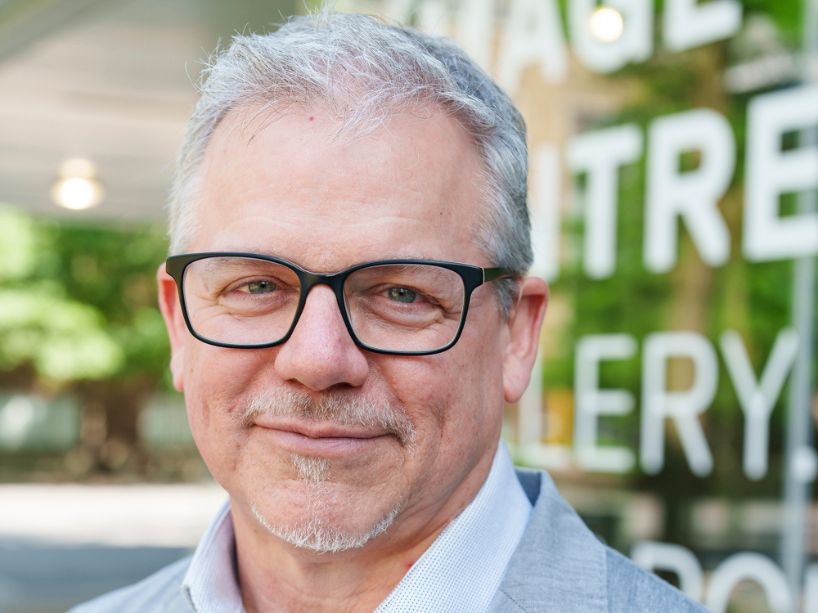
IMC Director Paul Roth has curated a significant exhibit of Richard Avedon's work, centering aging and late-life storytelling, an area rarely explored in this way.
During his time as a prominent fashion and portrait photographer, Richard Avedon was very much in the public eye, with major exhibitions across leading museums and galleries.
Roth previously curated a similar Avedon portrait exhibition in 2008 at the National Portrait Gallery in Washington, D.C., which examined Avedon’s work through the lens of politics and power during the election of Barack Obama, and featured one of Avedon’s final portraits of him. The show drew a large audience, underscoring Avedon’s enduring influence and prompting Roth to begin thinking about a future exhibition.
“Avedon explored three themes over his career and life,” says Roth. “Beauty, power and aging. I was struck by the theme of aging.”
Two decades later, that idea feels both timely and personal. With longstanding ties to the Avedon Foundation, including previous leadership of the organization, Roth was able to realize a project that would typically be out of reach for a smaller institution, given the scale and cost of presenting Avedon’s work. He helped secure loans from major institutions including the Museum of Modern Art (New York), the Metropolitan Museum of Art (New York) and the National Portrait Gallery (Washington, D.C.).
Why the IMC is picture perfect
As a photography-focused gallery, the IMC explores how images communicate and shape understanding, explains Roth. Its exhibition program is intentional in showcasing the many ways photography functions as creative and artistic expression.
“This exhibition fits our mandate to show variety and highlights the portraiture genre, rather than the usual reportage, and showcases Richard Avedon’s distinctive approach,” said Roth. “Photography often points either to the present or to historical events, but what’s compelling about Avedon’s images of aging is that they're really about the drama of aging as it's experienced by these individuals from the past, without being historical.”
For Roth, Avedon’s portraits feel immediate, bringing past subjects vividly into the present. Unflinchingly detailed, the photographs use lighting to heighten contrast and reveal every line, wrinkle and imperfection, creating brazen images that are at once stark and powerful.
“Whereas most portrait photographers try to conceal human aging, Richard Avedon wanted to show it,” said Roth. “That made him very unusual in his time.”
The result is a body of work that confronts rather than hides the realities of aging at a time of glorified youth.
Avedon was often quoted by reporters responding to criticism that his portraiture was unkind to its subjects. Roth says that, far from intending insult, Avedon was deeply interested in people’s lived experience and in photography’s ability to suggest a metaphor for a life lived.
Many of his subjects were public figures whose struggles were already known. By emphasizing details such as wrinkles, scars and other imperfections, Avedon created visual drama that invites viewers to read human drama, or what someone has endured, lost or survived. Lighting and composition turn physical marks into expressive elements.
“Across his career, he moved between overt and subtle forms of this drama, but consistently returned to the face as a stage for lived experience,” said Roth. “Avedon knew the medium of photography is inherently constructed, especially working in fashion photography. I'm hoping we can help change the perception that these photos are unkind, but rather profoundly empathetic.”
Richard Avedon is interested in showing the drama of life, and the face is for him a kind of theater.
The exhibition is especially meaningful on a university campus, where younger audiences are invited to engage more deeply with aging as a universal, shared human experience.
“Because conversations around aging and culture have become more common, it will be great for young people, who may be more receptive than those 30 years ago, to have this opportunity to see these portraits,” said Roth.
Scale and impact
The large scale of some of the portraits also heightens their emotional impact, especially when confronting an aged face at near life-size or larger.
“One of the first works visitors encounter is a large portrait of writer and humorist Dorothy Parker, once a major cultural figure,” said Roth. “Photographed in late life, a smoker and drinker who was prone to depression in her later years, Parker is shown with stark honesty in a way that would have been rare, particularly for women, at that time.”
For Roth, the image is striking because it is so direct and unidealized, saying that Parker herself reportedly appreciated its honesty.
“At this scale, her face becomes physically overwhelming in the gallery, reinforcing the photograph’s frankness and making the experience of viewing it especially powerful,” he said.
Despite his skill in creating editorial quality images, his portraiture focused on showing dimension and drama, and rewriting beauty in the imperfections and humanity of the images.
“To me, they are images of real and deep investment, concern and care for people who have been through a lot,” said Roth. “They’re not about death. They’re about life.”
Exhibition details
- What: Richard Avedon Immortal: Portraits of Aging, 1951–2004
- When: September 9–December 5, 2026
- Where: The Image Centre, 33 Gould Street, Toronto ON M5B 1W1
- Curator: Paul Roth
- Cost: Free
Times:
- Wednesday: 11 a.m. – 8 p.m.
- Thursday–Friday: 11 a.m. – 6 p.m.
- Saturday–Sunday: 11 a.m. – 5 p.m.
Exhibition Talk: Adam Gopnik on Richard Avedon
Author and award-winning journalist Adam Gopnik will present a lecture on Avedon's work on Tuesday, September 22, 2026, at The Creative School Chrysalis at TMU. Gopnik and Avedon were close friends and frequent collaborators over more than 20 years.
Publication
The exhibition is accompanied by a richly illustrated catalogue, Richard Avedon: Immortal. Edited by Paul Roth, Director of the Image Centre of Toronto Metropolitan University, this book includes over 100 Avedon portraits and essays by art critics Adam Gopnik, who knew Avedon, Vince Aletti, and IMC Curator Gaëlle Morel.