Toronto makes case to host new NATO-aligned defence bank
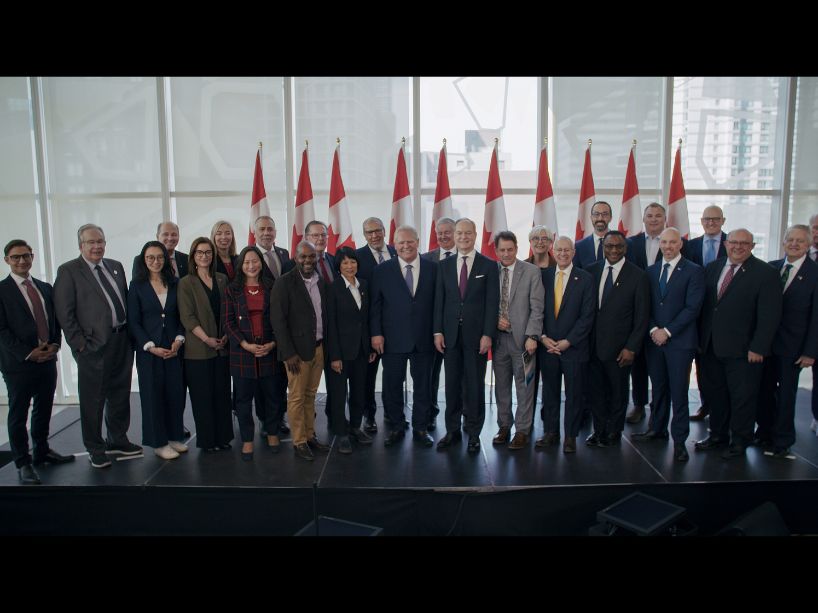
TMU hosted a high-profile event on May 12 to build support for Toronto’s bid to become home to the Defence, Security and Resilience Bank (DSRB) – a proposed international institution that could bring thousands of jobs to the region.
TMU President and Vice-Chancellor Mohamed Lachemi was among the speakers at the event, held at the Sheldon & Tracy Levy Student Learning Centre.
What is the DSRB?
The DSRB is modelled after the World Bank. It would finance defence, security and resilience projects for NATO members and allied nations, helping governments cover costs and close funding gaps across allied supply chains.
Canada was officially selected as the bank’s host nation late last month. Toronto, Vancouver, Ottawa, Montreal and Halifax are all vying to become the DRSBs permanent home. The federal government is expected to make its final decision in the coming months.
Leaders make the case for Toronto
The May 12 event brought together leaders from government, finance, business and post-secondary education. Speakers made the case that Toronto’s financial expertise, global business connections and research capacity make it the strongest choice.
Attendees included Premier Doug Ford, Toronto Mayor Olivia Chow, OMERS President Blake Hutcheson, Chief Executive Officer of Ontario Shipyards Shaun Padulo and MP James Mulroney.
Speakers pointed to Toronto’s concentration of major banks, pension funds, institutional investors and globally connected industries as key strengths that would support the DSRB’s long-term success.
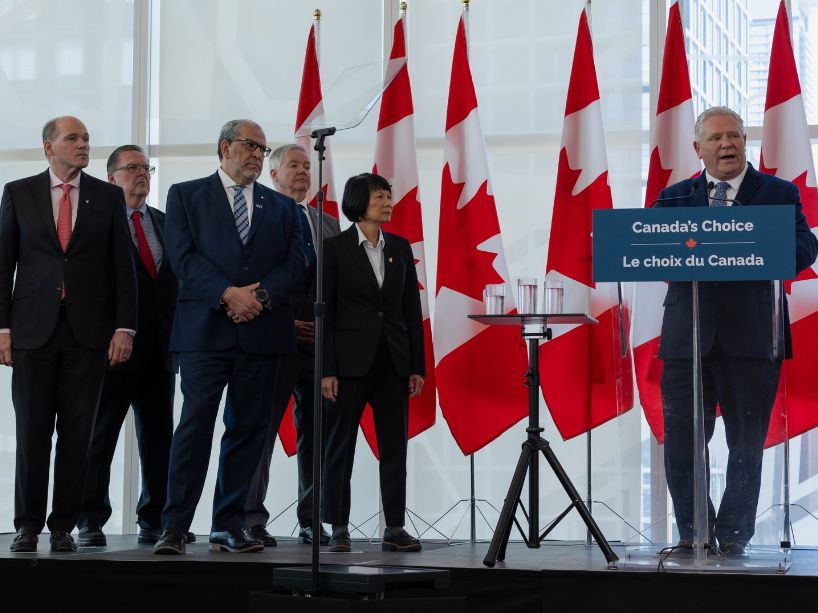
Premier Doug Ford spoke about the province-wide benefits of bringing the DSRB headquarters to Toronto.
Premier Ford explained that a Toronto-based DSRB would benefit the entire province – including rival bid city Ottawa.
“We want from east to west, from north to south, for everyone to benefit,” said Ford.
TMU’s role in the conversation
In his remarks, Lachemi stressed the value of partnerships between universities, industry and government in building Canada’s sovereignty, innovation, resilience and long-term economic growth.
“Toronto and the GTA are uniquely positioned to lead at this moment,” said Lachemi. “This region brings together extraordinary talent, global financial leadership, and one of the most dynamic innovation ecosystems anywhere in the world. TMU is proud to be a long-standing partner of the Government of Ontario in helping build Canada's innovation and resilience capacity.”
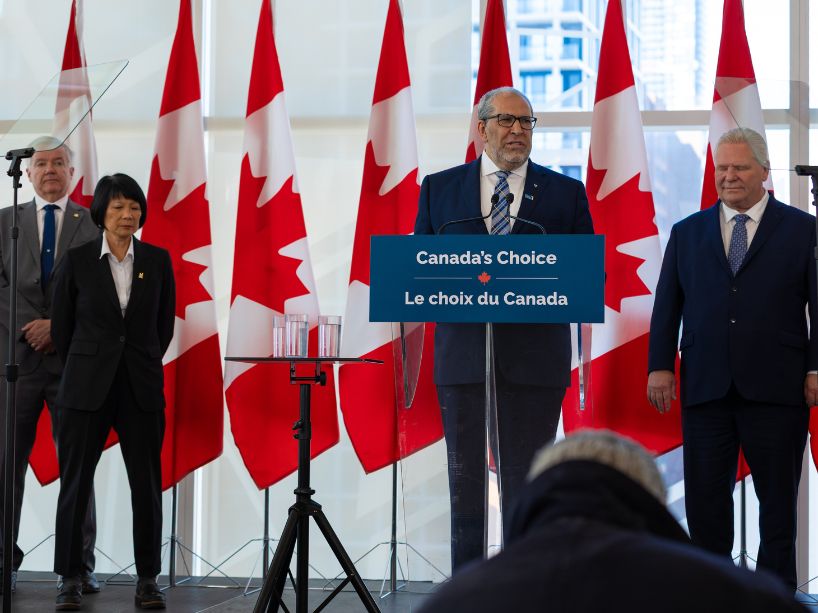
TMU President and Vice Chancellor, Mohamed Lachemi speaks to Toronto’s research strengths, talent and partnerships.
Lachemi also highlighted the research TMU conducts in areas directly tied to the DSRB’s mandate, including cybersecurity, artificial intelligence, aerospace, autonomous systems and infrastructure resilience.
“Sovereignty is not only about borders or geography,” he said. “It is about whether a country has the talent, technology, research capacity, partnerships, and institutional strength to respond confidently to a changing world.”
What comes next
If Toronto wins the bid, the DSRB is expected to create approximately 3,500 jobs in defence finance, international operations and specialized research and analysis.
The Ontario Chamber of Commerce and the Council of Ontario Universities (external link) have both publicly supported Toronto’s bid to host the DSRB headquarters, citing the city’s financial infrastructure, international connectivity and strong post-secondary sector.
A successful DSRB would create historic opportunities for Canadian workers, strengthen the economy, and expand Canada’s influence on the international stage.