TMU student uses energy, emissions data to reveal $500K in savings

Naima Samale wasn't sure exactly what to expect when she joined TMU's Sustainability Office as an engineering intern. What she found was a chance to do work that actually mattered.
The third-year computer engineering student completed the placement through TMU’s Career Boost program – and what she contributed went well beyond a line on her resume.
The Sustainability Office drives environmental stewardship by supporting education and engagement efforts that strengthen sustainability and environmental literacy at TMU.
Data deep-dive
TMU’s Sustainability Action Plan outlines three long-term goals, one of which is net-zero emissions to combat climate change. Samale’s efforts played a pivotal role in advancing these energy efficiency and decarbonization efforts.
One of the Sustainability Office’s core tools is energy tracking. By collecting and analyzing data on campus-wide energy use and greenhouse gas emissions, the team can spot where improvements are possible.
Working closely with the energy manager, Animesh Roy, Naima Samale analyzed complex data sets and helped translate them into clear, actionable insights.
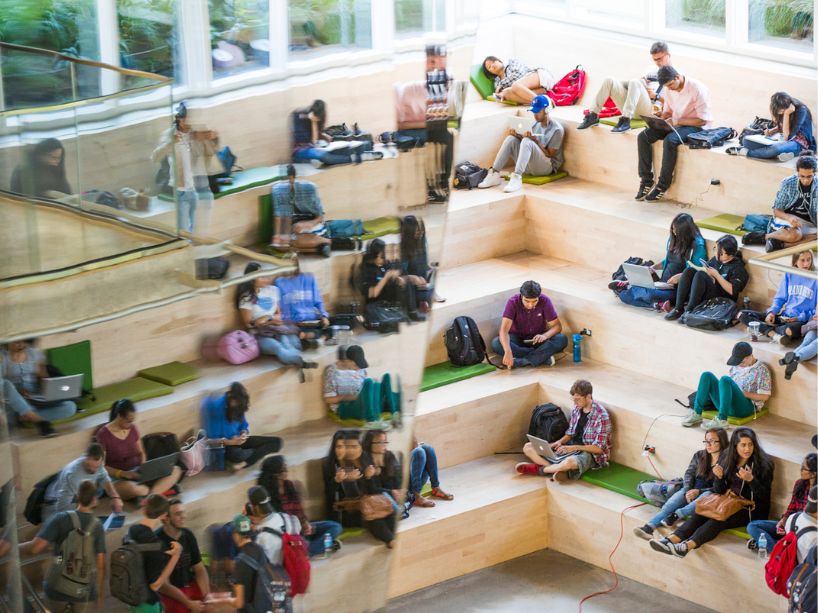
TMU is working to lower emissions on campus. Part of this involves decreasing direct emissions from purchased electricity.
“Initially, my work focused on developing the university’s first annual Green Revolving Fund report,” says Samale. “This is an important tool used to track the performance and impact of sustainability projects.”
The fund operates on a reinvestment model, cycling cost savings back into future projects. The numbers Samale uncovered were significant.
Across eight retrofit projects completed in 2024 in four campus buildings – including LED lighting upgrades in the SLC, and cooling system upgrades in the Library – the university reduced annual electricity use by more than 1.5 million kilowatt-hours and cut approximately 60 tonnes of carbon emissions. These efforts, combined with initiatives like the curtailment of the campus chiller plant, delivered over $500,000 in cost savings.
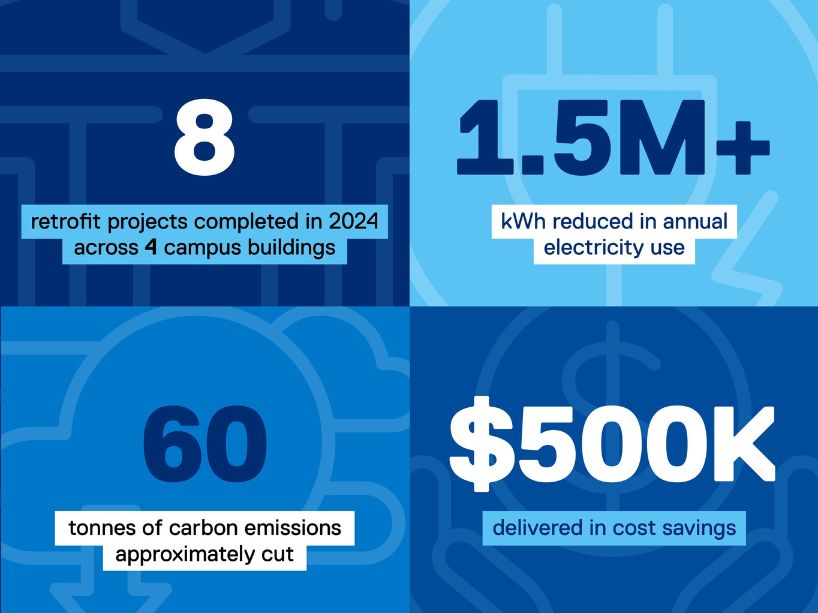
The numbers speak for themselves. Not only does sustainability make fiscal sense, it makes good on TMU’s commitment to the campus community and its future.
Beyond the data
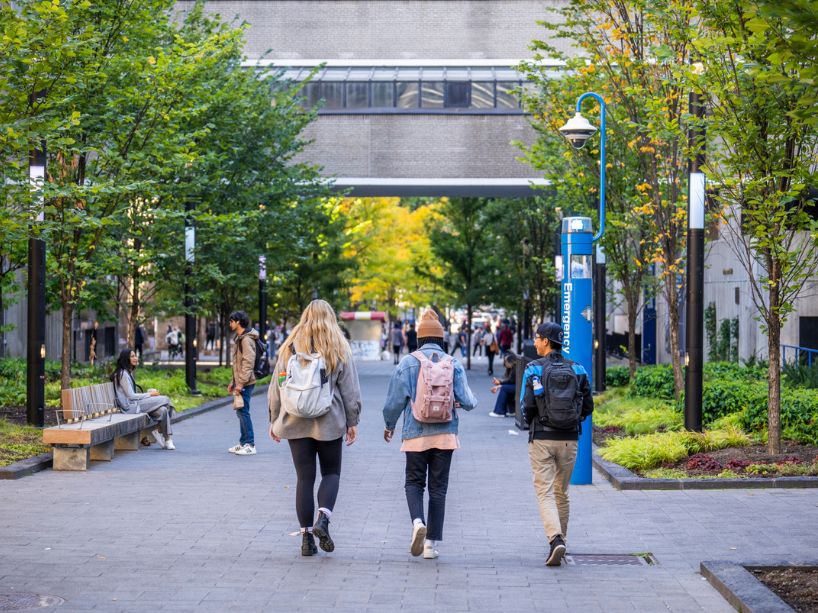
A green campus involves collaboration from different departments and stakeholders to ensure TMU is on a sustainable path.
Crunching the numbers is one thing, getting people to act on them is another.
“To get buy-in, it really comes down to measuring efficiency and its benefits,” she says. “This means looking at return on investment, waste reduction and operating cost savings, while considering different financing options, including having commercial partners take on some of the costs.”
For Roy, the data Samale produced reinforced something he already knew: sustainability investment pays off.
“By prioritizing sustainability and reducing our carbon footprint, we’re not only improving operations, we’re making the university more attractive to prospective students and showing our current community that we’re committed to real, measurable environmental progress,” he says.
Samale agrees the data does more than prove a point. “They help build momentum and support for future projects,” she says.
As an aspiring data scientist, Samale saw how the data she collected drove decision-making to support institutional climate goals, including TMU’s target of achieving net-zero emissions by 2045. She also sees how today’s projects are laying the groundwork for even larger initiatives in the years ahead.
Get in on the climate action
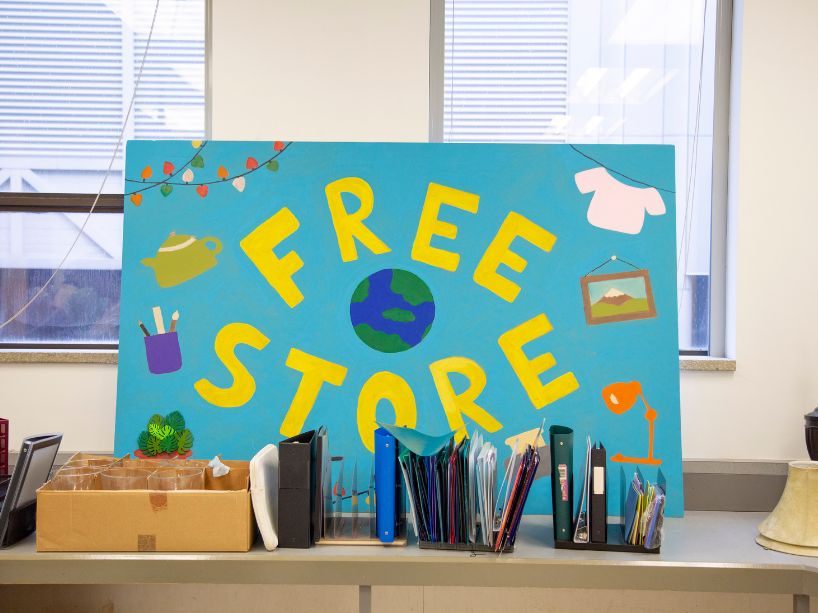
The Free Store brings the campus community together to reduce carbon emissions associated with the production and transportation of new goods, and supports the development of a circular sharing culture at TMU.
Samale’s message to other TMU students is simple: you don't have to be an expert to get involved.
“Start by volunteering and apply to join the team. You can be part of shaping new projects from the ground up,” she says.
Students, faculty and staff who are interested in promoting a culture of sustainability on campus can get involved through the Sustainability Ambassador Program.
Samale says students have agency, opportunities to lead and creative freedom in their roles supporting sustainability and student engagement on campus.
Initiatives like the Free Store and the Native Plant Pollinator Garden on the Nelson Mandela Walk were brought to life in collaboration with student interns and volunteers.
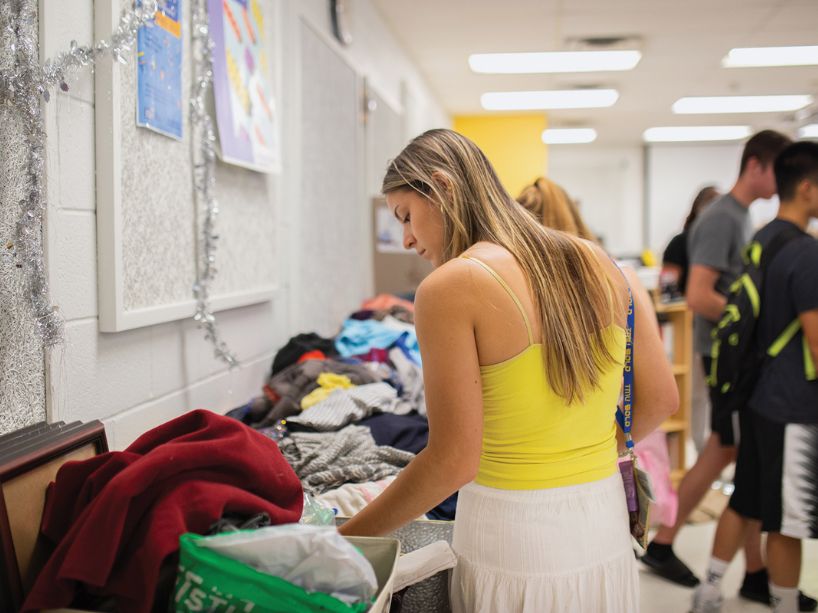
Student-led initiatives like the Free Store showcase the efforts of TMU students.
Universities play a role
Samale also sees a bigger opportunity. She says universities are key to exposing students to sustainability thinking beyond traditional environmental or energy programs, and across disciplines.
“Universities can play a stronger role in integrating sustainability in the educational experience by not treating it as a separate industry or niche interest,” she says. “In my faculty, not many computer engineers are thinking of careers in the energy sector, but this can change.”

Related stories: