TMU students to safeguard Residential School Survivor testimonies
Content warning: This article covers systemic abuse including missing and murdered Indigenous children and sexual abuse.
Roughly 38,000 accounts of abuse at Indian Residential Schools are set to be destroyed by September 19, 2027, by order of the Supreme Court of Canada.
As the most comprehensive archive of Survivor testimony about atrocities committed against children in Residential Schools, these testimonies were collected between 2006 and 2012. They will be gone forever – unless Survivors request their records be preserved.
The problem is urgent: Many Survivors and their families don’t know this deadline exists. These testimonies were gathered through the Indian Residential School Settlement Agreement and the Independent Assessment Process (IAP) – but many people have no idea their records are at risk of being erased.
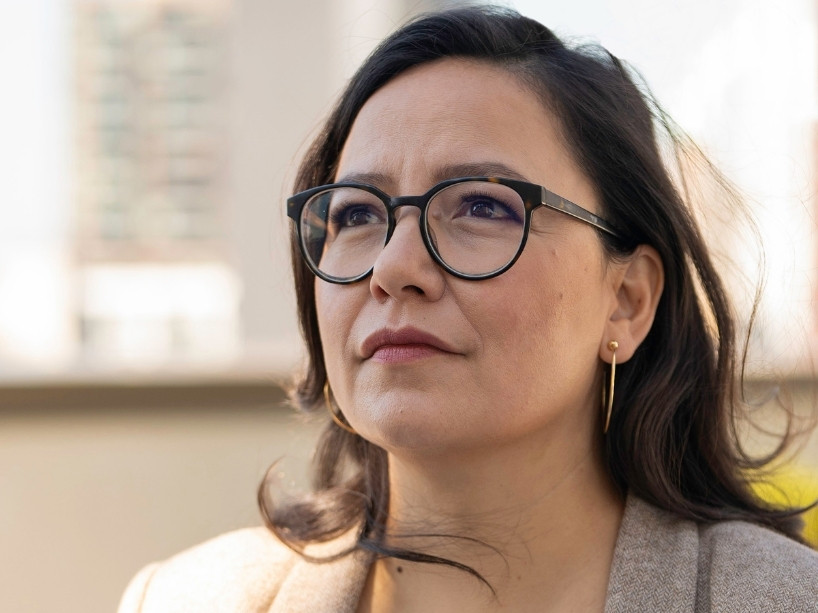
Connie Walker is a Pulitzer-prize winning Cree journalist and a member of the Okanese First Nation in Saskatchewan on a mission to create a new national archive, while raising awareness about the coming destruction of the IAP accounts. Now a professor and the Velma Rogers Research Chair in the School of Journalism at TMU, Walker is leading the Indian Residential School Records Project.
The initiative works in partnership with First Nations, Métis and Inuit communities to build this new national archive of Survivor accounts, testimonies and court filings.
By also raising awareness about the IAP destruction deadline, and with Walker investigating the court case that led to the Supreme Court’s decision – the project will help preserve as much of the truth as possible.
The project is funded by a lead grant from The Law Foundation of Ontario, and support from the Lincoln Alexander School of Law and Yellowhead Institute in partnership with the School of Journalism at TMU. With this support, Walker is building a team of law and journalism students to launch the project’s first phase in Ontario.
Why these records matter
Survivor accounts are essential to understanding the full scale of abuse at Indian Residential Schools. Preserving them could also lead to information about missing children.
Lincoln Alexander Law students will dig through Survivor court filings from the 1990s and 2000s held in provincial courts across Ontario. The archive will be built in collaboration with Survivors, their families and communities, giving them sovereignty over their own data to ensure history doesn’t repeat itself.
“Law students are going to play an integral role in this research,” said Walker. “They’ll be part of every step – filing access to information requests and analyzing the Supreme Court decision that is leading to the destruction of the most comprehensive archive of Indian Residential School Survivor testimony. They’ll also get to work directly with Indigenous people and communities, understand some of the barriers that exist and try to improve access to justice and access to information.”
In the project’s first phase, students will travel to communities and courthouses across the province to investigate five schools. They will receive trauma-informed training and work closely with Indigenous Knowledge Keepers and Survivors throughout the process.
“We have a responsibility to educate future lawyers about this chapter of Canada’s history — one that was deliberately silenced for generations,” said Donna E. Young, dean of Lincoln Alexander Law.
“This project offers our students a meaningful opportunity to address unmet legal and archival needs, support access to justice, and engage in reconciliation. We are deeply grateful to The Law Foundation of Ontario for this generous gift, which champions Indigenous-led initiatives and advances justice for Indigenous communities," Young continued.
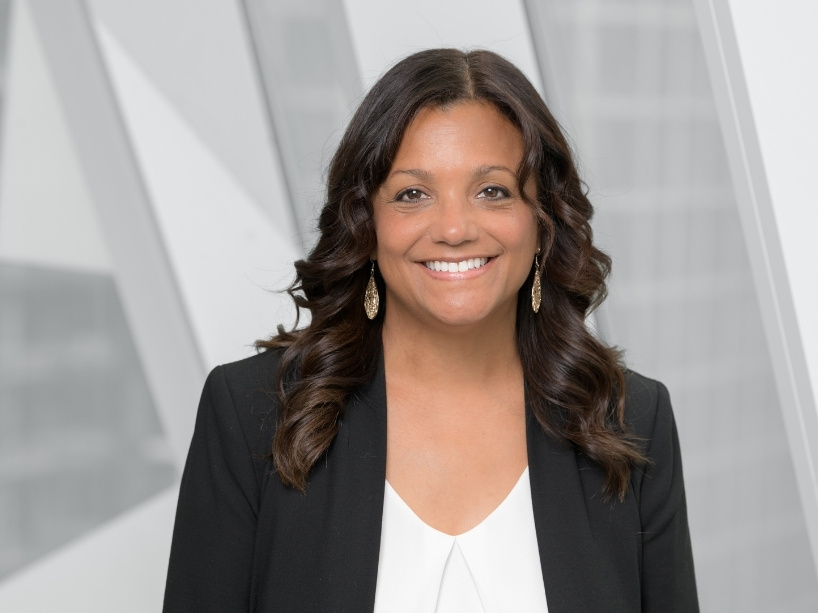
Donna E. Young, dean of Lincoln Alexander School of Law at TMU, says future lawyers have a responsibility to reckon with a chapter of Canadian history that was "deliberately silenced for generations.”
Journalism students join the investigation
Journalism students will investigate the scale of abuse at individual Indian Residential Schools and report on the impending destruction of the federally held IAP records. Their work will feed into a new podcast Walker is developing, bringing these findings to a broader audience.
“Journalism students will also play an integral role,” said Walker, a former CBC veteran reporter with 20 years of experience. “They will help to work with families and communities to decide how what we uncover will be shared with Indigenous communities, first and foremost, but also with the broader Canadian public.”
Since the Truth and Reconciliation Commission ended about 10 years ago, Walker has seen Canadians asking how they can take part in reconciliation. For TMU’s law and journalism students, this project is their answer.
A personal mission
“It's really important that law and journalism students understand the true history of Canada and the lives of Indigenous people,” said Walker, who also teaches Reporting on Indigenous Issues.
“This project gives them a real opportunity to do that – and to build meaningful and respectful relationships with Indigenous people and communities. Students will take part in reconciliation, help preserve the truth and work to improve access to justice. That’s a gift for their lives and careers. But I think it's also just incredibly important for Indigenous people as well. We need to keep Survivors and their families at the heart of everything we do," she said.
“Four generations of my family went to Indian Residential Schools.”
The project grew out of the second season of Walker’s podcast Stolen: Surviving St. Michael’s, which won numerous awards including the Pulitzer Prize and a Peabody Award. Blending investigative reporting with personal family interviews, the podcast tells the story of Walker’s late father, former RCMP officer Howard Cameron, and his time at St. Michael’s Indian Residential School in Saskatchewan – a school that ran for 100 years before closing in 1996.
“After learning for the first time in 2022 that my father was sexually abused by a priest as a boy at St. Michael’s, the podcast was initially an attempt to find out the identity of this priest and if he was ever held accountable,” said Walker, “but once my team and I began reporting, we realized there was more than one abusive adult, and the scope of our investigation widened to better understand the scale of abuse at St. Michael’s. We were able to access 485 lawsuits from Survivors and what we uncovered was horrifying.”
Through access to information requests, “we were able to create a new archive from those 485 lawsuits, which exposed a staggering level of abuse by 16 priests, 13 nuns and 15 staff members,” said Walker. “This is the process we are replicating in the Indian Residential School Records Project.”
There were over 100 Indian Residential Schools operating across Canada for over a century.
What students will uncover
“We’re still in the truth phase of Truth and Reconciliation. As an intergenerational Survivor, I’ve learned there’s still so much truth that we don’t understand about what happened in Indian Residential Schools,” said Walker. “I'm the daughter of a Survivor. I'm the granddaughter of four Survivors. Four generations of my family went to Indian Residential Schools, and the reality is that my whole life has been shaped by those experiences that they had. Many intergenerational Survivors don't know or understand how or why our lives were impacted. Even though it’s 2026, we are still fighting to protect those truths.”
Walker’s next steps include partnering with experts with deep experience in Indigenous community research. Among them is Kimberly Murray, former executive director of the TRC and the former independent special interlocutor for missing children and unmarked graves and burial sites. Law students will have the opportunity to work directly with Murray.
“As a journalist, it's my duty to help uncover as much of the truth as possible and preserve it, and that is the goal of the Indian Residential School Records project,” said Walker. “In spite of the challenges it's incredibly important for Indigenous people to understand the truth.”
Students can expect to uncover new information about children who died at Residential Schools and gain a clearer picture of the scale of abuse that took place at each school.
“TMU students have blown me away with how they think about Indigenous people and the history of Canada,” said Walker. “It’s inspiring to work with students who already know about Truth and Reconciliation and the significance of residential schools. I’m excited to discover all of the different ways they enhance the project, help shape the goals, and help build relationships with Survivors and their families.”