This mother-daughter duo is redefining inclusive child care

Child’s play. It’s a common phrase used to describe something effortless. But the reality couldn’t be further from the truth.
Play is complex and essential to how young children grow and learn.
It is also central to the inclusive approach to early education taken by early childhood educators (ECEs) and entrepreneurs Irma Canut (Early Childhood Studies MA ’22) and her daughter, Constanza Rojas Vertiz.
They saw a gap in how child care systems support children with different learning, developmental and sensory needs. So the mother daughter duo launched Organic Play, offering play-based interventions for neurodivergent children.

Irma Canut, an alum of TMU's Early Childhood Studies grad program, and her daughter, Constanza Rojas Vertiz, co-founded Organic Play to address gaps in inclusive early learning.
Canut says she’s dyslexic and required educational accommodations in school.
Her dyslexia affected her ability to keep pace, particularly with writing, and often required her to stay late to keep up.
“My school wouldn’t allow my mother to record the class,” Canut says. “So she collected notes from my friends, and we recorded everything at home instead. I had a box full of tapes for every subject that I would replay and gradually learn.”
She remembers those years as deeply challenging. “For a long time, I felt like I was never enough and that I wasn’t smart because I couldn’t absorb things the way everyone else did,” she says. “But I was just learning differently.”
Canut grew up in Mexico, but her story is not unique.
Suitable care difficult to find
According to the latest Statistics Canada data (external link) , 62 per cent of children aged 0 to 5 with disabilities attend some form of non-parental child care, while 38 per cent do not. Of the children with disabilities, 17.3 per cent were physical, 18.6 per cent were sensory, 50.9 per cent were learning and 29.4 per cent emotional.
Nearly half of parents report difficulty finding appropriate care, and close to one in 10 say their child was denied a child care spot because of their disability.
A 2021 research study published in Canadian Public Policy (external link) and co-authored by TMU Early Childhood Studies researchers, showed 79.5% of families with children who had disabilities that participated in numerous early-years services, experienced exclusion.
The issue isn’t just one of access; there is a fault in design. Canada needs child care that allows learning opportunities for all children.
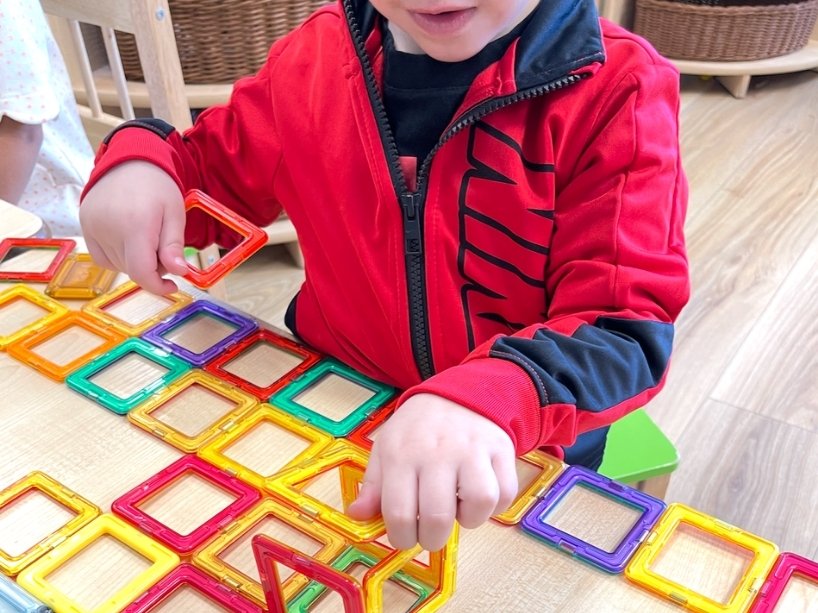
By supporting the child’s interests, play naturally expands to exploration.
Rojas Vertiz says families are promised inclusion on paper, but often face long waitlists, compliance-driven interventions and daycares unequipped to support their children. “This is a systemic problem,” she says.
After seeing firsthand the lack of child care accommodations for neurodivergent children, Canut and Rojas Vertiz launched Organic Play with support from TMU’s Social Ventures Zone to address these needs head on.
Inclusive and intentional child care
The Social Ventures Zone at TMU supports entrepreneurs who are building businesses that tackle real social challenges. Through mentorship, training and resources, the Social Ventures Zone helps founders develop and launch ventures – like Organic Play’s inclusive early childhood education start-up – that make a real difference in their communities.
Organic Play is an inclusive early learning approach that uses intervention strategies and therapeutic play to create proactive and intentional learning opportunities for all children, including those with developmental, learning and sensory needs.
Its child-led approach builds on children’s natural curiosity and places connection and trust at the centre of learning.
“If we know a child is having trouble sitting still during circle time, we make sure to have a spinning chair available so they can move but can still participate in the class,” says Canut.
Rather than relying on compliance-based strategies, Organic Play centres child-led learning that respects each child’s developmental pace, interest and natural curiosity.
“We developed an evidence-based framework that narrows the gap between neurodivergent and neurotypical development through therapeutic play and intentional inclusion.”
A social justice lens
Canut’s passion for inclusion deepened during her graduate studies in early childhood studies at TMU.
“TMU is grounded in inclusion, so being part of the Early Childhood Studies graduate program reinforced my approach to early learning and rooted my practice in evidence-based research,” she says.
Her studies helped her see how inclusion in the classroom connects to broader questions of equity and social justice. She sees each child as capable and full of potential, with unique strengths and needs. That belief drives everything she does.
As a former member of a student committee focused on inclusive practices, she started thinking about how to drive real change in early learning.
Today, that vision is at the heart of Organic Play. Together with her daughter, they are developing an inclusive early childhood education framework designed not just for their own space, but to be replicated and adapted by any child care provider.
The approach is built on a simple but powerful idea: children learn best through play. Whether they’re building emotional skills, socializing or solving problems, play is both the tool and the foundation for inclusive early learning.
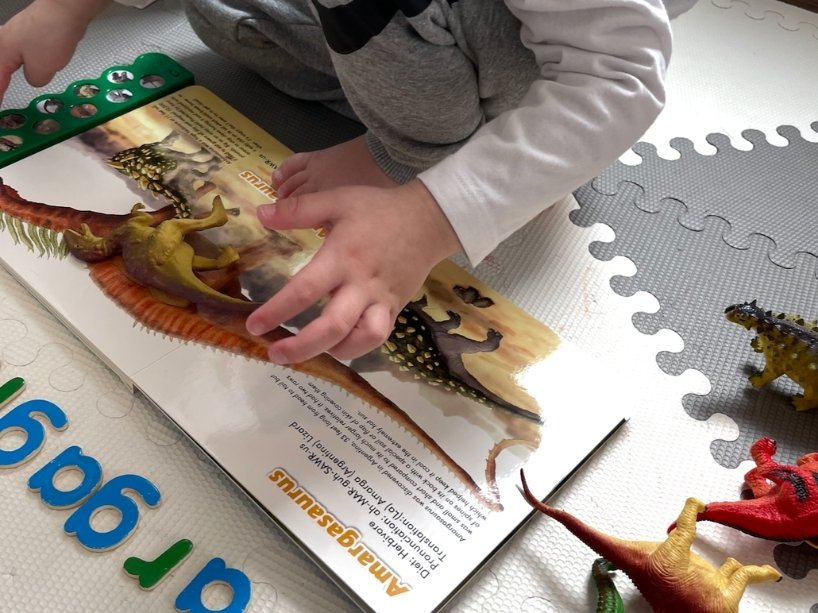
By appealing to a hyperlexic child’s strength in reading and written language, Organic Play creates play-based opportunities that support deep engagement and understanding.
We transform classrooms into communities of connection, where play and co-regulation act as bridges to emotional regulation, developmental growth and a deep sense of belonging for every child.
Their approach stands apart from the compliance-based methods where obedience is prioritized over understanding, and control over connection.
“Early childhood education should not rely on obedience; it should be grounded in connection, curiosity and developmental growth,” says Canut. “We do not want to stifle confidence, creativity, autonomy or emotional expression. We must be intentional and use the power of play to create conditions for children to build skills without suppressing who they are.”
Because children's identities are shaped in these early years, Canut says pushing compliance too early risks raising kids who feel disconnected from themselves – taught to fit a system instead of learning who they are.
She says their approach affirms each child’s identity and recognizes that one system doesn’t work for everyone. When children are given space to learn through play, learning happens at their own level and builds on their natural strengths.
“Children naturally imitate adults, they look to us for guidance,” she says. “By modeling healthy interactions and skills, we encourage imitation in a way that feels supportive rather than directive.”
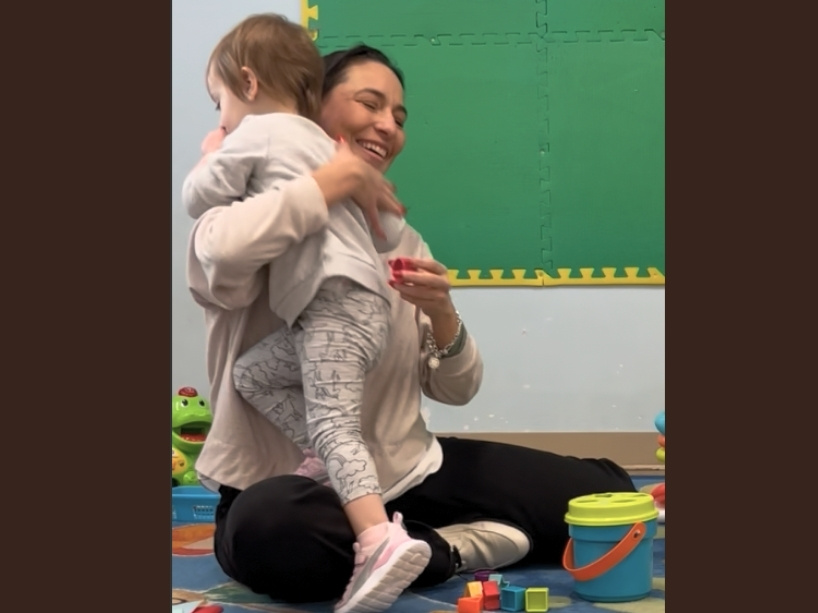
Learning begins with connection, where co-regulation and shared joy create the foundation for safety, engagement and development.
Organic Play is creating learning opportunities and spaces where every child – regardless of how they learn – can feel seen, supported and thrive.
“I believe every child deserves to be seen for who they are, not who we expect them to be,” says Canut.
As a mother and daughter, they share a deep passion for the work they’re doing together. Their goal isn’t just for kids to keep pace with their peers – it’s for them to thrive on their own terms.
“By putting children at the centre, Organic Play turns early education into an opportunity where individuality, confidence and creativity can flourish,” says Rojas Vertiz. “This conviction guides my work and my lifelong commitment to making inclusion a deliberate, everyday practice in early education.”