Free winter exhibitions at TMU’s Image Centre
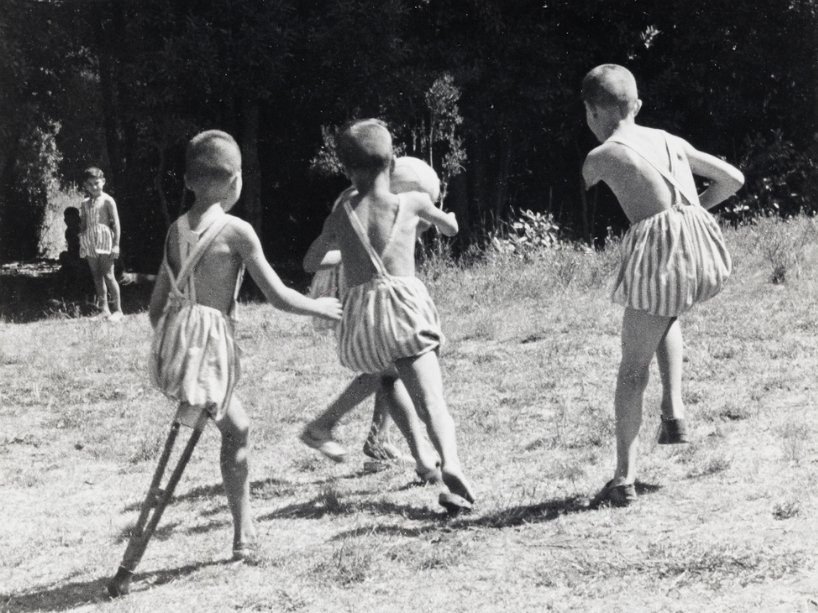
Looking for something new, interesting – and free – to check out this winter season? The Image Centre at TMU has you covered.
From now until April 4, community members are invited to explore four new exhibits as part of its winter programming.
In each installation, visitors will be taken on a compelling journey – from powerful images of children in a devastated, post-World War II Europe to photos of four Indigenous skateboarders traveling the frozen Dettah Ice Road in the Northwest Territories.
Get a sneak peek below:
Magnum's First
Main Gallery
Curator: Gaëlle Morel
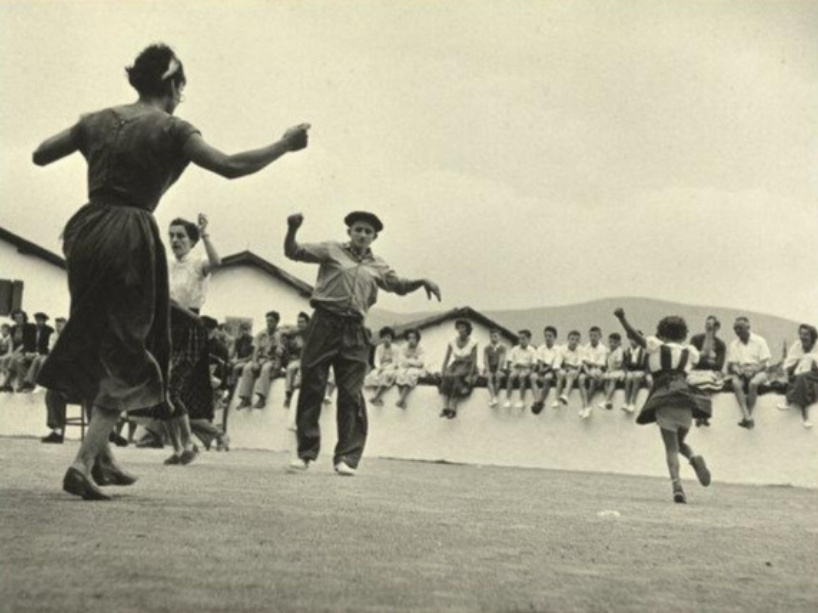
A village festival scene in Basque Country, France, photographed by Robert Capa in 1951, later published in Holiday magazine in an article about the summer travels of privileged Parisians. (Photo: © International Center of Photography/Magnum Photos)
In 1955, the legendary photo agency Magnum Photos organized its first group exhibition, Gesicht der Zeit (Face of Time) – a powerful reflection of post-war life and human resilience. This historic show was thought lost for over 50 years. Then, in 2006, it was rediscovered in the basement of the Institut Français in Innsbruck, Austria.
Now presented for the first time in North America, Magnum’s First features 83 original prints from the exhibition by eight of the agency’s early members, including the celebrated documentary photographers Robert Capa, Henri Cartier-Bresson, Inge Morath and Ernst Haas.
Restaged using the exhibition’s original layout, Magnum’s First captures a wide range of photographic approaches and global perspectives – from street scenes in Japan to political unrest in Hungary and the funeral of Gandhi in India.
The show offers a rare glimpse into the origins of Magnum Photos and its foundational role in shaping postwar photojournalism.
Organized in collaboration with Magnum Photos.
Chim’s Children of Europe (1949)
Curator: Gaëlle Morel
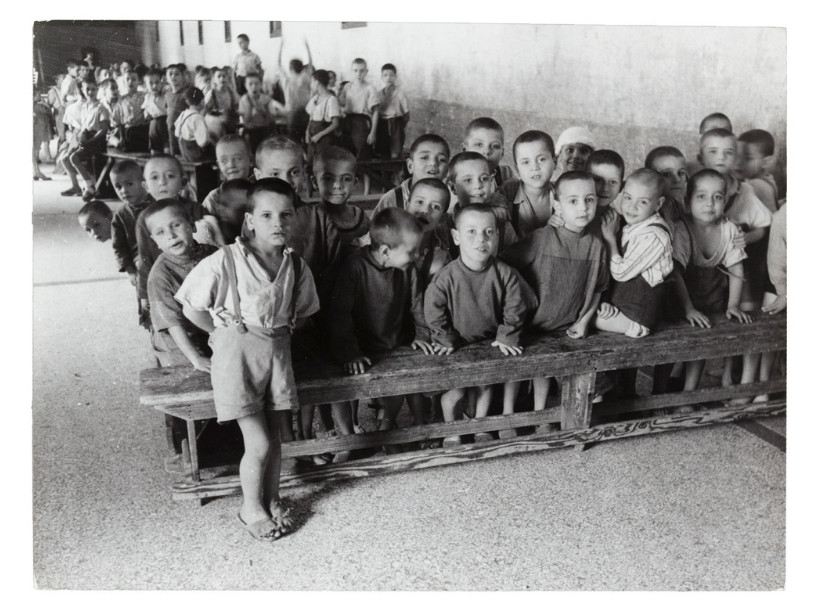
Children in an orphanage in Naples, Italy, photographed by David “Chim” Seymour in 1948. (Photo: The Image Centre, Gift of Ben Shneiderman, 2022 © David Seymour Estate / Magnum Photos)
In the aftermath of World War II, famed photojournalist (and co-founder of the Magnum Photos picture agency) David “Chim” Seymour was commissioned by UNESCO to document the living conditions of children across a devastated Europe.
The resulting images formed Children of Europe, a landmark 1949 publication that raised international awareness of postwar displacement and humanitarian need.
This exhibition brings together original prints and rare archival material from The Image Centre’s collection, revealing Chim’s compassionate lens and commitment to social documentation.
Capturing both hardship and resilience, this much-celebrated series reveals the lives of children in Austria, Greece, Germany, Hungary, Italy and Poland – offering a powerful testament to survival and recovery in a time of profound global upheaval.
Mark Igloliorte: Tuvak Akkusinialuk Siaggijâk (Ice-Road Skating)
Salah J. Bachir New Media Wall
Curator: Gaëlle Morel
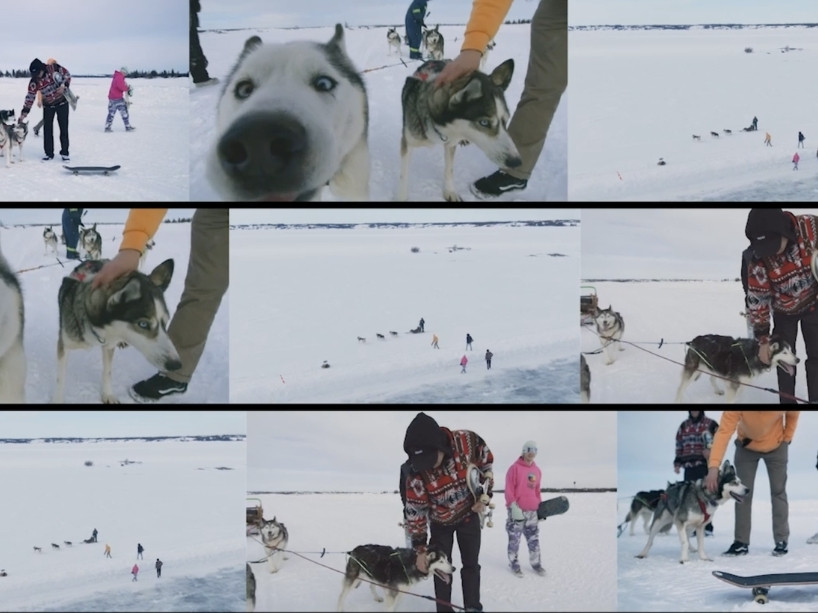
A still from Mark Igloliorte’s multi-channel video showing four Indigenous skateboarders with sled dogs in the Northwest Territories. (Photo courtesy of the artist)
In Tuvak Akkusinialuk Siaggijâk (Ice-Road Skating), four Indigenous skateboarders travel the frozen Dettah Ice Road in the Northwest Territories, weaving together spray paint, grip tape, country food and Inuit electropop.
Igloliorte frames skateboarding as an embodied presence on the land – where play, resilience and cultural knowledge move together across the ice.
First developed through the Indigenous media incubator ARCTIC XR, the 360-degree video premiered at the 2022 Venice Biennale, marking a landmark moment in Indigenous digital storytelling on a global stage.
In 2025, Igloliorte reinterpreted the work for Cairotronica in Egypt, shifting from headset-based immersion to cinematic scale and sound, further expanding the possibilities of Indigenous screen-based art.
Staging Celia Franca
On view until February 21, 2026
Student Gallery
Guest Curator: Sofia Beraldo
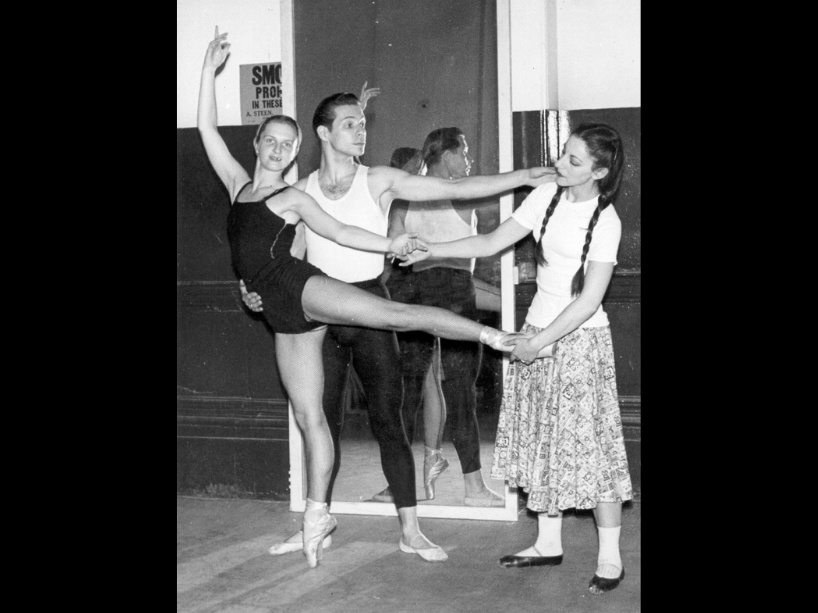
Celia Franca, right, founder of the National Ballet of Canada, with dancers Irene Apiné and Jury Gotshalksat in 1951. (Photo by J. Kreilis, courtesy of The National Ballet of Canada Archives)
Celia Franca’s (1921–2007) legacy and iconic facial silhouette are impossible to avoid when roaming the National Ballet of Canada (NBoC) and Canada’s National Ballet School both based in Toronto.
Born and raised in London, England, Franca moved to Canada at the age of 29 to found the NBoC in 1951. She served as the institution’s first artistic director, a post she held for 24 years.
Franca and her signature look – thin drawn on eyebrows, pale face makeup and red lipstick with her hair either in two braids or tied back in a chignon – became a personification of the company itself.
Signature look
Franca’s decision to have a signature look was no accident and required dedicated upkeep. Born as Celia Franks to a working-class family of Polish Jewish immigrants in east-end London, Franca undoubtedly understood how to use dress and her status as a ballet dancer as tools for upward mobility.
Although influenced by patrons who could purchase and wear couture, Canadian writer Carol Bishop-Gwyn noted: “She dressed in the garb of a Rosedale matron,” Franca had her own sense of style heavily influenced by her involvement in ballet.
Through archival images from The National Ballet of Canada’s Archive and Dance Collection Danse, this exhibition lifts the curtain on Franca’s off-stage wardrobe from 1951–1959. During this period, Franca was at the helm of the NBC as artistic director and, simultaneously served as a dancer by necessity while the NBC was in its infancy. Her dual role was reflected in her wardrobe, as she retained balletic influences – with the help of Christian Dior’s ‘New Look’ silhouette – yet cleverly used her clothing to separate herself from the rest of the NBC’s dancers.
For more information about The Image Centre’s winter exhibitions and free public programs, or to learn more about the daily drop-in tours, visit The Image Centre (external link) .