How one artist honoured fallen soldiers by painting war’s aftermath
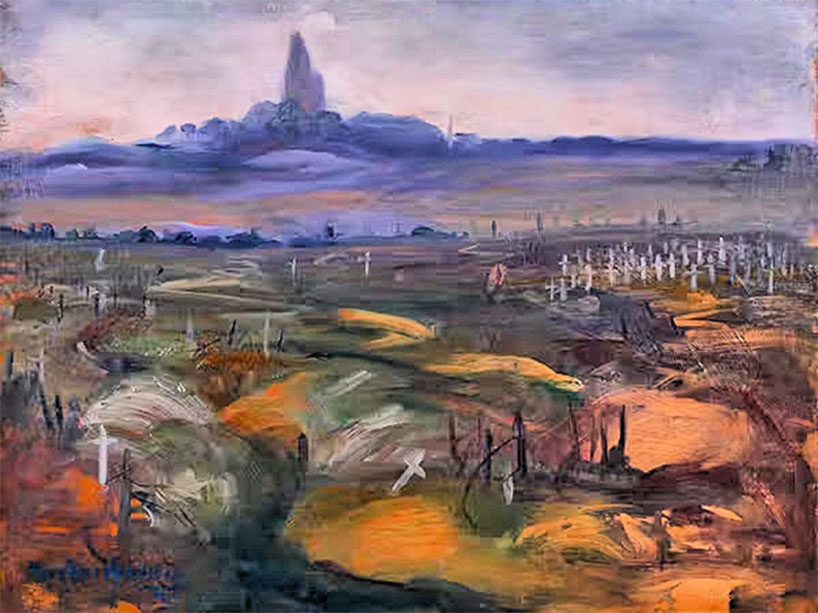
Canadian artist Mary Riter Hamilton depicted the aftermath of war in her collection of 320 battlefield paintings. This painting, The Battlefields of Vimy Ridge—The Lens-Arras Road, was made with oil on paper in 1919. (Library and Archives Canada. Courtesy Irene Gammel, I Can Only Paint: The Story of Battlefield Artist Mary Riter Hamilton (MQUP, 2020)).
More than a century after World War I ended, Remembrance Day still matters. Why? Because stories from those battlefields continue to teach us about sacrifice, resilience, empathy and the true cost of war.
Director of TMU’s Modern Literature and Culture Research Centre (MLC) Professor Irene Gammel knows this well. She searches for untold war stories and makes them accessible to students, fellow researchers and the public.
These first-person accounts create cross-generational connections, says Gammel. They help us understand what people experienced and why we need to remember.
Professor Gammel will speak at TMU’s Remembrance Day ceremony on Nov. 11, 2025. She will focus on individual stories and how the human cost of war was articulated in diaries, letters and art.
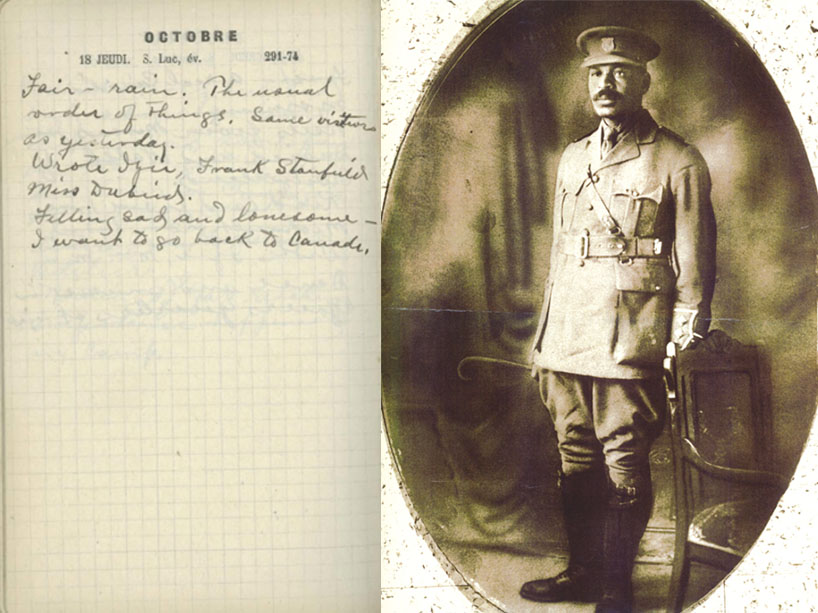
Captain William Andrew White, chaplain of the No. 2 Construction Battalion, kept a diary during World War I. An excerpt from October 18, 1917 reads: “Feeling sad and lonesome—I want to go back to Canada.” (Photograph ca. 1916. The Operation Canada Digital War Diaries Project, Modern Literature and Culture Research Centre, Toronto Metropolitan University. Courtesy of Anthony Sherwood.)
The story of a Canadian battlefield painter
One individual story is that of Mary Riter Hamilton, Canada's first female battlefield artist. After World War I ended, she travelled alone to Europe.
“She went to many of the small little-known places where Canadians didn't necessarily win, but where they suffered heavy losses,” said professor Gammel.
“She documented in beautiful paintings the landscape that was left – a very devastated landscape, an earth in turmoil. It was a place where many bodies still needed to be recovered during this time.”
With her paint brush, Hamilton memorialized the war and also documented the human cost of war.
Why remembering matters
Some people might ask: Why dwell on the past? Why not just move forward?
Professor Gammel believes highlighting sacrifices and showing empathy are two reasons why it remains important to continue studying the world wars and marking them with Remembrance Day.
“We can look at it through the perspective of Mary Riter Hamilton. A lot of people might say, ‘Shouldn't we just be focusing on rebuilding? Let's pretend this never happened, let's just move on.’ For Mary Riter Hamilton, it was important to think about the loss of human life, honour the people who died and honour their families who were suffering,” said professor Gammel.
Gammel calls Hamilton’s trip a classic remembrance project. Hamilton created more than 300 paintings, the largest known collection of First World War art by a singular artist. About half of the paintings are housed at Library and Archives Canada.
“Empathy was key for Mary Riter Hamilton,” said Gammel. “She captures memorializing as an act of empathy that bears witness to war’s lasting scars.”
Join the Remembrance Day ceremony at TMU
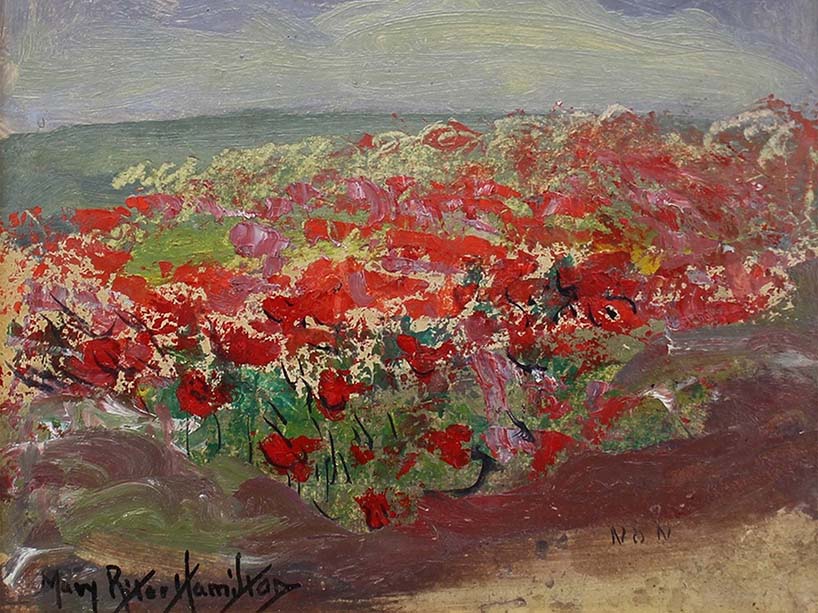
Mary Riter Hamilton, Flanders Field, Oil on board, 1919-1923, 24.13 x 18.42 cm. Uno Langmann Gallery. Courtesy Irene Gammel, I Can Only Paint: The Story of Battlefield Artist Mary Riter Hamilton (MQUP, 2020).
TMU’s Remembrance Day ceremony honours lives lost due to acts of war and creates space for everyone impacted by global conflict.
Event details:
- When: Nov. 11, 2025 from 10:40 a.m. to 11:15 a.m
- Where: Kerr Hall Quad
- Program: TMU student Alan Jamieson will open with an honour song, Irene Gammel will share remarks and the event will close with the singing of O Canada performed by the Toronto Metropolitan Concert Choir.
Related stories: