World Mental Health Day 2021: Ask an expert
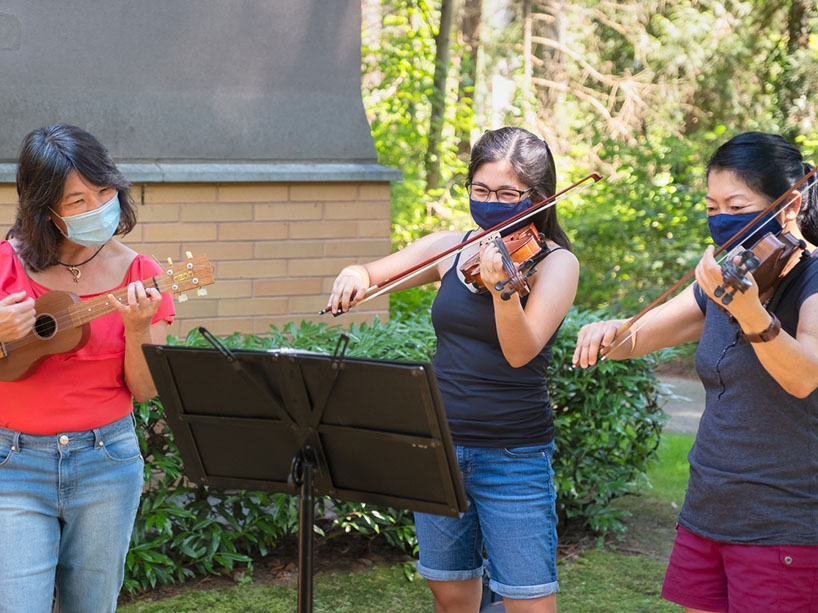
With the pandemic preventing us from taking part in so many of the activities and events that we enjoy, psychologist Diana Brecher says it’s important to be creative and reimagine how we can connect with others and find joy. (iStock by Getty Images)
Loneliness. Anxiety about the future. Lack of motivation. If you’re feeling any of these, you’re not alone.
In advance of World Mental Health Day on Oct. 10, through social media, we asked you to anonymously share your most pressing mental health concerns with us. And these were a few of the concerns many of you submitted.
“Tragically, it’s not surprising,” says clinical psychologist Diana Brecher, who has over 30 years of experience at Ryerson providing mental health services. “The pandemic has taken a tremendous toll on our mental health in so many ways.”
Below, Brecher, who founded ThriveRU and co-leads Thriving in Action, two positive psychology Student Wellbeing programs, answers some of the most pressing questions submitted about the issues most affecting you.
Read below for some of these concerns and Brecher’s expert advice for each response.
Brecher: Most of us think that motivation is something that we will just feel or receive. If someone is saying that they're struggling with motivation, really what they're struggling with is waiting passively in hope that they're going to feel a certain emotion. But, actually, motivation is something that often is the result of an intention or a commitment that we make. So what has to come first is this commitment.
For example, saying to yourself, I am going to exercise every day, regardless if I feel like doing it at the time, or I'm going to do my classwork every day. It's that original intention and commitment to act that then generates motivation, after the fact. If you think about what comes first, the way out of that kind of cycle is to say, “I'm going to make a plan, and I'm going to follow through with that plan - whether I feel like it or not.”
It’s about following your plan and not your mood. And if you can do that, it will help you build the momentum you need.
So, think about what's going to make a good day for you. What are your obligations and what are your interests? Can you structure it in such a way that you have a plan, you've scheduled things in, and then you're not relying on feeling motivated in the moment, but you're simply going to say, “At some point, I thought this was a good idea, so I'm going to trust that and follow through with that.” And then, what will likely happen is that you'll start to feel that it's the right thing. And then, the motivation comes along - and it gets easier as you go. As the expression goes - we need to put the cart before the horse - motivation is the cart, and commitment is the horse.
Brecher: When I hear that, I'm filled with regret that the world is the way it is today due to the pandemic. It’s kind of setting up lots of people to feel disconnected and lonely - not even having the opportunity to join things in person because it's just inaccessible right now. That's the reality that many people share. Sometimes, suffering can be alleviated a little bit if you recognize that you're not the only one who's going through this. I think this is a very common situation, even for those people who are living in their communities and have lots of friends.
But, given that, I think that one of the things that we can think about is, where are you focusing your energy? Are you wishing that things were different? Or are you pursuing something that is truly of interest to you, regardless of the context - something you're curious about, that you're passionate about? Can you fill your free time with something that is very fulfilling for you? Be it learning a new skill like a musical instrument, engaging in an artistic endeavour or playing games that are really engaging? Can you begin, first of all, to inner resource a connection with yourself?
That's one step in addressing loneliness or isolation. Now the hitch is, it requires a certain amount of upfront energy and it's really hard to do that, and I recognize it. But I do think it is worth the initial effort of investment.
The other thing is, Ryerson and other universities have actually created lots of ways to connect with other students. In fact, there's a Ryerson Today article that talks about some of these resources, such as MyRyeU and FriendUp. They’re platforms that create a way for students to connect. I encourage anyone who is feeling isolated to check those out. And while I recognize that those are online, for those who are saying, “I’m tired of being online”, you know, it could be that you meet someone through these online experiences and end up doing something in person, if that feels safe. You know, going for a walk or engaging in a bike ride or whatever it is that you want to do outside that feels good. But you have to start somewhere.
This could also be seen as an opportunity to become more self reliant - even just choosing to read books that you never have time to read. And when you're truly engaged in a really great novel, you're not thinking about what you're missing, you're actually engaged in this imaginary world. Can you engage in self-care that typically you wouldn't have time for? It could be seen as an opportunity rather than a very, very difficult situation which it truly is.
I heard at the beginning of a pandemic someone say, “We're all in the same storm, but we're in different boats”. And what that means is, some of us have more resources, some of us have more connections, but at the end of the day we can all do something for ourselves. It may be that this is the time to engage in a new meditation practice or learn yoga online. There are lots of new and different things that you can do for yourself, and in the long run, you'll always have that as an inner resource.
Brecher: This is really hard. I know that all the data is telling us that. Everyone is struggling with mental health issues, whether it was an issue before the pandemic or not, and so it makes sense that what pre-existed is now feeling worse. So, it's the fallout. It’s what we've all experienced and I'm so sorry that you're going through this.
I think engaging in as much self compassion as you can find, to not blame yourself for any of this because none of it is your fault, is perhaps the first step to bouncing back or moving forward. So, I want to kind of frame my answer in the context of resilience.
In my work as a clinical psychologist, I developed this five factor model of resilience, of which one of the factors is self-compassion. But there are others as well, and each one together can help us regroup. So, the five factors are engaging in mindfulness, which is really about being in the present moment, tapping into our gratitude for what is going well, and paying attention to the good things that are happening in our lives. Tapping into hope and optimism and beginning to think about things from the perspective of a more hopeful perspective. Self compassion is about being your own best friend and the moment you need it the most. And then how do you persevere and persist even though things have been really tough? Can you be really intentional about it and give yourself tons of credit for having pushed through the really hard times?
And then it's about reaching out for help, and it sounds like perhaps you are reaching out for counselling, even though it is virtual, or by phone. And the phone format, I’d like to point out, can be very effective for a counselling session, since you can focus entirely on expressing how you feel, and on listening to the other person, without having video as a distraction. And so, with those sessions, see if you can take in the benefits, and focus more on what you're getting out of it than what you're not getting out of it, because this is an unprecedented time in our lives. No one is in control. Stress is really about feeling out of control, dealing with uncertainty, and dealing with conflict, and by definition, the first two are built into living through a pandemic. So, we're all struggling, some more than others, and having hope is about saying, “This is going to end someday, things are going to change. And I just have to keep going until then.”
Brecher: You know, I'm sure you are in very good company - with lots of graduating students across multiple universities right now who are facing the same dilemma. So, the truth of the matter is that connecting with Ryerson’s Co-Op and Career Centre is really a great resource for you. They’re providing all kinds of networking opportunities. Yes, they're online, but their services and strategies are still valid for your job search. There are also job search and networking strategies and skills that you can acquire to make it less daunting.
I’d also like to go back to this notion of not feeling hope. Shane Lopez is a psychologist who's spent his entire career studying hope. He talks about hope as the combination of optimism, a sense of agency, and the capacity to make plans to implement whatever it is you want to have happen. So, optimism is about that belief that things are going to get better. It's operating from that perspective, even if you don't believe in it 100 per cent. Even if you believe in 20 per cent of it to start - agency is the sense that you can do something about the situation. So, going to the Co-op and Career Centre, and taking some workshops and meeting with an advisor, and getting some suggestions about post-graduation plans, and then making specific plans and coming up with a whole kind of project management blueprint of, “We're going to do this and this is the timeline, and this is the right thing to do.”
On the other hand, if you passively wait for something to happen, chances are that it probably won't. But if you take a more proactive stance, again, it's this idea that you have to invest initial energy at the beginning for something to take on a life of its own and have momentum. So, that's the hard part. But, if you start even with just going to the website, booking an appointment or meeting with someone who is an expert in this area and getting some ideas, it can help you kind of build that plan. If you believe that you're beginning to do something about the job search months in advance, that's going to build your confidence, you may begin to get new ideas about what you can do, things that you hadn't considered before, and see this is an opportunity to make it be something really wonderful. And so, hope is really about that belief and the action and then building in the plans to make it happen.
Brecher: This is a bit similar to the concern about motivation, but fatigue can come from different things. It can come from chronically not getting enough sleep. And we know that sleep is incredibly important for well-being and learning, and our health, generally. But fatigue could also be based on what we're thinking, which is “I'm bored and tired of this routine that I didn't sign up for, and when is it going to end?”. And so there's this “I'm sick of it, and I want it to change but it's not in my control” feeling. So, fatigue can be based on not getting enough rest, not eating well or not taking care of your body, since things like exercise, nutrition and self-care, can increase your energy generally.
But if it's based on a more emotional fatigue where you're just sick and tired of living through this pandemic, you're in good company. We all are in this together. And it's about asking, “What can you do today?” We're only really in control of our present and only to some extent anyway. But, what can you do today to make it a worthwhile day, a day that you feel like you either accomplished something you set out to do, or you had a connection in a way that was really meaningful, or you've learned something really important in class or outside of class, it doesn't matter.
Ask yourself, ‘How can I make today worthwhile?’ And if you do that day after day, it kind of takes care of the future, because living in your present really will add up to the future.
So, you're not going to worry about what January is going to look like, but rather, “What's today going to look like?” And can you be proactive about something you can do that is pleasurable, interesting or engaging today? If you do that every day, it can be really helpful. You can also pay attention to the good things that are happening every day that you might not be focusing your attention on, because it’s our tendency to deal with problems and negativity bias. Instead, focus on what's going well. So, could you engage in the three good things exercise which is very simple to do at the end of the day: acknowledge the good things that happened, and if you do that day after day, and you will begin to shift that focus from what's missing to what's actually going well.
Are you in crisis? For emergency medical or mental health response, please dial 911 or go to your local hospital.
--
Related: