Tackling Toronto’s homelessness, one bus at a time
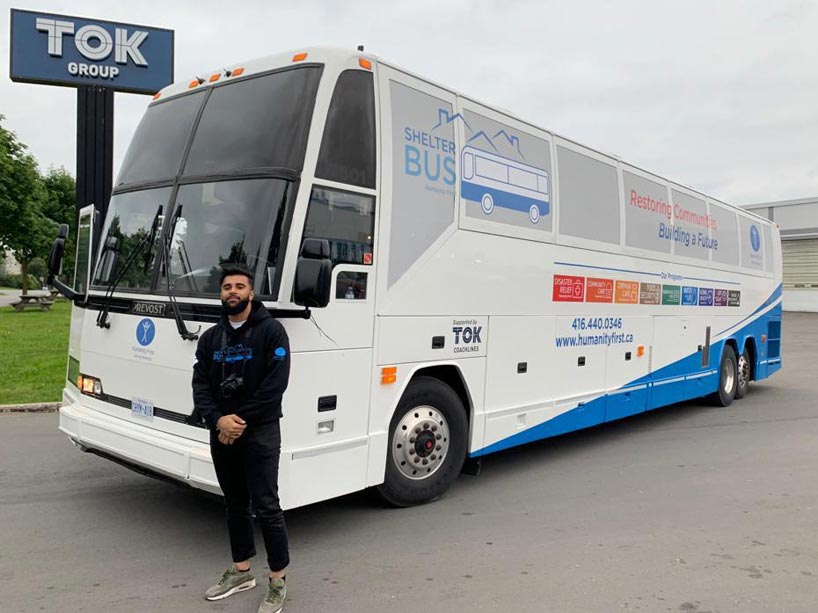
Burhan Goraya and his Shelterbus team are having a huge impact in Toronto. In December 2019 alone, the team served 1,116 meals and accommodated 1,297 guests. Photo credit: Burhan Goraya.
When Burhan Goraya (biology ’18) made the trek from Vaughan to Ryerson’s downtown campus every day for his classes, Toronto’s growing homelessness caught his attention. “While at Ryerson, I became aware of how serious homelessness is in this city and how big of a public health concern it is,” he says.
Indeed, the city faces a great challenge: approximately 8,700 people in Toronto (external link) are currently experiencing homelessness, which means they’re often faced with other barriers as well, including access to a primary care physician and necessary social support. Finding a safe place to sleep can be difficult, with shelters across the city currently operating with 95 per cent (external link) or higher occupancy rates.
Goraya was already involved with the Humanity First (external link) ’s Ryerson chapter as one of their presidents, and when the organization decided to focus on homelessness as a target initiative, Goraya initially got involved with smaller projects including food and clothing drives. But in June 2018, the group noticed that the shelters in the GTA were seriously overstrained. “We thought maybe we could find a sustainable, cost-effective way of alleviating some of the stressors,” he says.
Naeem Farooqi, another member of the Humanity First team, works in the transit industry procuring buses for cities. He noticed that end-of-life coach buses were being sold for scrap metal. “We thought a better way to use these buses was to have them repurposed into a project where we can help the most vulnerable of our city,” says Goraya.
The idea meant that, after some renovations to install 44 seats that convert into 20 beds, the team could create a mobile shelter that reduced the cost of a shelter bed from the city’s $65 per night to a mere $25 per night. “It’s a substantial difference, and it’s made possible because we have the luxury of partnering with different organizations and our team is entirely volunteer-based.”
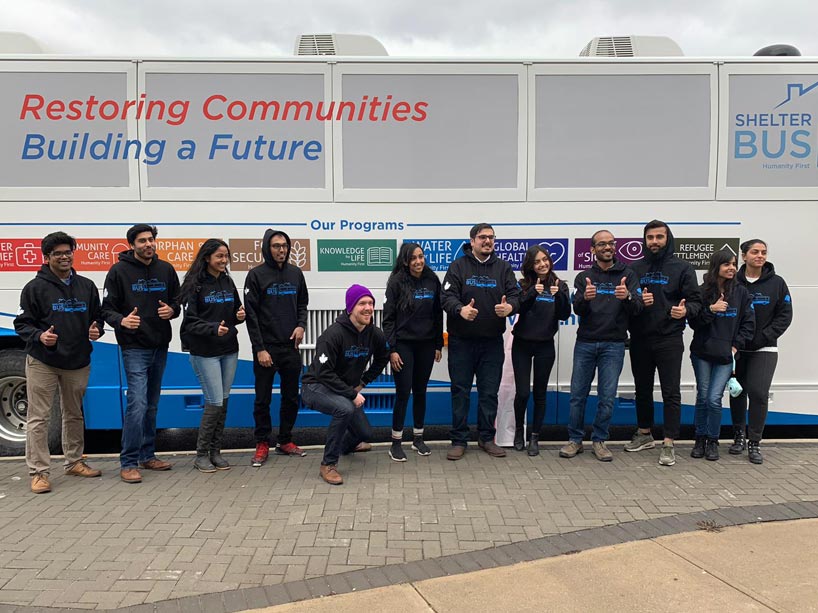
Shelterbus is able to cut the cost of making the beds available to individuals by operating on an entirely volunteer basis each night. Photo credit: Burhan Goraya.
Before getting the bus on the road, though, the team wanted to earn the trust of the community. This meant extensive community outreach with different shelters in Toronto. “We got to know a lot of the people who now use the bus,” says Goraya. His team worked with different shelters to come up with the specific neighbourhoods that needed help the most: Moss Park, City Hall, and Queen’s Park. They then built their six-month pilot project around these areas. Starting in June 2019, the team took the bus to these different areas to provide shelter to individuals nearby.
Come December when the temperature dipped, the team was operating the mobile shelter nightly. Goraya says that the shelter’s unique ability to be mobile allows the team to have more of an impact in communities that need it most. “It means getting more people on the bus. We start at 7 p.m. at Moss Park, and pick up any individuals who are there waiting for us. Then we go around the circuit to City Hall and Queen’s Park, picking up other individuals,” he says. “Every two hours, we drive the bus around to pick up others if the bus isn’t fully occupied.”
The Shelterbus project has grown so much in the last year that Ontario NorthLand, a transit company in North Bay, recently donated a new coach bus to the team and they are now raising funds to convert the bus into a second mobile shelter. “Homelessness in Toronto has been growing over the past few years. One bus isn’t going to solve the issue,” says Burhan. “Now, we’re hoping to get more volunteers working with us and more corporate sponsors to help make that project a success as well.”
Goraya encourages Ryerson community members who are interested in getting involved on a volunteer basis to reach out to the team through their website (external link) , Twitter (external link) or their Instagram account (external link) . “We’d love to work with students who can help in the logistical aspects of the bus, such as urban design students, engineers, sustainable development students, or anyone who is willing to work towards making a difference in this regard,” says Goraya. “Currently our volunteers are on the bus from 8 p.m. to 7 a.m., and their activities include providing hot meals, warm drinks, hygiene kits, and being there to provide a sense of community.”
When asked what’s next, Goraya says he has aspirations to go to medical school and focus his career on the public health interest he developed at Ryerson. “At the moment I’m working at the Toronto General Hospital, in a research position at the Interventional Cardiology Department,” he says. “I’d really like to work in public health and medicine, doing work that will help our Toronto community. Being born and raised here, I want to give back the most that I can.”