Social policy in motion: Driving change to transform transit
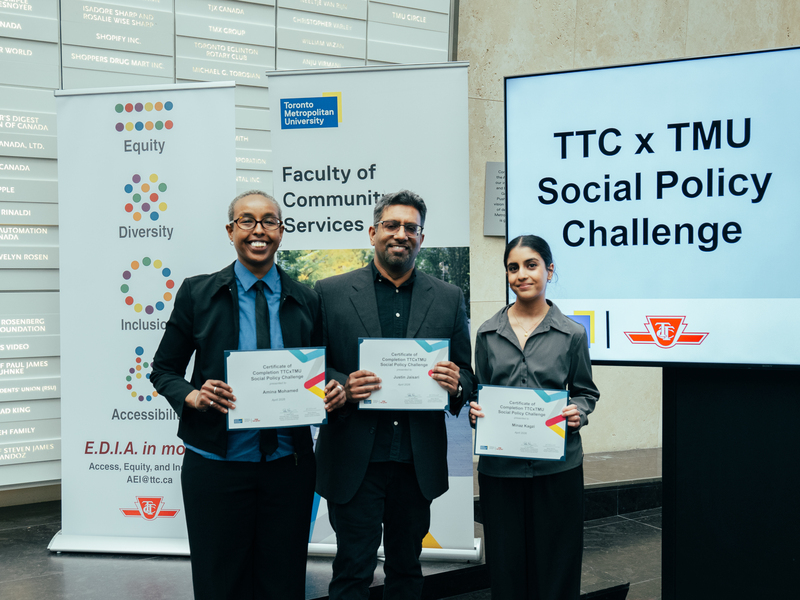
Congratulations, winning team!
Social work undergrads Amina Mohamed, Justin Jaisari & Minaz Kagzi
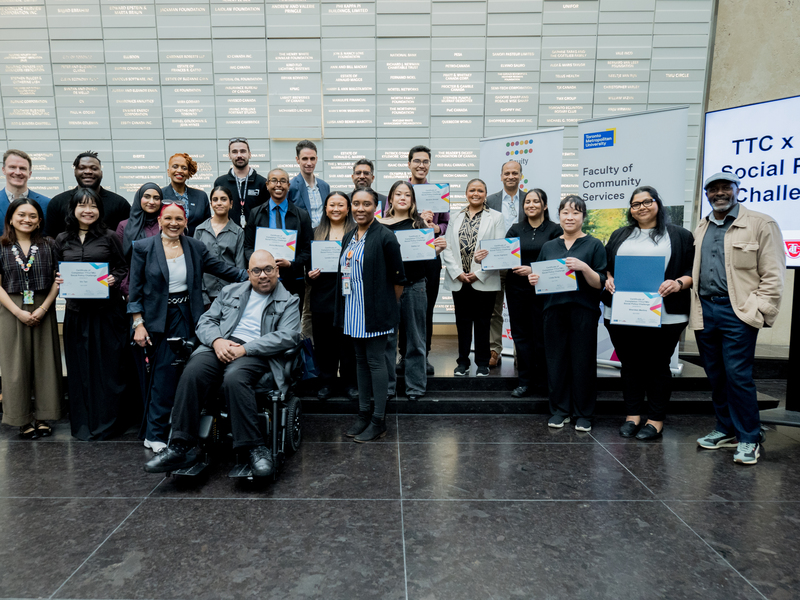
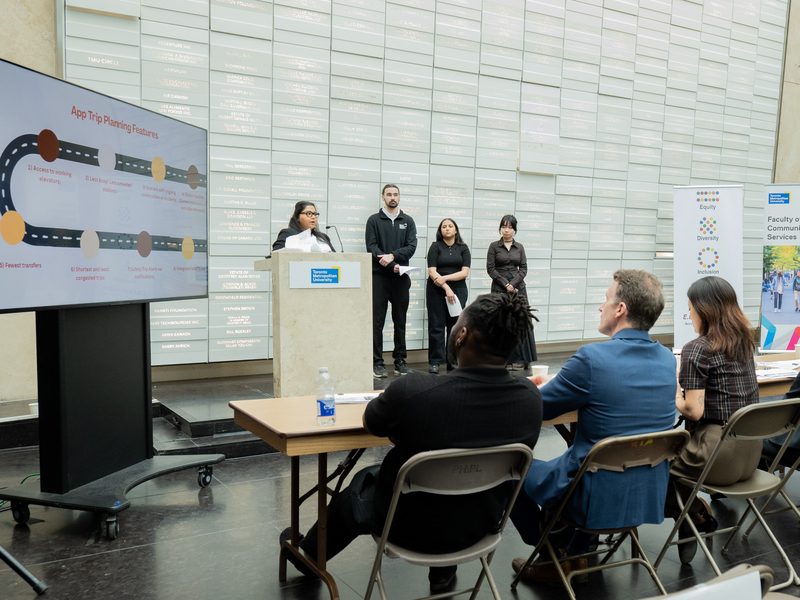
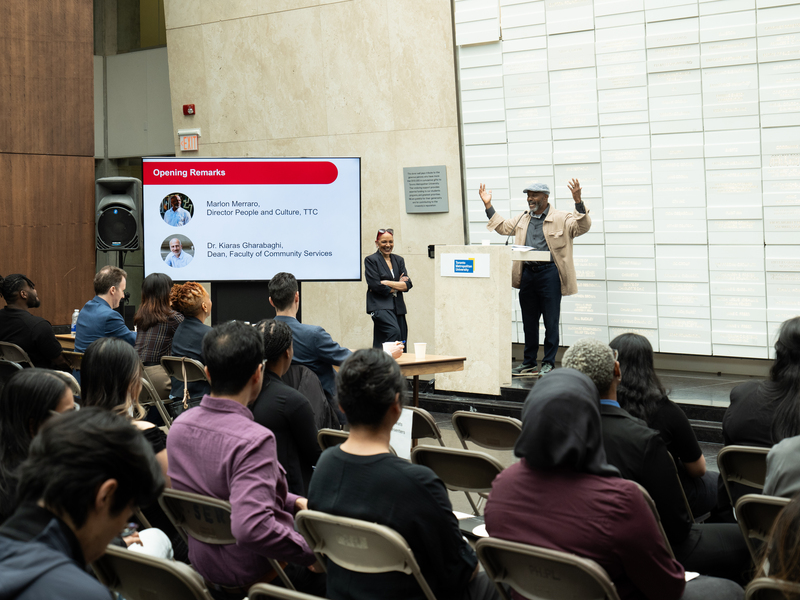
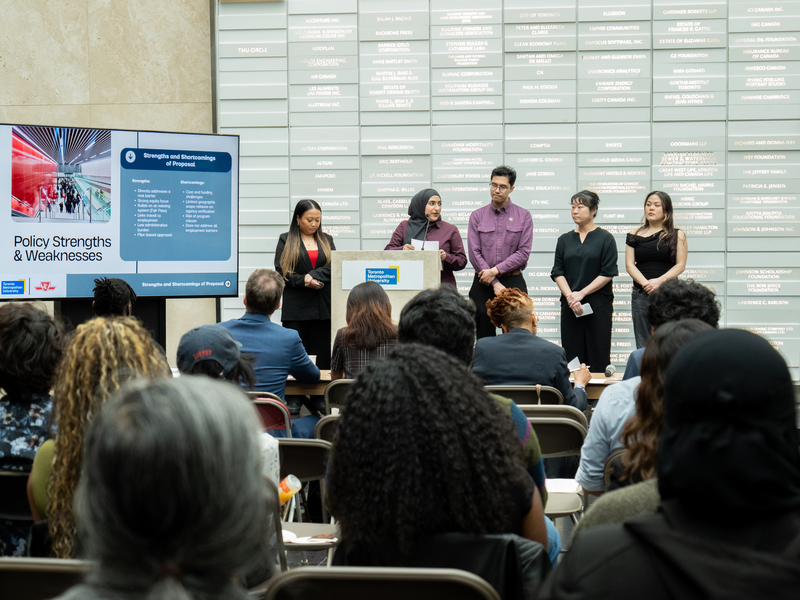
Congratulations to the top team at the 2026 TTC x TMU Social Policy Challenge! Third-year undergrads Justin Jaisari, Amina Mohamed and Minaz Kagzi secured the $6000 grand prize for their winning proposal on Reconciliation with Indigenous Communities.
The event, now in its third iteration, is an academic-industry partnership designed to give students hands-on, interdisciplinary training on complex, real-world issues.
“When we think of the TTC many of us first think of buses, streetcars, subways, and just getting from point A to point B,” says Jessica DeWit from TTC. “This event asks us to consider the social issues connected to transit, look deeper, and see that people are at the heart of the TTC.”
This year, interdisciplinary teams applied know-how in social work and urban and regional planning to tackle the issues of (1) Indigenous reconciliation, (2) transit access, and (3) affordable housing and transit connectivity.
Thanks to our participating students and everyone at the TTC, TMU’s School of Social Work and School of Urban and Regional Planning, and the Faculty of Community Services Dean’s Office who worked to make this year’s event another success in experiential learning and community partnership!
“As the world around us changes, it’s important for a place like TTC to adapt and grow. Young people, like TMU’s students, help make this growth possible.”
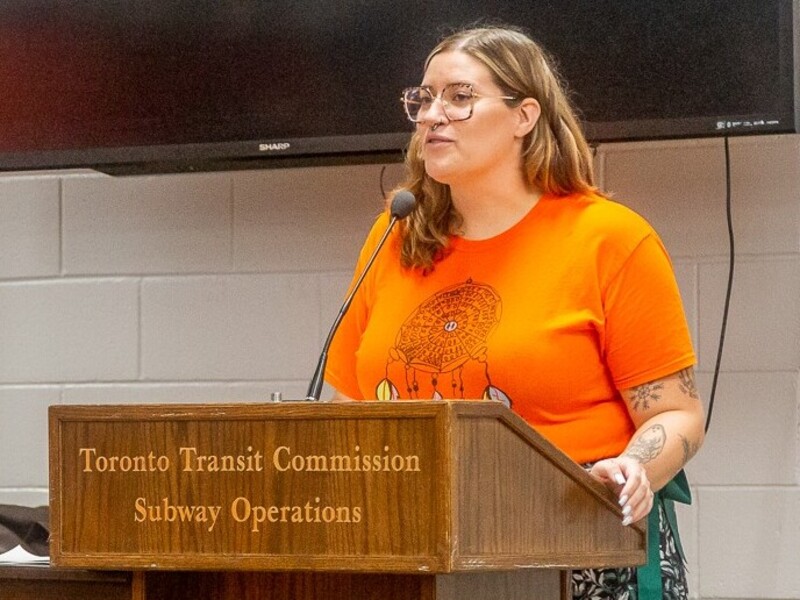
Q: What value does TTC see in tapping in partnerships and learning events like this?
“Many in our workforce are aging out and retiring. The next generation of talent will fill this gap. By creating opportunities to mentor, teach, inspire and elevate young people, we prepare them to enter confident and capable. These partnerships tell them that we care what they have to say and we value ideas they bring to the table.”
Q: What impressed you about students’ ability to tackle complex social issues?
“I really liked their bold take and diverse perspectives on issues. I worked with the Indigenous policy team and observed their actionable approach. They weren’t scared to take risks and ask for something big.”
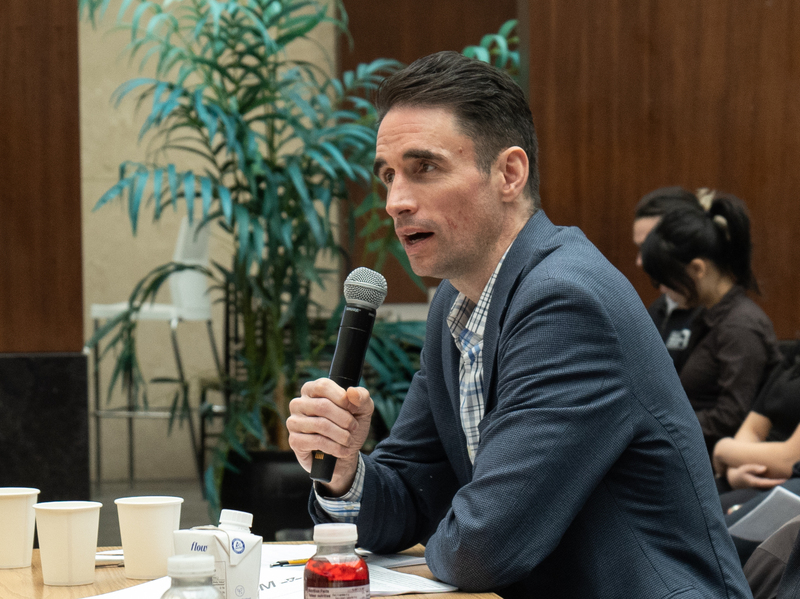
Q: What realities did this year’s students face in tackling policy issues?
“Most policymaking is a slog, a lengthy and tiring process: two steps forward, three steps back, three steps forward, one step back, repeat. Good ideas from a technical perspective alone will never materialize unless they match a political and strongly felt public interest reality/need.
This year’s TTC x TMU Challenge was a beautiful example of how our students sensed the reality of current political winds, and then put their fingers on the pulse of visionary ideas at this very time in history."
“We weren't just learning from the TTC; we were contributing something back. That accountability and relevance is hard to replicate in a classroom setting.”—
Q: How did this experience compare with lectures, theory, essays and tests?
“We weren’t just working for a grade. The issues, stakes and people impacted are real. Being in conversation with an institution that could actually implement our proposal forced us to think about feasibility, unintended impacts, and how to ground our work in community realities rather than just theory. We also had access to TTC staff and professors who shared expertise, insight and feedback while still maintaining our voice. Having so many people invested in making our policy successful felt supportive and inspiring.”
Q: What made this win meaningful?
“After all the meetings, hard work and adversity, it’s an honour — not just because we won, but because our idea itself was taken seriously. We put forward not theory but a policy rooted in economic reconciliation and material change, with real potential to exist in the world. To have that recognized feels validating.”
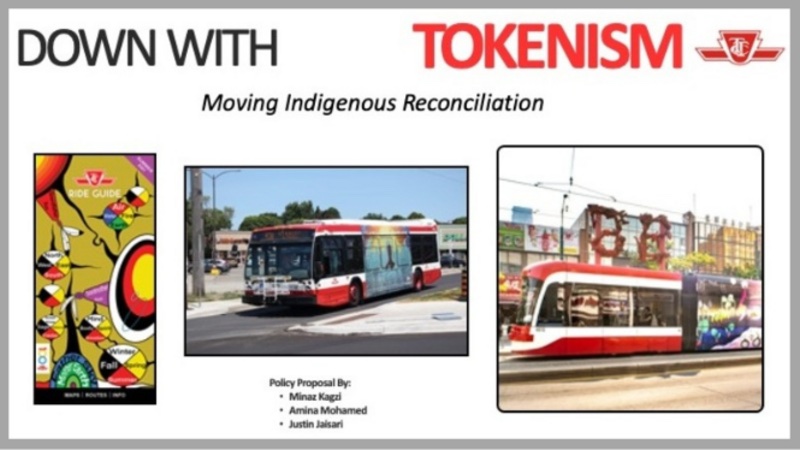
Social issue: Reconciliation with Indigenous Communities
Proposed policy: Launch an Indigenous Reconciliation Pass providing free fare as a means of economic reconciliation. Engage Indigenous agencies to verify eligibility, distribute and renew passes annually.
Rationale: Mobility is essential for participation in economic and social life. Free fare removes access barriers and expands opportunities in employment, education, healthcare, and community programs. Change is material, measurable and transformative.
Viability: Countries implementing free public transportation in smaller transit systems see up to 750% in increased ridership, with improved mobility and well-being among transit-dependent individuals. A similar free-fare model is already being used by the Canadian National Institute for the Blind (CNIB).