New research reveals unseen realities behind racialized evictions in rental housing markets
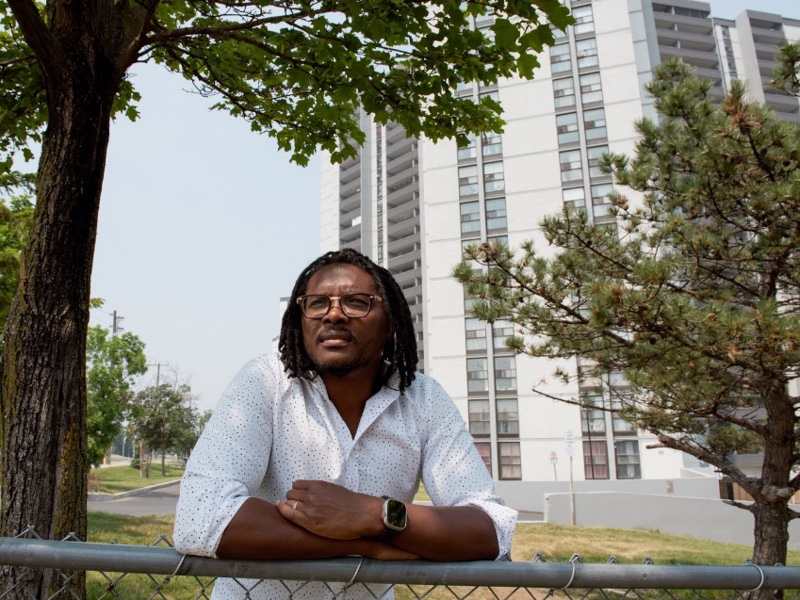
A new paper published in Geoforum by urban planning professor Nemoy Lewis and TMU alumnus Dimtiri Panou exposes realities of racialized housing “from the inside out”, beginning with what tenants live and navigate day to day.
“It’s an important approach,” says Lewis, “because eviction and displacement cannot be fully grasped through administrative data alone.”
His prior quantitative research has shown how eviction and aggressive landlord strategies are disproportionately concentrated in Black-majority and immigrant neighbourhoods.
This new case study set in Toronto’s northwest shifts the analysis to tenants’ accounts of how housing insecurity is produced, systematically sustained, and normalized by large, financialized landlords over time — often through notices, threats of removal, debt pressure, chronic disrepair, and landlord intimidation.
“At Chalkfarm, eviction was not a singular moment of crisis, but a chronic condition, a mechanism of racialized extraction embedded within the very structure of tenancy.”
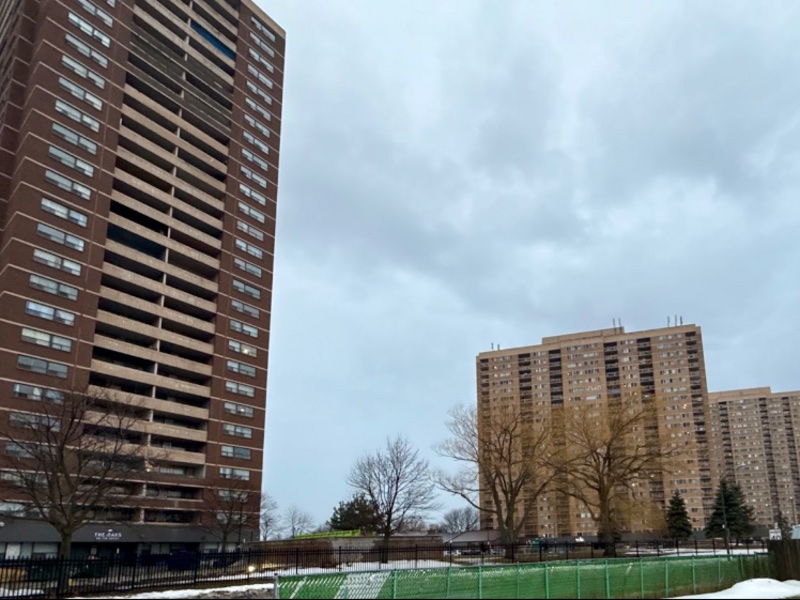
Rentals buildings at Chalkham Drive in Toronto's northwest, the setting for Lewis’ newly published case study.
While none of the interviewed tenants were formally evicted, they describe the tactics as a constant condition shaping everyday life in the buildings.
The paper documents how tenants respond to — and collectively survive — the imposed housing insecurity. Rather than allowing abandonment and misrecognition to render them passive, tenants generated practices of community care, refusal, self-determination, and formally organized resistance.
“These acts are not incidental to the story,” says Lewis. “They’re the grounds on which tenants refuse narratives of helplessness and how they rework space from within conditions of constraint.”
The paper demonstrates how eviction is only one part of a broader infrastructure used to extract financial value from tenants. Weak governmental enforcement of rental regulations allows this racialized system of exploitation to persist. The authors conclude that “a just urban future requires a rupture with this cycle” and “tenant-led, non-extractive models."
Read the full, open-access paper: "Expropriation and Refusal: Black Tenants, Racial Capitalism, and the Struggle for Home at Chalkfarm Drive" (external link)

Explore more at TMU's School of Urban and Regional Planning.