Food Environment Consensus Roundtable at TMU
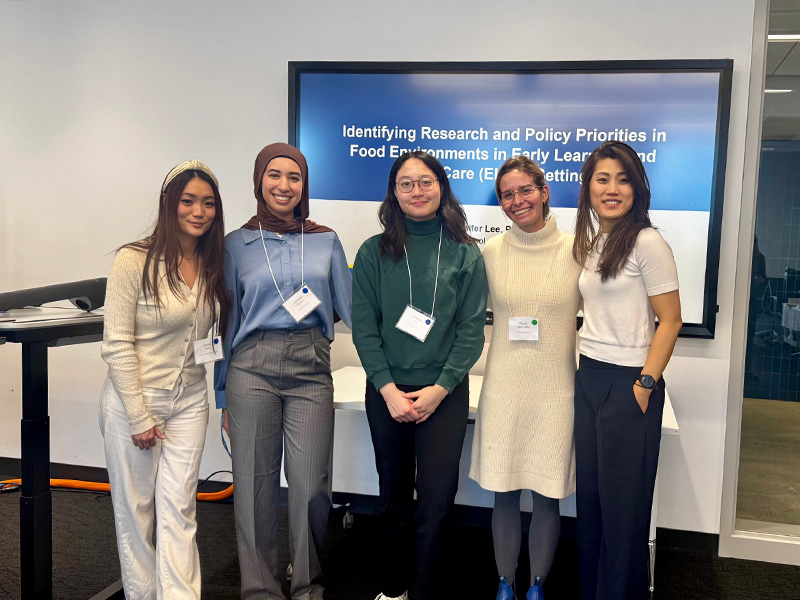
Food is foundational to long-term health and psychosocial development. In early learning and child care (ELCC) settings, there’s a growing need to understand food as a pillar of high-quality care and part of the early learning curriculum — not solely a nutritional service or an operational add-on.
To that end, on Friday, November 21, researchers from TMU hosted the Food Environment Consensus Roundtable — an interdisciplinary event to strengthen food environments in ELCC settings.
Nutrition professor Jenn Lee led the initiative with fellow professors and co-investigators Jessica Omand and Nick Bellissimo from the School of Nutrition and Sejal Patel from the School of Early Childhood Studies.
Experts and knowledge holders attended, including early childhood educators and staff, researchers, catering companies and public health workers. Professionals from these fields are traditionally siloed. The roundtable brought them together into a collaborative space to:
- reflect on existing food-related ELCC policies and standards
- identify and prioritize gaps in current research and policy, and
- explore meaningful opportunities to strengthen food environments across ELCC settings in Ontario
Through facilitated discussions, participants shared current challenges, lived and professional experiences, and opportunities for improvement.
“Listening to various groups at the roundtable conversations was very valuable— particularly in understanding how each perceives early learning and child care settings and what they consider their top priorities. I got a genuine sense of how policy and research shifts begin through open and collaborative dialogue.” —Clarissa Chu (Nutrition and Food ‘25), Research Assistant
Topics reflected both the daily realities of food provision in child care programs and broader system-level needs — such as how cost pressures are currently shaping food choices more than guidance documents or best practices, and that “food is memory” in that what happens in ELCC settings shapes how children relate to food for years.
“I gained a much broader understanding of the research and policy gaps around food in ELCC settings,” said professor and Registered Dietitian Jessica Omand. “We all share a strong belief that food is foundational to child development, equity, and health. By working together across disciplines, we can strengthen data collection and research to advocate for system-level improvements.”
Participants’ contributions will help guide the next phase of the project and inform research, policy and practice — all aimed at strengthening food environments and driving change in training and funding for ELCC settings. The conversations marked an encouraging, collaborative and cross-sectoral step forward in prioritizing children's health and well-being.
The event was made possible through funding by the Canadian Institutes of Health Research (CIHR) and TMU’s Faculty of Community Services.