Health Professionals Advisory Board’s 29th meeting held at TMU
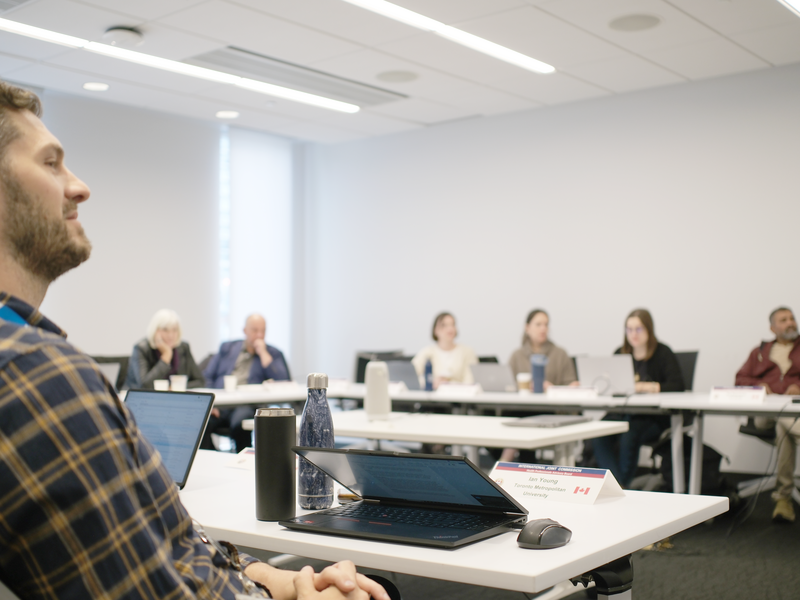
TMU public health professor Ian Young (left) hosted the Health Professional Advisory Board in their work advising the International Joint Commission on managing and protecting waters lining the Canada-US border.
On October 14th and 15th, experts from the International Joint Commission’s Health Professionals Advisory Board (external link) convened at Toronto Metropolitan University, hosted by TMU public health professor Ian Young.
The Board consists of experts from across North America, meeting twice a year — once in Canada and once in the United States. They discuss current and emerging issues related to water quality in transboundary Canada-US waterways, including the Great Lakes, with potential impact on human, animal and environmental health. Their results inform the work of the US-Canadian International Joint Commission (external link) (IJC), with recommendations that may be forwarded to the Governments of Canada and the United States.
The board discussed current and potential projects including on microplastics and emerging contaminants, early warning systems for antimicrobial resistance in water, and molecular and genomics technologies for (PDF file) modernizing microbial water quality assessment (external link) .
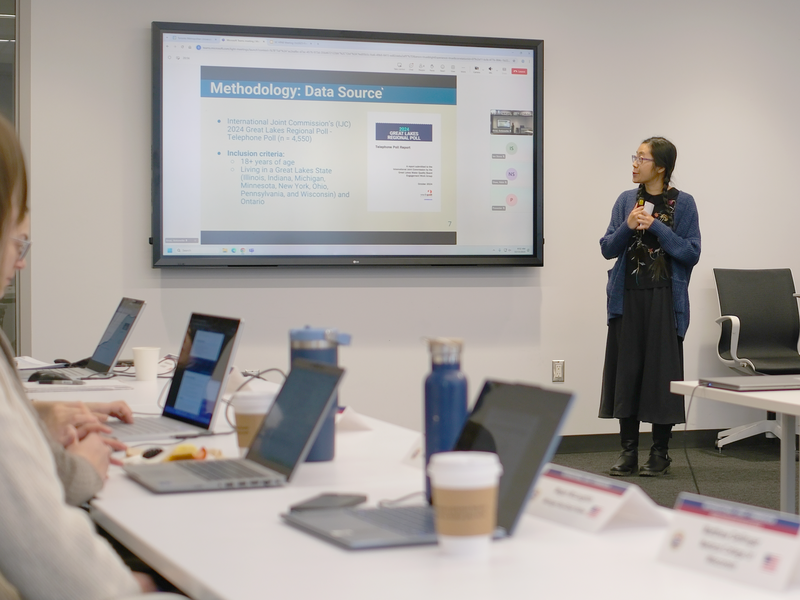
TMU Occupational and Public Health master’s student Tiffany Cao had the chance to present to the Board on an Analysis of the Water Quality Board’s Fourth Great Lakes Regional Poll (external link) .
Cao's thesis research examines factors associated with the frequency of people checking beach water quality before swimming, and includes an analysis of the IJC Water Quality Board’s public opinion poll data about public perceptions and behaviours of water quality in the Great Lakes Watershed.
U.N. SDG watch
The Board’s work contributes to the United Nations’ Sustainable Development Goal #6 for Clean Water and Sanitation (external link) . Their impact reaches humans, animals and the environment in both Canada and the United States, with a focus on helping the governments to improve water quality, protect water-related ecosystems, and increase transboundary cooperation.