Digital forensics expert Jad Saliba gifts $500K to the Faculty of Community Services
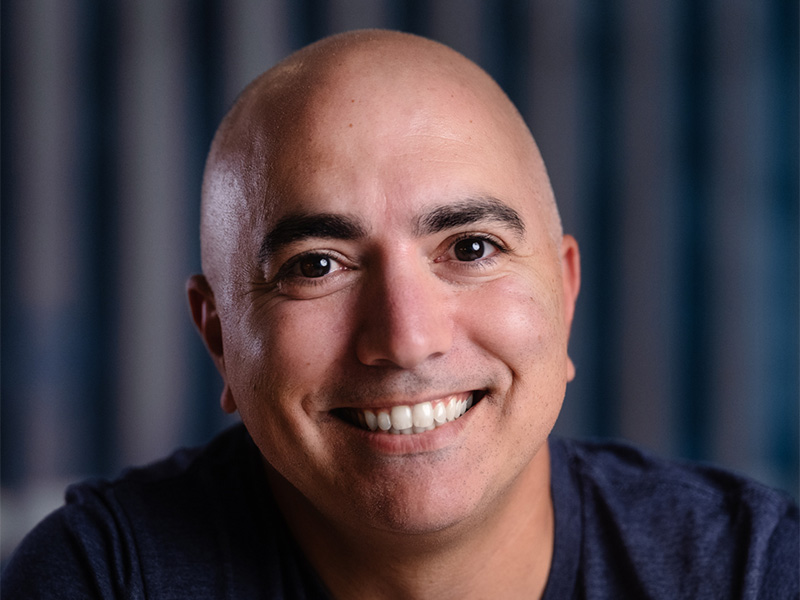
Jad Saliba and his foundation Badge of Hope’s $500K gift will advance the Faculty of Community Services in establishing transdisciplinary, holistic and survivor-informed programs and research in combating child sex trafficking and online child sexual exploitation over the coming decade.
Toronto Metropolitan University (TMU) is delighted to announce a transformational gift by former police officer and digital forensics expert Jad Saliba.
Through his charitable foundation Badge of Hope, Saliba has committed $500,000 to support two key initiatives developed from the Faculty of Community Services. First, a recently launched Executive Certificate Program; second, an upcoming Master of Health Sciences — both in Combating Child Sex Trafficking (CST) and Online Child Sexual Exploitation (OCSE).
“We are grateful to Mr. Saliba for his generosity and remarkable dedication to battling sexual abuse and exploitation crimes against children in a rapidly evolving digital environment,” said dean Kiaras Gharabaghi. “It marks a major step forward in building holistic collaboration between professionals and sectors in this little known but much needed space.”
“We’re very excited to work with Mr. Saliba over the coming decade,” said Jennifer Martin, an internationally recognized expert on child sex trafficking and online child sexual exploitation, and the faculty’s Associate Dean, Scholarly, Research and Creative Activity. “The funding will be instrumental in providing sustained operational support for the Master’s program and two annual bursaries for the Executive Program.”
The latter allocation will help alleviate financial barriers that might otherwise prevent two specific audiences from enrolling: policing professionals and survivors-turned-leaders. Encouraging and enabling the participation of both of these key populations inspired Saliba to establish Badge of Hope (external link) and to direct funds to the two TMU programs.
Policing, technology, philanthropy
Saliba began his career as a constable for the Waterloo Regional Police Service. Then, in 2007, cancer struck.
Fortunate to recover, Saliba took a role in the hi-tech crimes unit, working to uncover digital evidence to support investigations. The move was pivotal in ultimately shaping his trajectory.
Enabled by the rapid development of technology, criminals were finding new ways to abuse more children. One night, coming home frustrated, Saliba drew on coding skills he’d learned in school and began writing a program to recover digital data from digital evidence for criminal investigations.
Working spare nights and weekends on the project, he eventually left policing to work full time on his innovation, eventually forming the company Magnet Forensics in 2011.
Over the next 14 years, the firm developed advanced tools and techniques to uncover digital evidence for criminal investigations. Its products are now used around the world by thousands of agencies in cases involving child exploitation, corporate cybercrime, military intelligence and national security.
In 2019, Saliba received the Governor General’s Innovation Award. In 2021, Saliba and business partner Adam Belsher took Magnet public, and sold the enterprise two years later. Still, he saw there was more to do — this time through philanthropy.
“I feel very blessed in life, but the point of success wasn’t to retire on a beach somewhere. After seeing what I’ve seen as an officer fighting these crimes — it’s hard not to keep helping in additional ways when you have the means. It’s very rewarding and fulfilling."
Having witnessed the mental and emotional toll on police officers who dedicate their lives to fighting sexual crimes against children, and the difficulties ahead of rescued children rebuilding their lives, Saliba established Badge of Hope.
His foundation has a two-pronged mission: ensure that those who pursue justice are never left to struggle alone, and that those who survive injustice are never left behind or forgotten.
Badge of Hope typically supports frontline organizations that provide wellness programs, counselling services, emergency support and recovery resources for police officers in crisis and survivors of serious crime.
However, TMU’s academic initiatives in combating child sex trafficking and online child sexual exploitation struck a chord.
Empowering formalized education in the battle
Saliba first heard about TMU’s approach to combating sexual crimes against children through one of the Executive Program’s instructors, a member of the Royal Canadian Mounted Police.
Accepting an invitation to attend one of the program sessions, Saliba was impressed.
“When I saw the impact, the variety of people the program could reach, I thought, ‘This is the way to really strengthen coordinated efforts and fight the abuse and exploitation.’”
He reflected: “The internet has no borders. So, work in this space really benefits from global coordination. It helps to know that there are others and what they’re doing so that different sectors don’t duplicate efforts.”
Saliba also appreciated TMU’s initiative in pulling the work into an academic environment with input from policing, professionals and survivors. He’s convinced that a specialized graduate program will fill important gaps.
“The master’s program is really interesting,” he said. “Formalizing this work, making the space more accessible, and creating a framework to ensure that assumptions are accurate and that people in the field are getting the latest information from the best research possible — all of that feels really needed right now.”
With the Executive Certificate already launched, the master’s program in development, and a newly opened research centre, the Faculty of Community Services is grateful to Saliba and Badge of Hope for their extraordinary generosity, and the faculty looks forward to working together with Saliba over the coming decade to advance this important work.