Grad student trains on new Canadian approach to zoonotic diseases

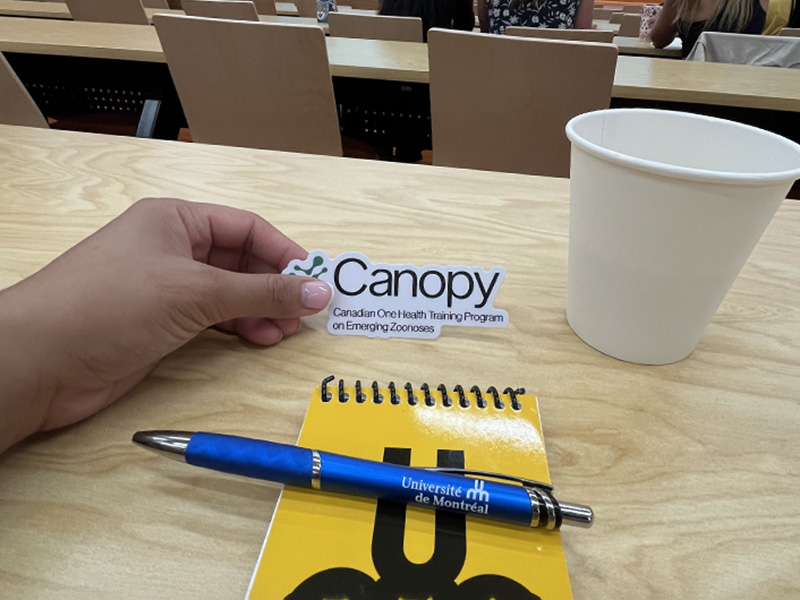
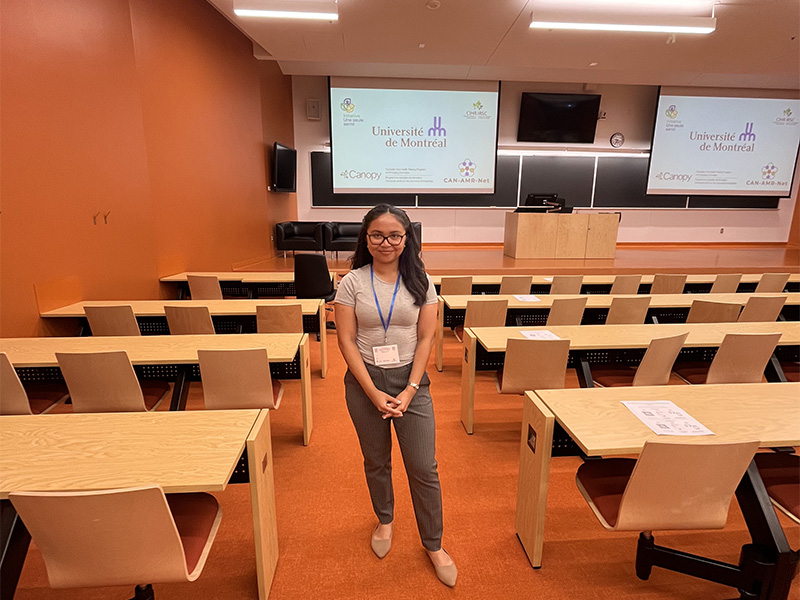
In August, TMU occupational and public health master’s student Maiza Sy was among the multidisciplinary group of researchers, leaders and professionals selected from across Canada to participate in the Canadian One Health Training Program on Emerging Zoonoses (COHTPEZ (external link) ) held at the Université de Montréal.
Zoonoses are diseases or infections easily transmitted between animals and humans. With over 200 known types — including rabies and COVID-19 — they’re a growing public health concern, comprising a large percentage of newly identified infectious diseases.
Sy received training on One Health, a unifying approach to zoonotic disease prevention, control and response. The four-day training event featured workshops, panels, research presentations, and an interactive activity working in multidisciplinary teams to develop a One Health approach to control a selected zoonotic pathogen.
Sy recently discussed her experiences with this unique training opportunity in health research.
What did you enjoy most?
I appreciated that this conference was filled with people from various disciplines such as microbiology, environmental science, public health, and social sciences. It gave us an avenue to connect and learn from each of our disciplines and value what each of us brings to the table to address zoonotic diseases.
How did you gain from the experience?
I got to enhance my skills in One Health — such as effective communication, collaboration and resilient working, systems understanding and more. All of us scholars were trained on how to apply One Health skills, values and attitudes, and use knowledge and awareness in our respective research projects.
Who would you recommend this experience to?
Definitely to master's and PhD students who specialize in zoonoses. You’ll learn a new set of skills that are very valuable in zoonotic research. You can also network with scholars and OneHealth experts from all over Canada.
What interested you about the MSc program at TMU?
I really like that it’s thesis-based. I wanted a program where I could really dive into the research process and build a strong foundation for a PhD. Now that I’m in my second year, I can honestly say it’s been a transformative experience. I’ve grown so much! I'm a more confident writer, expanded my network, presented at a conference, and I’m now collaborating with important organizations. This program has opened up opportunities I never expected. I’m so grateful for that and would also like to thank my supervisor, Dr. Ian Young, for his continued support and invaluable guidance during my master’s journey.
What career plans do you have after graduation?
After I graduate, my main goal is to pursue a PhD. I’d love to continue doing research and eventually teach public health at the university level. I’m really passionate about the field, especially population health and I see myself combining both research and teaching in the future.